A great tandoori smoky flavor arrives before the first bite. It is the warm aroma of spice meeting intense heat, the faint char at the edges, and the bright tenderness beneath it. Done well, it makes chicken, paneer, fish, or vegetables taste deeply satisfying without needing a heavy sauce or excess oil.
That character is often mistaken for simply “burnt” food or an overpowering dose of smoked spice. It is neither. Authentic tandoori cooking is a careful balance of marinade, fire, timing, and restraint. The goal is not to hide the ingredient, but to give it a lively, savory depth that makes each bite feel freshly cooked.
Where Tandoori Smoky Flavor Comes From
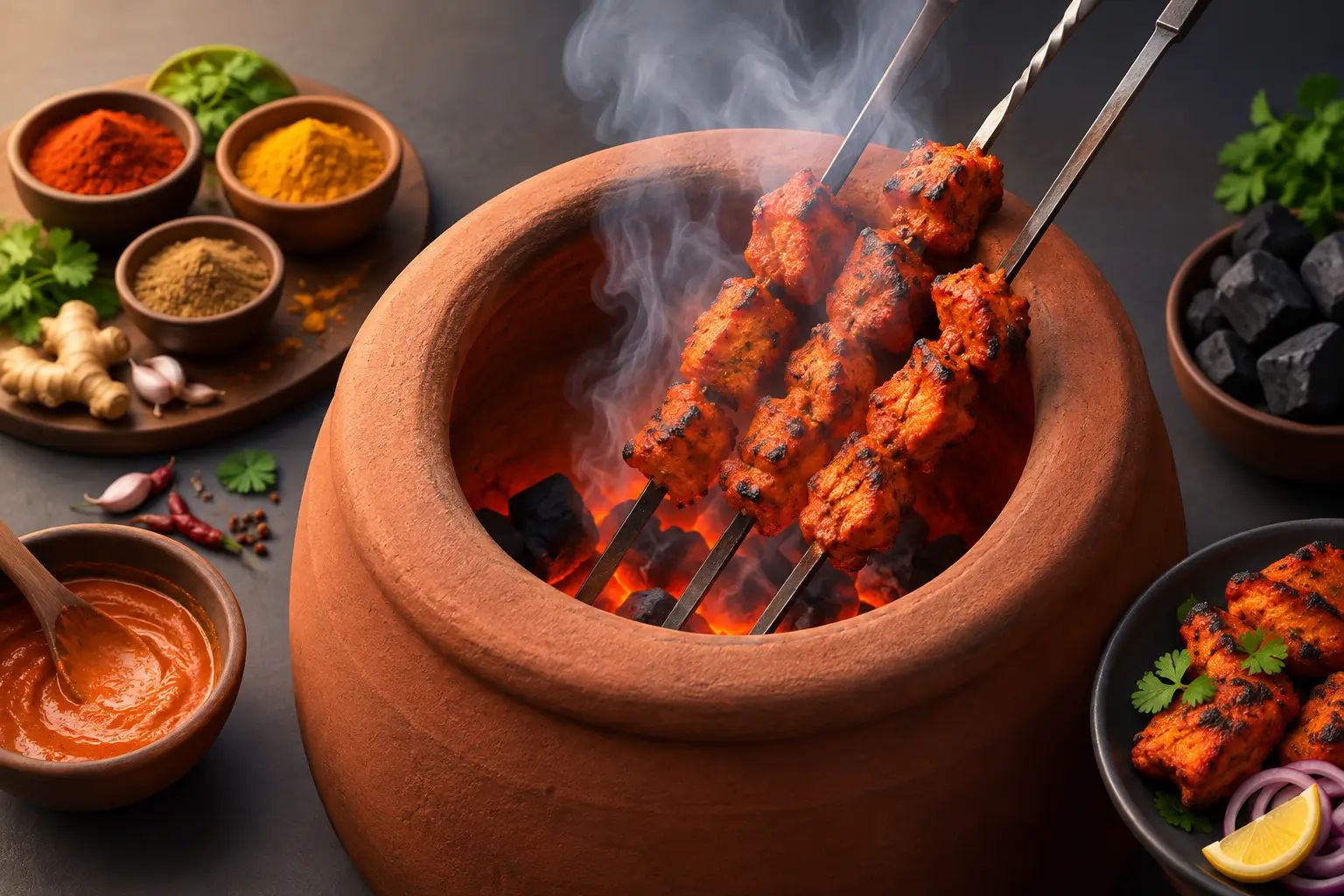
Traditional tandoori dishes are cooked in a clay tandoor, a cylindrical oven heated to extremely high temperatures. Skewered ingredients cook quickly near its hot inner walls, while the heat seals the outside and keeps the center succulent. The small areas of caramelization and char create the smoky notes people recognize immediately.
A tandoor does more than apply heat. Its high temperature changes the yogurt-based marinade, helping its natural sugars and milk solids brown while the spices become fragrant. That is why properly cooked tandoori food has complexity: a little tang from yogurt, warmth from spices, savory roasted notes, and a clean finish.
At Cilantro London, this balance matters. Tandoori dishes should feel flavorful and comforting, yet still light enough to enjoy as part of a relaxed lunch, a family dinner, or an easy takeaway evening. Smoke is one layer of the experience, not the whole story.
The Marinade Builds Flavor Before the Fire
The work begins long before anything reaches the oven. Yogurt is central to many tandoori marinades because its gentle acidity helps tenderize proteins without making them mushy. It also carries ground spices evenly across the surface, so flavor is present in every bite rather than sitting in a thick coating.
Ginger, garlic, cumin, coriander, turmeric, chili, and garam masala may all play a role, but the blend changes depending on the ingredient. Chicken can stand up to bolder spice and a longer marination. Delicate fish benefits from a lighter hand and less time. Paneer needs enough seasoning to complement its mild creaminess without masking it, while vegetables need careful cuts so they cook evenly and retain their natural sweetness.
A good marinade should taste balanced on its own: tangy, savory, aromatic, and gently spicy. If it tastes flat before cooking, more heat will not fix it. If it is too salty or aggressively hot, charring can make those qualities even more pronounced.
Why Yogurt Matters More Than Heavy Cream
People often associate rich Indian food with richness from cream, butter, or oil. Tandoori cooking offers a different kind of satisfaction. Yogurt gives body and tenderness while allowing the spice blend and high-heat cooking to remain at the forefront.
This is one reason tandoori dishes can be a smart choice when you want a meal with real depth but a fresher, less greasy feel. Pair grilled chicken tikka or paneer tikka with a crisp salad, vegetables, or a fragrant rice dish, and the meal stays generous without becoming overly heavy.
High Heat Creates Char, Not Dryness
The difference between beautiful charring and a dry, tough result is usually timing. Tandoori cooking relies on fierce heat, but food cannot be left unattended. A skilled cook watches for color at the edges, turning skewers as needed so the marinade caramelizes evenly.
Chicken should emerge with a charred exterior and juicy interior. Paneer should have lightly crisped corners while remaining soft inside. Vegetables should be blistered and sweet, not collapsed. The right finish has contrast: roasted outside, tender center, and spices that taste toasted rather than bitter.
This is also why a tandoori dish may look darker in a few places. Those spots are not a flaw when they are controlled. They bring a roasted depth that makes the yogurt marinade, lemon, and fresh herbs taste even brighter.
Smoke Should Support the Spices
Smoke is powerful. Too much can overwhelm the gentle floral notes of coriander, the brightness of lemon, or the natural flavor of fish and vegetables. Too little, and the dish can taste like an ordinary grilled kebab.
The best tandoori smoky flavor sits in the background at first, then lingers pleasantly after the bite. It gives the dish its signature warmth without leaving an acrid or ashy taste. This balance is especially valuable for diners who enjoy Indian food’s spice depth but prefer food that feels clean, fresh, and well judged.
Can You Create Tandoori Flavor Without a Tandoor?
Yes, although the result will be different. A very hot grill is often the closest home alternative because direct heat can give food some of the same browning and char. A broiler can also work well, particularly for chicken tikka, paneer, and vegetables arranged on a rack so excess marinade does not pool beneath them.
For the best result, let the food marinate long enough for the flavor to develop, then remove excess marinade before cooking. A thick, wet layer is more likely to steam than char. Cook in a hot oven or on a preheated grill, and finish only when the edges have picked up color and the center is properly cooked.
Avoid relying on liquid smoke to do all the work. Used sparingly, it can add a hint of aroma, but too much can taste artificial and flatten the spice profile. Smoked paprika can bring warmth and color, though it has a different character from clay-oven cooking. In a home kitchen, the most convincing result comes from good marinade and high heat, not shortcuts.
Choosing a Tandoori Dish for Your Table
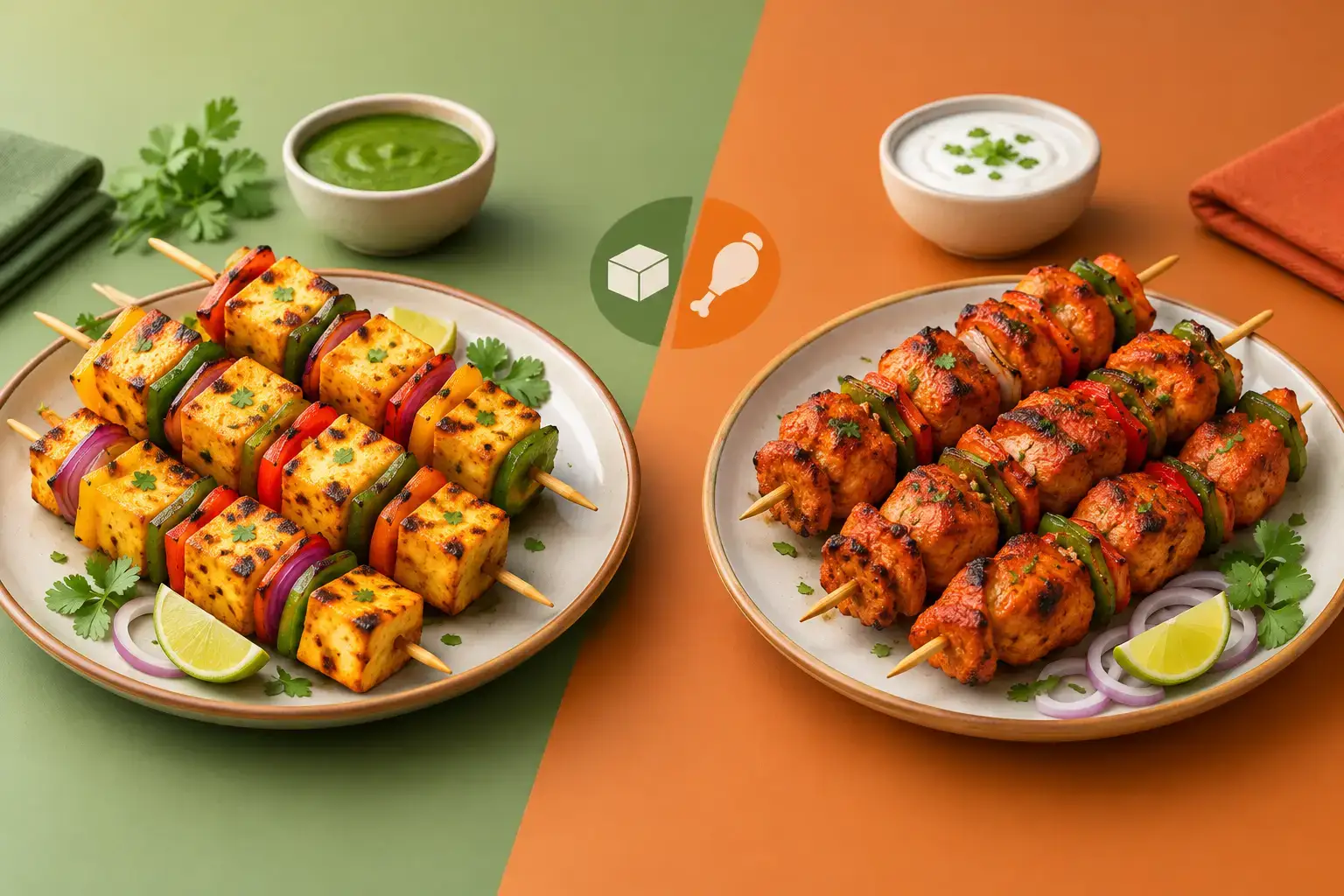
Tandoori food is especially easy to share because it works across different appetites and dietary preferences. Chicken tikka offers familiar, lean protein with bold seasoning. Paneer tikka is a satisfying vegetarian option with a soft, milky center and a charred spice crust. Tandoori vegetables bring sweetness and texture, while fish can be an elegant choice when cooked with care.
For a balanced meal, consider the contrast around the main dish. Cooling raita softens chili heat. A fresh salad adds crunch and acidity. Dal gives a more comforting, substantial element, while a simple rice or naan helps gather the juices and spices without competing with them.
If you are ordering for a group in Putney, Roehampton, Barnes, or nearby neighborhoods, a selection of tandoori dishes makes it easier to accommodate different preferences without losing a sense of occasion. It works just as well for a casual weeknight order as it does for a table shared with friends.
What to Look for When Ordering Tandoori Food
A well-made tandoori dish should smell roasted and aromatic, not oily. The color should come from spices and cooking, rather than suggesting an excessively heavy coating. Most of all, the ingredient should still be recognizable: chicken tastes like chicken, paneer remains creamy, and vegetables retain their character.
Freshly prepared food also matters. Tandoori dishes are at their best soon after cooking, when the edges are still lightly crisp and the interior is warm and juicy. If you are ordering takeaway, opening the container promptly and serving the food with fresh lemon can help preserve that just-cooked appeal.
The pleasure of tandoori cooking lies in that first contrast of char, spice, and tenderness. Choose a dish that suits your appetite, add something fresh alongside it, and let the smoky warmth do what it does best: turn a simple meal into one worth lingering over.