A tandoori order can set the whole tone of dinner: smoky fragrance, charred edges, warming spice, and a dish that feels satisfying without needing to feel heavy. When choosing paneer vs chicken tikka, the better option is not simply about vegetarian or meat-based eating. It comes down to texture, appetite, dietary preferences, and what you want alongside it.
Both dishes earn their place on an Indian menu. Both are typically marinated with yogurt, ginger, garlic, and carefully balanced spices before being cooked at high heat for that unmistakable tandoori character. Yet paneer and chicken respond to that treatment in very different, equally appealing ways.
Paneer vs Chicken Tikka: The Main Difference
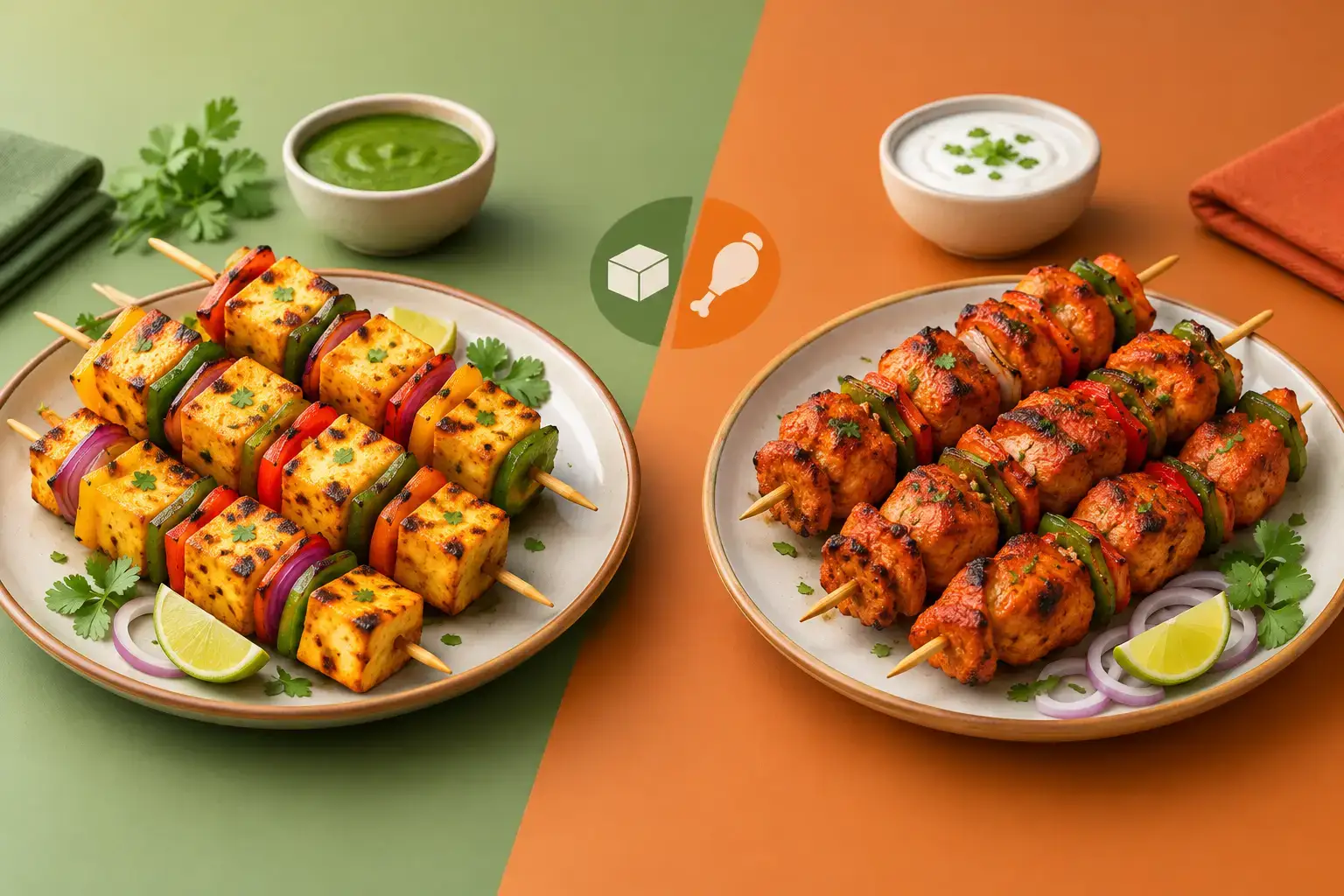
Chicken tikka is made with boneless pieces of chicken marinated in spices and yogurt, then grilled or cooked in a tandoor-style oven. It is known for its lightly charred exterior, tender center, and savory depth. The marinade brings brightness and heat, while the chicken provides a leaner, more substantial bite.
Paneer tikka follows a similar preparation, but the protein is paneer, a fresh Indian cheese. It holds its shape over high heat and becomes gently crisp at the edges while remaining soft and creamy inside. Bell peppers and onions are often cooked alongside it, adding sweetness, color, and a little bite.
The key distinction is texture. Chicken tikka is juicy, fibrous, and deeply savory. Paneer tikka is rich, milky, and satisfyingly dense. If you are craving the clean, smoky character of grilled chicken, chicken tikka is likely the natural choice. If you want a vegetarian dish that still feels generous and restaurant-worthy, paneer tikka more than delivers.
Flavor: Smoky Savory Chicken or Creamy Paneer?
The spice profile can be very similar, but the ingredients carry those spices differently. Chicken absorbs a marinade readily, so you tend to taste ginger, garlic, chili, cumin, and tangy yogurt throughout every bite. The char from high-heat cooking adds a subtle smokiness that works beautifully with mint chutney, lemon, or a crisp salad.
Paneer is milder by nature. Rather than competing with the spices, it provides a creamy backdrop that lets them show their character. A well-made paneer tikka has a pleasant contrast: the exterior is smoky and lightly spiced, while the middle is soft and mellow. It is particularly good for diners who enjoy aromatic Indian flavors but prefer a gentler, less meat-forward finish.
Neither option needs to be fiery to be flavorful. The most memorable tikka is layered rather than aggressively hot, with toasted spice, acidity from yogurt and lemon, and careful seasoning that keeps the dish fresh. If you have a preferred spice level, it is always worth sharing it when you order.
Which Is the Lighter Choice?
There is no universal winner, because portion size, marinade, cooking method, and sides all matter. Still, chicken tikka is often the leaner choice when you are prioritizing protein and a lighter-feeling meal. Grilled chicken served with salad, vegetables, or a tomato-based curry can make a satisfying dinner without the richness of a cream-heavy sauce.
Paneer provides protein too, but it is also higher in fat because it is cheese. That richness is exactly why many people love it. It can feel more filling, especially when paired with naan, rice, or a rich curry. For a balanced plate, consider paneer tikka with vegetables or a fresh salad, then choose the bread or rice portion that suits your appetite.
The cooking style matters more than people sometimes expect. Tandoori dishes are generally a smart choice for diners looking for the bold flavor of Indian food in a fresher, less greasy format. The deep flavor comes from the marinade and heat, not from a heavy coating or a rich sauce.
Protein, Vegetarian Needs, and Dietary Considerations
Chicken tikka is a strong choice for diners focused on a protein-forward meal. It is especially useful after a busy workday, when you want something flavorful that feels substantial but not overly rich. Pair it with grilled vegetables, salad, or a lentil dish for a complete and comforting dinner.
Paneer tikka is vegetarian, but it is not vegan and it contains dairy. That is an essential distinction for anyone managing dairy allergies, lactose sensitivity, or a vegan diet. Because tikka marinades commonly include yogurt as well, chicken tikka may also contain dairy depending on the recipe.
For gluten-free diners, tikka can often be a suitable option, but preparation and accompaniments matter. Naan contains wheat, and cross-contact can be a concern in any busy kitchen. If you have an allergy or strict dietary requirement, ask the restaurant directly before ordering. A thoughtful kitchen will help you choose a dish and sides that fit your needs.
What Should You Order With Each?
Chicken tikka is versatile. It can be the centerpiece of a lighter meal with salad and chutney, or it can become part of a fuller Indian feast with fragrant basmati rice, dal, and a curry with a brighter sauce. Its smoky savoriness also stands up well to punchy pickles and fresh mint.
Paneer tikka pairs especially well with dishes that bring contrast. A crisp salad cuts through its creamy richness, while a lemony lentil dish or lightly spiced vegetable curry keeps the meal varied. If you are sharing, paneer tikka is an excellent addition to the table because it gives vegetarian guests a main dish with the same sense of occasion as grilled meat.
For a casual night at home, either choice works beautifully as a starter to share before a curry. For a lunch that needs to keep you going, chicken tikka may feel more direct and protein-led. For a relaxed vegetarian dinner, paneer tikka brings warmth, texture, and enough richness to feel like a treat.
When Paneer Tikka Is the Better Pick
Choose paneer tikka when you want a vegetarian main that does not feel like a compromise. It is also the better fit if you enjoy creamy textures, mild dairy notes, and vegetables cooked alongside the main ingredient. Its satisfying bite makes it ideal for sharing at the table or adding variety to a mixed order.
Paneer can also be a welcome choice when you are eating with different preferences in mind. A meal with paneer tikka, a vegetable dish, a lentil curry, and one chicken entrée gives everyone something generous to enjoy without making the table feel overly heavy.
When Chicken Tikka Is the Better Pick
Choose chicken tikka when your appetite calls for a smoky, savory, protein-rich dish. It is a dependable order for a post-work dinner, a casual takeaway, or a meal that needs to travel well. The charred flavor remains satisfying even with simple sides, making it a great option when you want clarity rather than richness.
It is also an easy favorite for diners new to Indian food. The familiar appeal of grilled chicken meets the warmth and complexity of Indian spices, creating a dish that is approachable without being plain.
Make the Choice That Fits Your Evening
Paneer vs chicken tikka is less of a contest than a question of mood. Paneer offers creamy comfort and vegetarian generosity; chicken brings leaner savoriness and smoky depth. Both can be part of a balanced, freshly prepared Indian meal when cooked with care and paired thoughtfully.
Next time you are choosing dinner in Putney or nearby, follow your appetite rather than a rule: order paneer tikka for a rich, comforting vegetarian plate, or chicken tikka when you want that clean tandoori char and satisfying protein. Better still, share both and let the table decide which disappears first.