If you love Indian food but not the heavy, overly rich feeling that sometimes follows it, the good news is simple – there are plenty of examples of lighter Indian meals that still deliver depth, comfort, and real character. Indian cooking has always had a strong tradition of balance, with grilled dishes, lentils, vegetables, herbs, and bright spices playing just as much of a role as creamier curries and richer celebratory plates.
That matters if you are choosing dinner after work, ordering for the family, or trying to find something satisfying that will not leave you sluggish an hour later. A lighter Indian meal is not about giving up flavor. It is about how a dish is prepared, how the ingredients are balanced, and whether the meal feels fresh rather than weighed down by excess oil, cream, or butter.
What makes Indian food feel lighter?
Usually, it comes down to cooking method and structure. Dishes cooked in the tandoor, simmered with lentils, built around vegetables, or finished with yogurt, lemon, coriander, and fresh spices often feel cleaner and more balanced than dishes based heavily on cream or ghee.
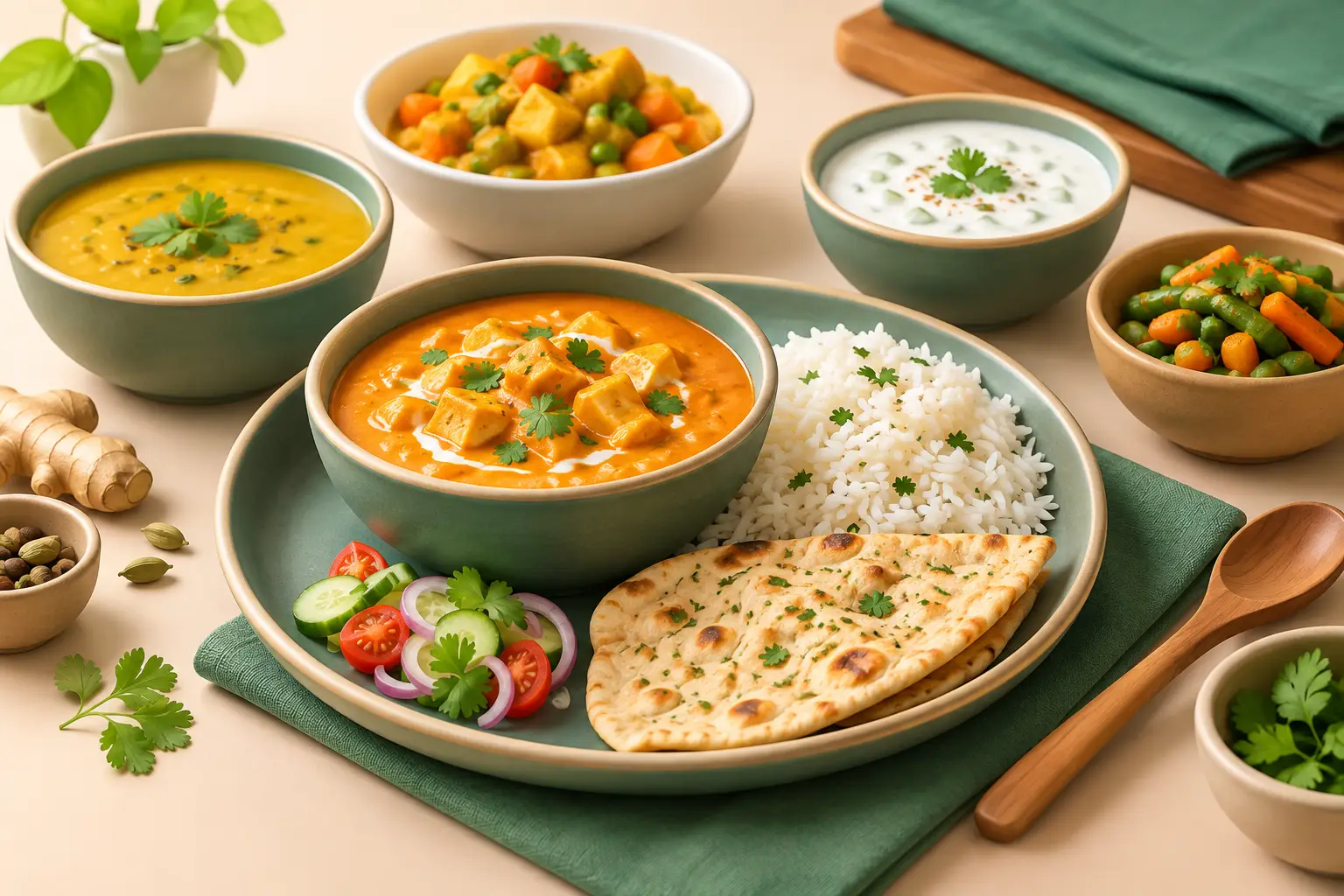
Portion pairing matters too. Even a classic curry can feel much lighter when served with a simple salad or a smaller portion of rice rather than rich breads and multiple side dishes. So when people search for examples of lighter Indian meals, they are often really asking a more practical question: what can I order that still tastes indulgent, but eats well on a weeknight?
10 examples of lighter Indian meals
Tandoori chicken
Tandoori chicken is one of the clearest examples. It is typically marinated in yogurt, spices, garlic, and ginger, then cooked at high heat, which gives you bold flavor without a heavy sauce. The result is smoky, charred, and deeply savory, while still feeling fresh.
This is a strong choice if you want protein-forward food that does not rely on richness for impact. Add a crisp salad or grilled vegetables and it becomes an easy, balanced meal.
Chicken tikka with salad
Chicken tikka keeps the same appeal as tandoori chicken but in boneless pieces, which many people find easier for lunch or a quick dinner. Because it is grilled rather than fried, it tends to sit lighter.
The trade-off is that it will feel less saucy and comforting than a curry. If you want something cleaner and more streamlined, that is exactly the point.
Dal tadka
A well-made dal tadka can be one of the most satisfying lighter meals on the menu. Lentils bring protein and fiber, and the dish gets its flavor from tempered spices, garlic, onion, and herbs rather than heavy dairy.
It is comforting without being excessive. If you are especially hungry, pair it with a modest serving of rice instead of multiple breads, and it remains balanced.
Chana masala
Chana masala offers a similar appeal, but with chickpeas instead of lentils. It has body and warmth, yet often feels brighter thanks to tomato, onion, and spice-led cooking.
This is a smart option for vegetarians and anyone who wants a dish with enough substance to stand on its own. It can become heavier if paired with too many extras, so the best approach is to keep the sides simple.
Tandoori salmon or fish tikka
Fish can be one of the best answers if you want Indian food that feels refined and lighter. Tandoori salmon or fish tikka gives you spice, smoke, and freshness, with a cleaner finish than many meat-based curries.
Not every restaurant handles fish with the same care, so quality matters here. When it is done properly, it is elegant, aromatic, and ideal for diners who want flavor without a heavy finish.
Vegetable curry with a tomato-based sauce
Not all vegetable curries are automatically light, but those built on tomatoes, onions, ginger, garlic, and spices rather than cream can be excellent. Mixed vegetable curry, baingan bharta, or aloo gobi can all fit, depending on how they are prepared.
This is where restaurant style makes a difference. A kitchen focused on freshness and made-to-order cooking usually delivers a vegetable dish with more definition and less grease, which is exactly what many diners are looking for.
Saag dishes with moderate richness
Saag, whether with paneer, chicken, or potatoes, can work well as a lighter option when the spinach remains the star and the dairy stays in the background. The earthy flavor of greens gives the dish depth without needing too much extra fat.
There is some variation here. Saag paneer will usually feel heavier than saag chicken, simply because paneer is denser. If you want the lighter version, choosing leaner protein makes a real difference.
Grilled paneer tikka
Paneer is not the lightest ingredient on a menu, but grilled paneer tikka can still be a better option than richer paneer curries. The smoky edges, spice marinade, and lack of heavy sauce help keep the dish feeling more balanced.
This is a good example of how lighter does not always mean low-calorie. Sometimes it means cleaner tasting, less oily, and easier to enjoy as part of a well-composed meal.
Cucumber raita with grilled mains
Raita is not a meal by itself, but as part of a plate it can shift the whole experience. Pairing cucumber raita with grilled chicken, fish, or vegetable dishes adds cooling contrast and helps create a fresher overall balance.
If you tend to order spicy mains, this is one of the easiest ways to keep dinner satisfying without piling on richer sides. It makes the plate feel complete without becoming too much.
Salad-led Indian plates
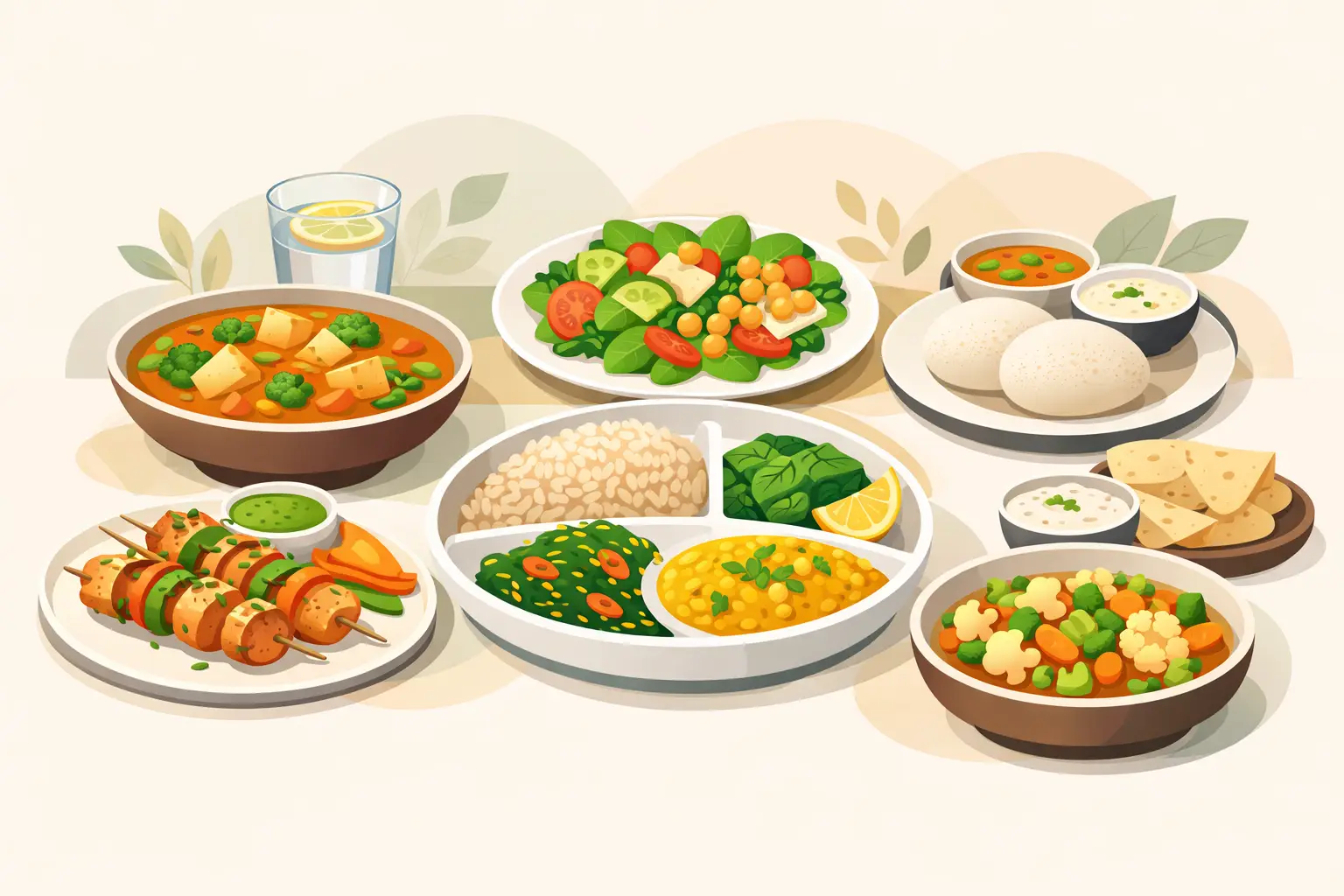
A modern Indian kitchen will often build lighter meals around grilled proteins, chutneys, fresh herbs, pickled onions, and salad rather than defaulting to a curry-and-rice format. These combinations can feel especially useful for lunch, early dinners, or office meals where you want flavor but still need to get on with the rest of your day.
This approach suits the way many people eat now. You still get authentic spice and texture, but with a cleaner, more contemporary balance.
How to choose lighter Indian meals without guessing
The easiest place to start is with the cooking style. Look for words like tandoori, tikka, grilled, roasted, lentil, chickpea, or vegetable-based. Those often point toward dishes that rely on spice, smoke, and freshness rather than sheer richness.
It also helps to think in combinations. A rich main with naan, rice, starters, and creamy sides can become heavy very quickly. A grilled main with salad, raita, or one simple side feels completely different.
Sauce is another clue. Tomato, yogurt, coriander, green chili, and spinach-based dishes often feel brighter than makhani, korma, or heavily buttery sauces. That does not make one category better than the other. It just depends what kind of meal you want that day.
Lighter does not mean less authentic
There is still a common misconception that Indian food is naturally heavy, but that usually comes from a narrow takeaway lens. Across India, everyday cooking includes grilled meats, dals, vegetable dishes, broths, dry curries, and meals built around freshness and spice rather than excess richness.
A more balanced Indian meal is not a compromise. In many cases, it is actually closer to how these dishes are meant to shine. Good ingredients, proper seasoning, and careful cooking allow the layers of flavor to come through more clearly.
For local diners who want that balance, a restaurant with a fresher, more refined approach can make all the difference. At Cilantro London, that means Indian food prepared with care, depth of flavor, and a cleaner finish that works just as well for a relaxed dinner out as it does for an easy takeaway at home.
When a lighter meal is the better choice
There are obvious times when lighter options make sense, like midweek dinners or work lunches, but they are just as useful when you are feeding a group with different preferences. One person may want grilled fish, another a lentil dish, another a vegetable curry, and everyone still feels looked after.
They are also ideal when you want Indian food more often. Rich dishes absolutely have their place, especially for celebrations or colder evenings, but lighter choices are often what turn a cuisine from an occasional treat into a reliable part of your weekly routine.
If you are deciding what to order tonight, start with one simple question: do you want comfort, or do you want comfort with lift? Often, the best answer sits somewhere in the middle – char from the grill, warmth from the spices, freshness from herbs and yogurt, and enough substance to leave you satisfied without feeling slowed down.