A sizzling tandoori chicken tikka and a crisp fried samosa can both satisfy a craving for Indian food, but they offer completely different experiences on the plate. In the conversation around tandoori cooking versus frying, the real question is not which method is universally better. It is which one brings the texture, richness, and feeling you want from your meal.
For diners who love authentic Indian flavor but prefer food that feels fresh rather than heavy, tandoori cooking often has a natural advantage. High heat, aromatic marinades, and careful timing create depth without needing a great deal of oil. Frying has its place too, especially when a dish calls for a delicate crunch or a golden, celebratory finish. Knowing the difference makes it easier to order well, cook thoughtfully, and enjoy every bite.
Tandoori Cooking Versus Frying: How the Heat Works
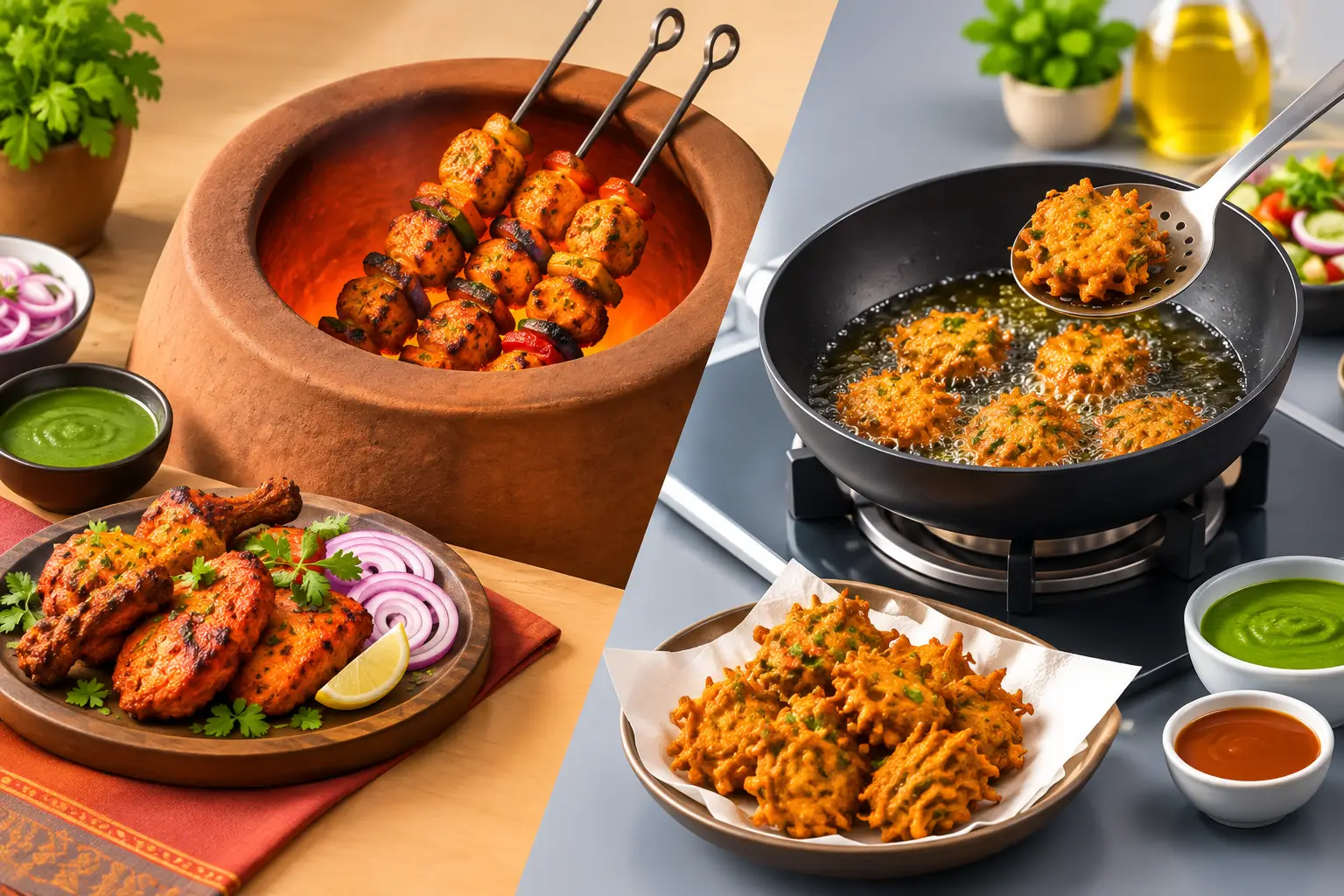
Tandoori cooking is built around fierce, direct heat. Traditionally, food is cooked in a clay tandoor oven, where the intense temperature quickly sears the outside while keeping the center moist. Meat, paneer, fish, and vegetables are usually marinated first in yogurt, spices, ginger, garlic, and citrus or lemon. That marinade does more than add flavor. The yogurt gently tenderizes, while the spices develop a toasted fragrance as they meet the heat.
The result is distinctive: lightly charred edges, a smoky aroma, and a savory crust that does not feel oily. A good tandoori dish should have contrast. You may taste the brightness of lemon, the warmth of cumin and chili, and the earthy depth of garam masala, all alongside the natural flavor of the main ingredient.
Frying works differently. Food is placed in hot oil, creating a crisp outer layer as moisture escapes from the surface. Depending on the recipe, the ingredient may be coated in batter, crumbs, flour, or a spiced paste. This method is especially effective for samosas, pakoras, onion bhajis, and certain seafood starters, where crunch is central to the dish rather than an optional extra.
Neither method lacks skill. A tandoori chef must control a very hot oven and prevent lean ingredients from drying out. A cook who fries well must maintain the right oil temperature, so food turns crisp rather than greasy. The key difference lies in the cooking medium: tandoori dishes gain character from heat and marinade, while fried dishes gain much of their signature texture from oil.
Why Tandoori Dishes Often Feel Lighter
Tandoori food is frequently seen as the lighter choice because little to no oil is required during cooking. The marinade carries the seasoning, and the tandoor creates color and texture without submerging food in fat. This can make tandoori chicken, grilled paneer, seekh kebabs, or spiced vegetables a satisfying option when you want a meal that feels generous but balanced.
That does not mean every tandoori dish is automatically low in calories or every fried dish is a poor choice. A creamy marinade, rich sauce, or oversized portion can change the overall picture. Equally, a small, freshly fried appetizer shared across the table can fit comfortably into a varied meal. Balance depends on portion size, accompaniments, and how often a dish is chosen, not just on one cooking method.
Still, tandoori cooking gives diners more room to build a lighter meal. Pair grilled chicken or paneer with a fresh salad, dal, vegetable sides, or a tomato-based curry. Choose naan or rice according to your appetite rather than treating both as a requirement. The meal remains full of spice and comfort, without relying on fried texture for satisfaction.
Flavor Is Not Only About Richness
There is a persistent idea that lighter Indian food must be less exciting. Proper tandoori cooking proves otherwise. Charring concentrates flavor, while a well-made marinade seasons food from the inside rather than simply coating the surface. Kashmiri chili can bring rich color and gentle warmth, while coriander, fenugreek, black pepper, and ginger build layers that stay clear rather than muddy.
Frying delivers a different kind of pleasure. The contrast between a crunchy shell and a soft, spiced filling is difficult to replace. A fresh vegetable pakora with mint chutney, for example, is meant to be enjoyed for its crisp edges and tender center. Trying to make every fried favorite behave like a grilled dish misses the point.
The better approach is to choose based on the moment. A fried starter can feel particularly welcoming on a cold evening, as part of a shared table, or alongside bright chutneys that cut through its richness. Tandoori dishes are often ideal for a weekday dinner, a protein-forward lunch, or a takeaway order when you want to feel comfortable after the meal rather than overly full.
Texture: The Biggest Difference on the Plate
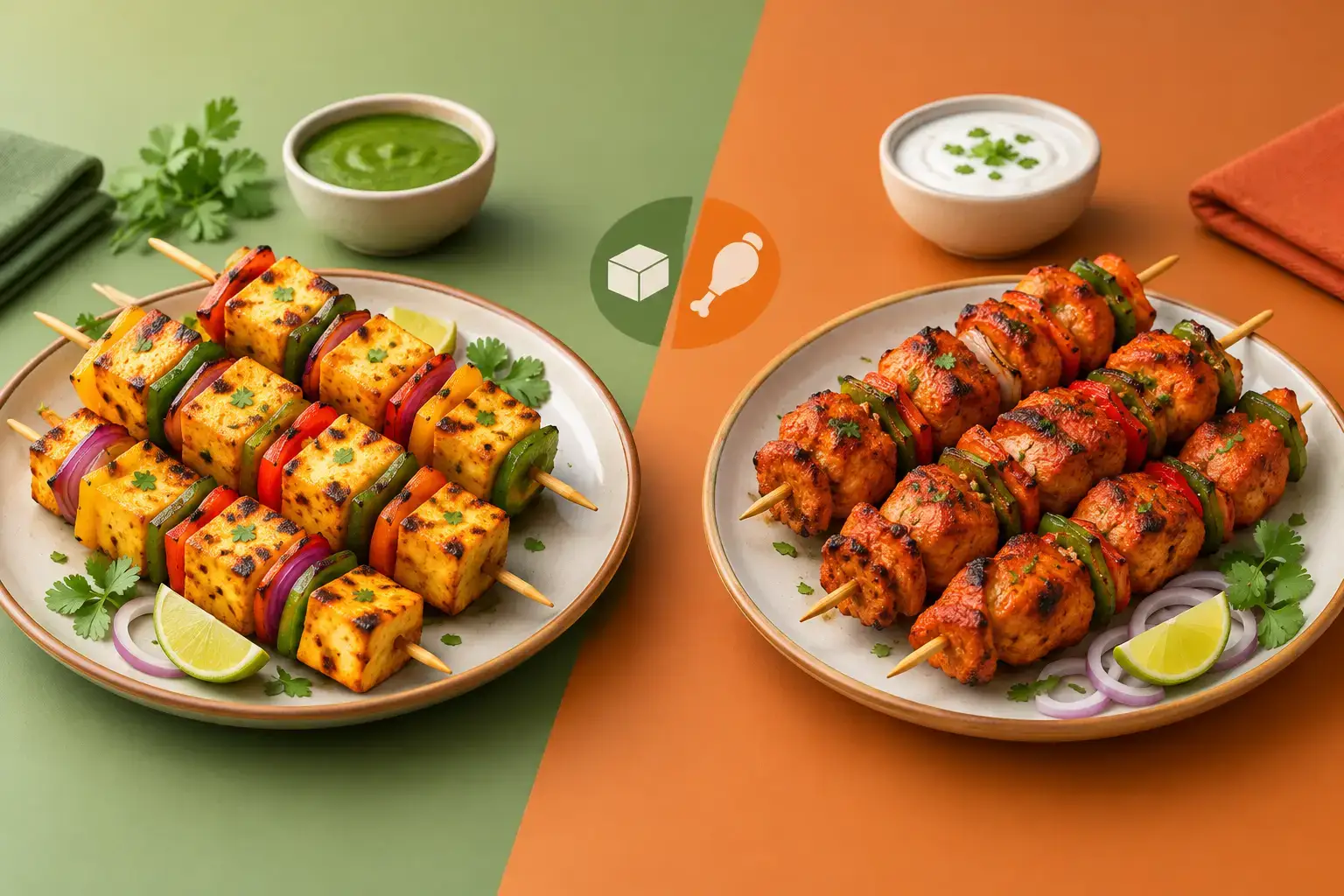
Texture is where diners notice the contrast most immediately. Tandoori food has a firmer surface, occasional char, and a juicy interior when cooked well. Chicken tikka should be tender enough to pull apart easily, with slightly caramelized edges from the heat. Tandoori paneer should have a lightly crisp exterior while remaining soft and milky inside. Vegetables should be blistered, not limp.
Fried food is defined by a more uniform crunch. A samosa should crack delicately when broken, revealing a fragrant filling. An onion bhaji should be craggy and crisp at the edges, with onions that have softened just enough. When frying is rushed or oil is not hot enough, that crispness is lost and the food can absorb excess oil. This is why quality and timing matter so much.
For a meal with more than one course, combining textures can be the answer. Share one fried appetizer, then make a tandoori dish the centerpiece. You get the pleasure of a crunchy starter without turning the entire meal into something heavy.
Choosing the Right Method for Different Ingredients
Some ingredients are especially suited to the tandoor. Chicken thighs and breast pieces benefit from a yogurt marinade that protects them from high heat. Firm fish can take on smoky spices beautifully, though it needs careful cooking to remain tender. Paneer, mushrooms, peppers, and cauliflower also respond well, gaining a charred sweetness that pairs naturally with cooling yogurt or tangy chutney.
Frying is often the stronger choice when the ingredient needs a protective shell. Finely chopped vegetables, mashed potatoes, lentil mixtures, and soft fillings can be shaped and encased in pastry or batter. That exterior keeps the interior warm and soft while adding the crisp finish people expect.
There are also dishes that sit somewhere in between. Some Indian recipes briefly fry spices or onions to establish a flavorful base, then use grilling, roasting, or simmering for the main cooking. A little oil can be an important flavor carrier. The goal is not to avoid it at all costs, but to use it deliberately.
How to Order a Balanced Indian Meal
When you are ordering for a relaxed night at home, start with what you want the meal to feel like. If freshness and lighter eating are priorities, choose a tandoori main, a vegetable dish, and one satisfying carbohydrate such as rice or naan. Add dal for comforting depth, or a salad for contrast.
If you are sharing with friends or celebrating, a mix makes more sense. Order a few starters, including one fried favorite if that is part of the occasion, then balance the table with tandoori dishes and vegetable-based mains. Chutneys, pickles, and raita do useful work here: they bring acidity, coolness, and brightness that keep richer flavors from becoming overwhelming.
At Cilantro London, the appeal of tandoori cooking is that it supports the restaurant’s approach to authentic Indian food: generous in spice, carefully prepared, and satisfying without unnecessary heaviness. It is a style that works just as well for a casual Putney takeaway as it does for a leisurely dinner out.
The Best Choice Depends on the Meal You Want
Choose tandoori cooking when you want smoky spice, tender proteins or vegetables, and a meal that feels naturally lighter. Choose frying when crispness is the point, when you are sharing starters, or when a particular dish deserves its classic golden finish. There is room for both on an Indian menu, especially when the cooking is thoughtful and the ingredients are treated with care.
For your next order, let your appetite set the direction. A plate of charred tandoori paneer or chicken with fresh sides may be exactly right for a busy evening, while a shared samosa or bhaji can make the table feel a little more festive.