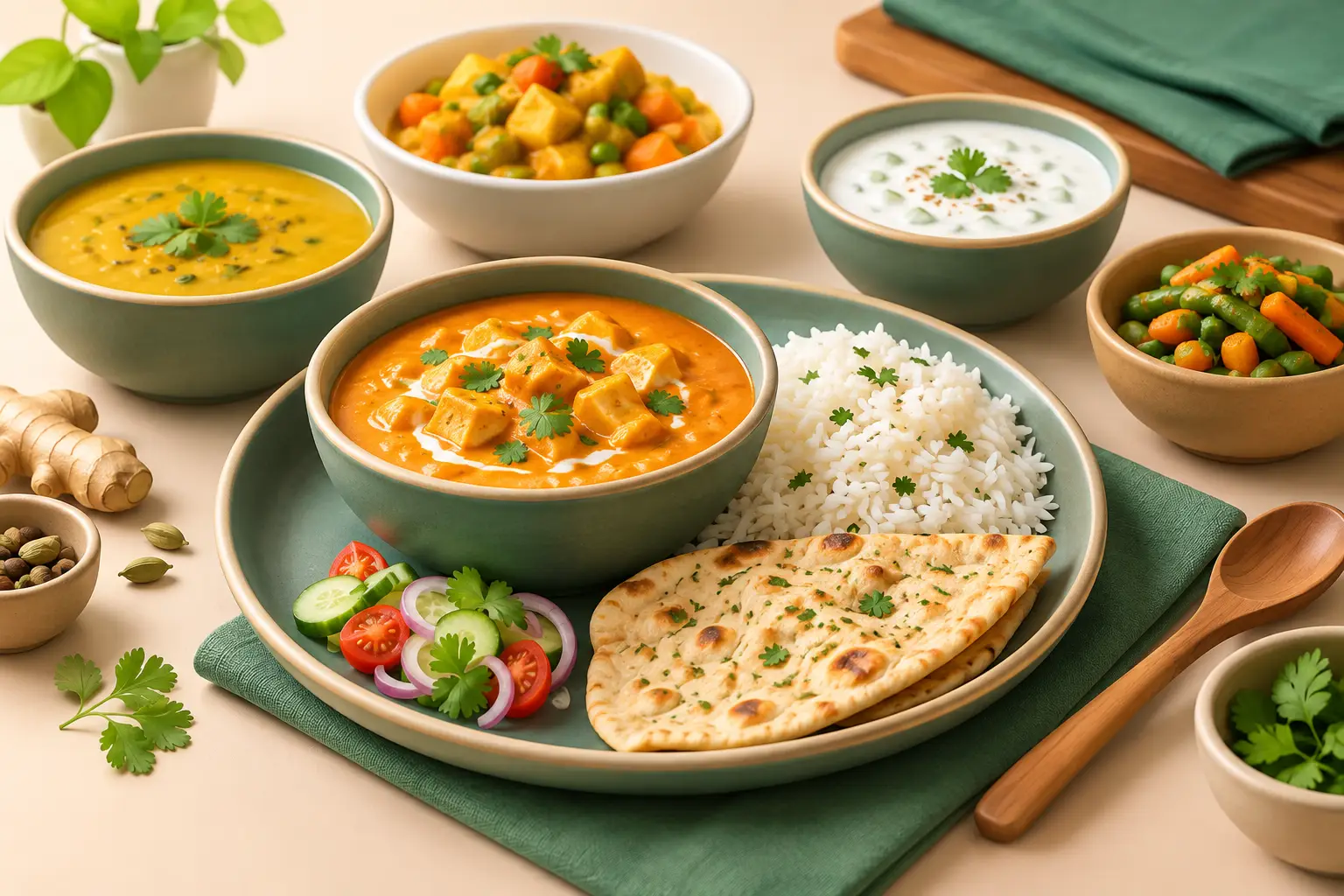
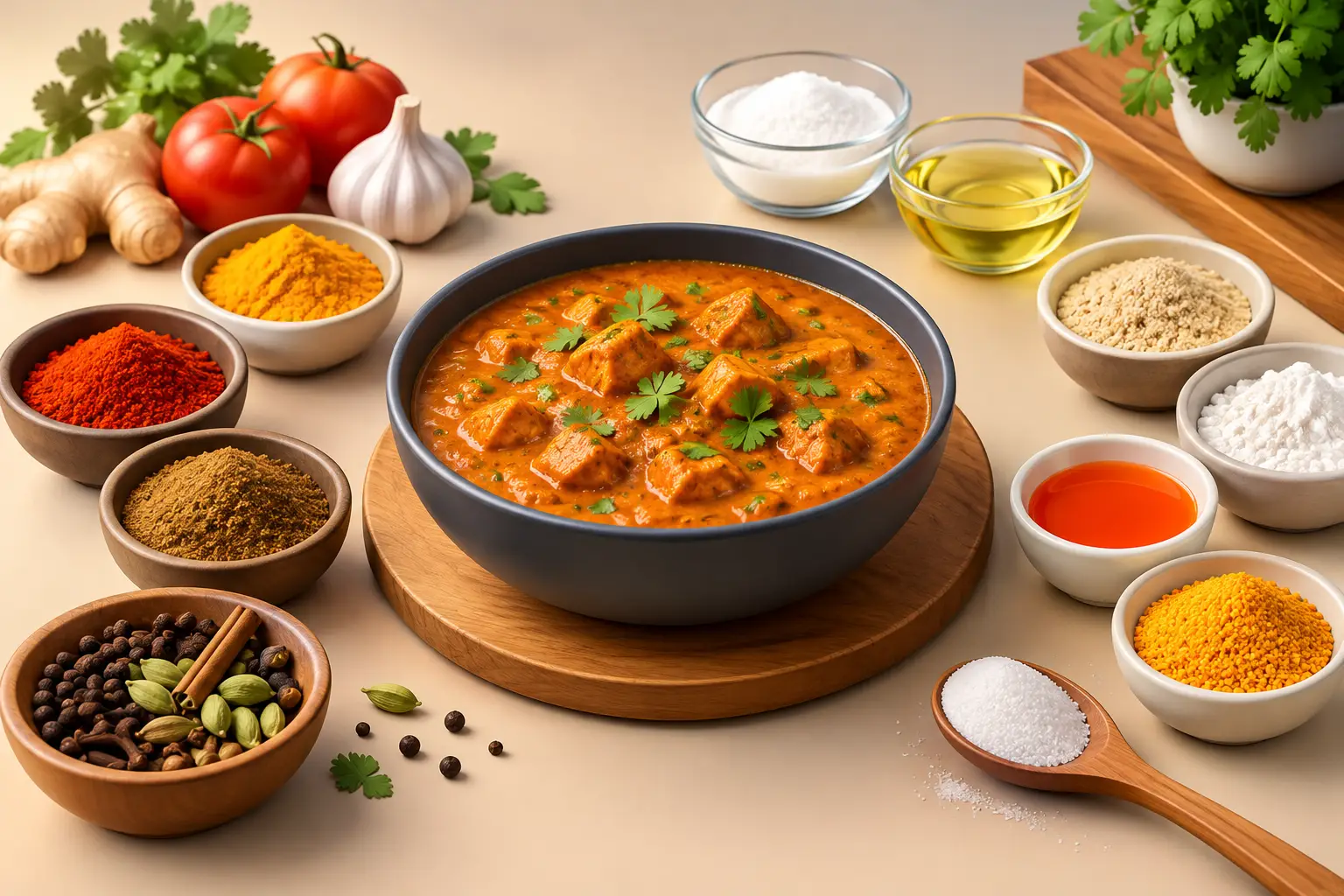
A curry can look brilliantly red, stay creamy after reheating, or arrive with a sweetness that seems stronger than its spice. Those qualities may come from careful cooking, but they can also come from Indian food additives. The phrase can sound alarming, yet additives are not automatically a sign of poor food. The real question is what has been added, why it is there, and whether it supports the dish or substitutes for fresh preparation.
For diners who want Indian food with depth but without the heaviness of a typical takeaway, understanding the difference is genuinely useful. It makes it easier to choose dishes that feel satisfying, balanced, and true to the ingredients behind them.
What Counts as an Indian Food Additive?
An additive is an ingredient included primarily to change a food’s color, flavor, texture, shelf life, or consistency. In Indian cooking, this can range from entirely familiar pantry ingredients to industrial ingredients found more often in packaged foods, ready meals, sauces, and some high-volume takeaway kitchens.
Salt, sugar, lemon juice, yogurt, and ghee can all preserve or enhance food in some way, but they are also traditional culinary ingredients with a clear role in a recipe. By contrast, artificial colors, flavor enhancers, stabilizers, and preservatives are generally used to create a particular visual effect, intensify flavor, or make food last longer.
That distinction matters. A little turmeric gives a dish warm golden color and earthy flavor. A synthetic yellow dye may produce a brighter, more uniform result without contributing anything to the taste. Neither fact alone tells you whether a meal is good or bad, but it does tell you something about how it was made.
The Additives You May Encounter in Indian Food
Colors that make food look more dramatic
Bright orange tandoori dishes, vivid red curries, and intensely colored sweets can sometimes contain added food coloring. Traditional ingredients such as Kashmiri chili, paprika, saffron, beetroot, turmeric, and tomato can create beautiful color naturally, though their appearance is often more nuanced than an artificially dyed version.
Artificial coloring is especially common in foods designed to look identical every time. If an orange chicken tikka looks almost fluorescent, it is reasonable to ask how its color was achieved. Some diners are particularly sensitive to certain colorings, while others simply prefer to avoid them. Either way, a restaurant should be able to answer clearly.
Flavor enhancers and excessive salt
Monosodium glutamate, often called MSG, is used in many cuisines to add savory depth. It is not unique to Indian food, and it is not inherently dangerous for most people. It does, however, deserve a more thoughtful conversation than either blanket fear or blind acceptance.
MSG can make a sauce taste fuller when time, stock, roasted onions, tomatoes, spices, and slow cooking have not done enough of the work. The same applies to excessive salt, sugar, or concentrated seasoning blends. Used carefully, they can support flavor. Used heavily, they can flatten a dish into one loud note and leave you thirsty afterward.
A well-cooked dal, for example, should gain its richness from tempered spices, lentils, aromatics, and patient simmering. A quality curry should not need to overwhelm the palate to feel flavorful.
Preservatives in packaged products and prepared sauces
Preservatives help food remain safe and stable for longer. They are most relevant in bottled chutneys, jarred sauces, frozen products, spice pastes, pickles, and commercially prepared naan or snacks. Their presence can be practical, particularly when a product needs a long shelf life.
Freshly made restaurant food is different. A curry prepared to order and cooked from fresh onions, garlic, ginger, herbs, spices, and tomatoes has less need for preservation. That does not mean every component is made from scratch every hour. It means the cooking approach should prioritize freshness where it affects flavor and quality most.
Thickeners, stabilizers, and texture shortcuts
Some sauces use starches, gums, emulsifiers, or cream substitutes to stay smooth, thick, and consistent. Again, these are not automatically a problem. A small amount of starch may be useful in a sauce. But when a curry has a gluey texture, an oily surface, or an oddly uniform richness, it may be carrying more than the recipe needs.
Many classic Indian dishes naturally develop body through reduced onions, ground nuts, lentils, yogurt, tomato, cream, coconut, or slow-cooked vegetables. These ingredients create texture while bringing their own flavor. The trade-off is time, skill, and cost, which is why shortcuts can be tempting in mass-produced food.
Why Fresh Cooking Changes the Equation
The most appealing Indian food is built in layers. Whole spices bloom in oil. Onions soften and sweeten. Ginger and garlic provide warmth. Tomatoes reduce into a sauce. Fresh herbs add lift at the end. When these stages are handled properly, the food needs fewer tricks to taste complete.
Fresh cooking does not mean every dish must be plain, low-fat, or mild. It means richness should have a recognizable source. If a makhani sauce is creamy, that creaminess should come from dairy, cashews, or a considered plant-based alternative. If a biryani is fragrant, it should be because of basmati rice, whole spices, saffron, mint, fried onions, and careful layering.
This is also where a lighter approach can make a real difference. Less oil does not have to mean less flavor when spices are toasted properly and sauces are made with care. It simply means the ingredients have room to speak for themselves.
How to Make Better Choices When Ordering
You do not need to interrogate every menu item to enjoy a good Indian meal. A few practical cues can help. Look for menus that describe ingredients rather than relying only on generic labels such as “special sauce.” Choose dishes with vegetables, lentils, grilled proteins, and clearly named spices. Be cautious with meals that are unusually sweet, neon-bright, very oily, or identical in texture from dish to dish.
Dietary requirements deserve direct communication too. Gluten-free, vegan, dairy-free, and nut-free requests can involve hidden ingredients in spice blends, sauces, marinades, and prepared components. Ask about the full preparation, not only the main ingredient. A vegetable curry may be vegetarian, for instance, but still contain cream, ghee, or a sauce thickened with something you would rather avoid.
At Cilantro London, the aim is to let authentic recipes, responsibly chosen ingredients, and made-to-order cooking do the hard work. That means food can still be comforting and celebratory while feeling cleaner, fresher, and more balanced on the table.
Indian Food Additives Are Not a Simple Yes-or-No Issue
A long ingredient list is not always a warning sign, and a short one is not always proof of quality. Pickles, chutneys, and spice blends can be wonderfully complex. Likewise, a preservative may be appropriate in a packaged product designed for safe storage. Context matters.
What should concern diners is not the existence of every additive, but the absence of transparency and care. Is a color there to make food look exciting, or does it conceal a lack of fresh ingredients? Is a thickener supporting a delicate sauce, or replacing proper cooking? Is added sugar balancing acidity, or covering blandness?
The best meals rarely need a dramatic explanation. They smell of toasted spices, taste distinct from one another, and leave you comfortably satisfied rather than weighed down. When you order your next curry, trust your senses, ask a thoughtful question if you need to, and choose the kitchen where flavor begins with real cooking.