A family meal can go one of two ways. It either lands on the table and everyone quietly gets on with eating, or it turns into a low-level negotiation over spice, texture, portion size, and whether there is anything the kids will actually touch. If you are wondering which indian dishes suit families, the answer is usually the dishes that balance comfort, variety, and flexibility rather than the hottest or most adventurous options.
Indian food is particularly good at this when it is cooked with care. A well-made family order gives you mild choices, richer dishes for those who want depth, plenty of rice and bread for sharing, and enough vegetarian or lighter options to keep everyone happy. The key is not ordering one huge curry and hoping for the best. It is choosing a spread that gives different ages and appetites something to enjoy.
Which Indian dishes suit families at mealtime?
The best family-friendly Indian dishes tend to have familiar textures, balanced spice, and broad appeal. That usually means creamy curries, tandoori favorites, biryani, lentil dishes, and breads that make the whole meal feel generous and easy to share.
Butter chicken is one of the most reliable examples. It has the warmth of Indian spices without aggressive heat, and the sauce is smooth, rich, and approachable. Children often prefer it because it feels comforting rather than challenging, while adults still get plenty of flavor. Chicken tikka masala plays a similar role, though it can be a little brighter and more tomato-led depending on the kitchen.
For families who want something even lighter, tandoori chicken is often the smarter choice. It brings all the fragrance and char of Indian cooking without a heavy sauce, which makes it useful when one person wants something wholesome and another wants a more indulgent curry on the side. Tandoori dishes also work well for mixed tables because they are easy to share and pair naturally with rice, salad, or naan.
Lamb dishes can suit families too, but it depends on the cut and style. A slow-cooked lamb rogan josh with tender meat and a deep, spiced sauce is usually a better family choice than anything very hot or sharply pickled. If your table includes younger eaters or anyone cautious with spice, chicken and paneer are generally safer starting points.
The family order works best when it mixes textures
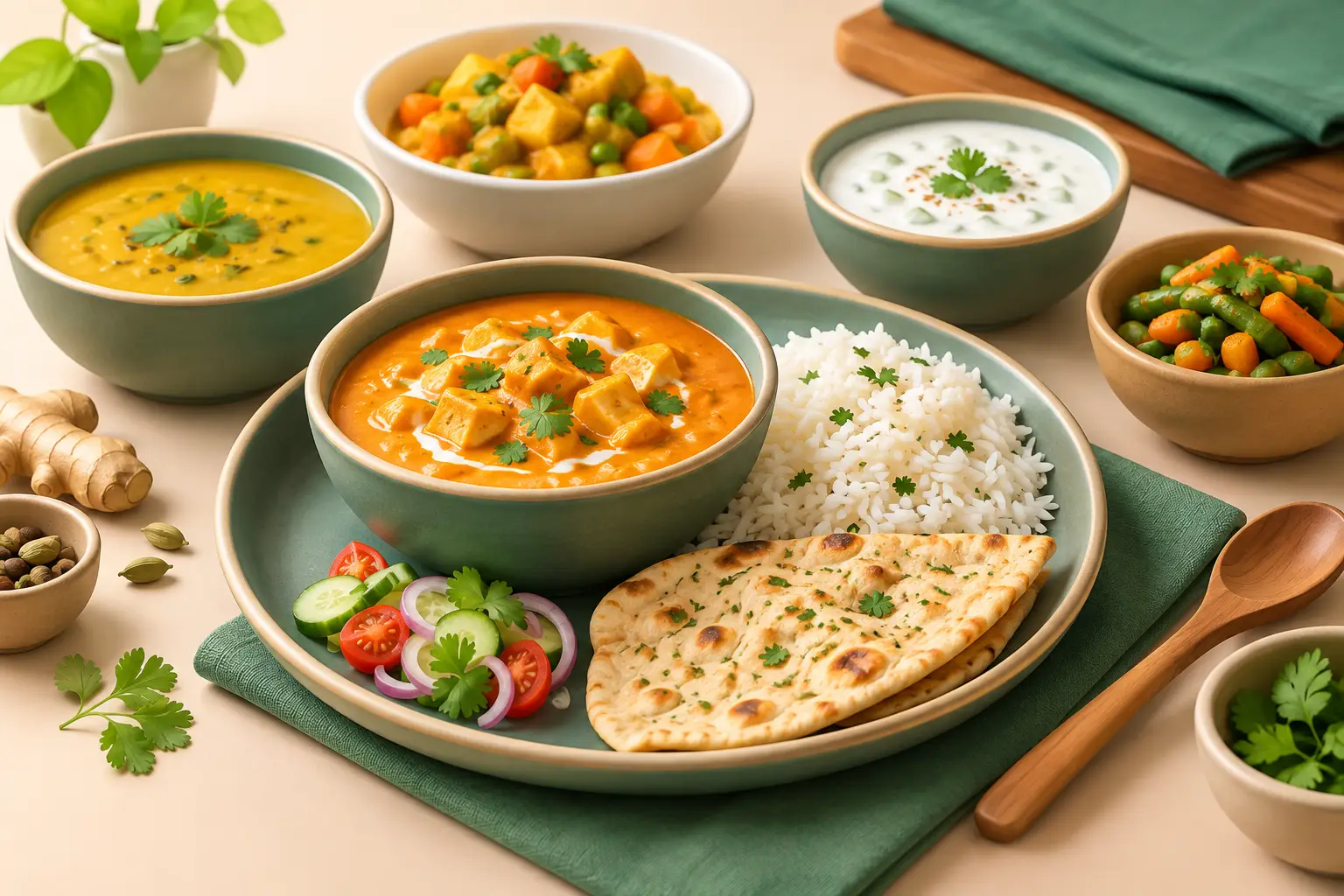
One reason Indian food suits group dining so well is that it does not need to revolve around a single centerpiece. A better approach is to think in layers. You want one mild curry, one grilled dish, one vegetarian side, plenty of rice, and bread for scooping and sharing.
That mix keeps the meal from feeling too rich. If every dish arrives in a thick cream-based sauce, people tire of it quickly. But if you combine something creamy with something smoky from the tandoor and something earthy like dal, the table feels balanced.
This matters especially for takeaway at home, where families often want the comfort of a proper dinner without the heaviness that older-style curry house meals can sometimes bring. Freshly made dishes with cleaner flavors and less grease are easier to share across generations, and they leave room for everyone to enjoy a full meal rather than feeling done after a few bites.
Mild curries that usually please everyone
When people ask which indian dishes suit families, they are often really asking which curries are least likely to cause complaints. Mild does not have to mean bland, and the best family curries prove that.
Korma is the obvious example, but it can divide opinion. Some love its gentle sweetness and creamy texture, while others find it too rich if the rest of the meal is already heavy. It works best as one part of a varied order rather than the entire meal.
Butter chicken tends to be the more dependable middle ground. It is creamy but still layered with spice. Chicken tikka masala is another safe option, especially for households that like a little tang and color without too much heat.
Paneer makhani can be excellent for mixed households where some people do not eat meat. The paneer gives a satisfying bite, and the sauce often echoes the same mild, velvety style that makes butter chicken so popular. This makes it easier to create a family meal where vegetarian diners are not treated as an afterthought.
If your family likes a bit more warmth, a jalfrezi or balti can work, but this is where it depends on the kitchen. In some restaurants, these are lively and manageable. In others, they carry enough heat to put off younger diners. When ordering for a wider age range, it is usually better to keep the main dishes mild and add heat later with condiments or a spicier side for the adults.
Which Indian dishes suit families with different diets?
This is where Indian food often shines. Families rarely all eat the same way now. One person wants chicken, another prefers vegetarian dishes, someone else is avoiding gluten, and somebody is trying to keep things lighter on a weeknight.
A lentil dal is one of the best answers. It is comforting, protein-rich, and gentle enough for almost everyone. It also balances a meal beautifully, especially alongside grilled meats or richer curries. Chana masala is another strong choice if your family enjoys a little more texture and depth.
For vegetarian households, paneer tikka, vegetable biryani, saag paneer, and dal can create a meal that feels complete rather than compromised. For gluten-free diners, many curries, rice dishes, and tandoori items fit naturally, though breads and some fried starters may not. For families trying to eat a bit more cleanly, grilled dishes, tomato-based curries, and sides like cucumber raita or fresh salad keep things feeling fresh.
That is part of why modern Indian cooking works so well for busy households. It can be generous and satisfying without relying on the heavy, oily style that used to define takeaway for many people.
Biryani is a strong family choice, with one caveat
Biryani deserves more credit in family ordering. It is fragrant, filling, and self-contained, which makes it ideal when you need a dependable dish that does not rely on extra sides to feel complete. Chicken biryani is usually the easiest crowd-pleaser, while lamb biryani brings a deeper flavor for more adventurous tables.
The caveat is spice. Some biryanis are gently aromatic, while others can be noticeably hot. If you are ordering for children or sensitive eaters, it is worth choosing a kitchen known for balance and freshness rather than heat for its own sake.
Served with raita, biryani becomes even more family-friendly. The cool yogurt softens the spice and gives younger diners a more familiar way in.
Bread, rice, and sides make the meal easier
A family meal feels more relaxed when there is enough on the table for everyone to build their own plate. Naan, roti, and pilau rice help do that. They soften stronger flavors, stretch the meal further, and make sharing feel natural.
Sides matter more than people think. Saag, dal, raita, and a fresh salad can turn a takeaway into a proper dinner. They also help when different people at the table have different appetites. Someone may want curry and naan, while someone else prefers grilled chicken with rice and a lighter side.
This is often the difference between a chaotic order and a well-judged one. Family-friendly Indian food should not feel like a gamble. It should feel generous, balanced, and easy to enjoy at the same table.
How to build a family-friendly Indian order
For most households, the sweet spot is three or four dishes rather than too many competing choices. A mild chicken curry, a tandoori dish, one vegetarian option, and rice or bread is usually enough to satisfy a family without waste. If you are feeding a bigger group, add biryani and a dal before you add another rich curry.
This approach gives variety without overloading the table. It also keeps the meal lighter and more polished, which is exactly what many local diners now want from a dependable Indian restaurant. At Cilantro London, that balance between authentic flavor and a fresher, less heavy style is part of what makes family dining feel easy rather than overdone.
The best family meals are not about playing it too safe or ordering the spiciest thing on the menu to prove a point. They are about choosing dishes with enough comfort, quality, and range that everyone feels looked after. If you start with mild curries, add something from the tandoor, include a good vegetarian dish, and make room for rice and bread, you will usually get it right.