Some nights, the decision is easy. You want comfort, spice, and something deeply satisfying, and the real question becomes whether a biryani or rice bowl dinner fits the mood better. Both bring rice to the center of the plate, but they create very different dinner experiences.
If you are ordering for yourself after work, planning a relaxed dinner at home, or trying to please a table with mixed preferences, that choice matters more than it seems. One leans rich, layered, and celebratory. The other can feel lighter, more flexible, and easier to tailor. Neither is better in every situation. It depends on what kind of evening you want and how you like your Indian food to eat.
What makes a biryani or rice bowl dinner different?
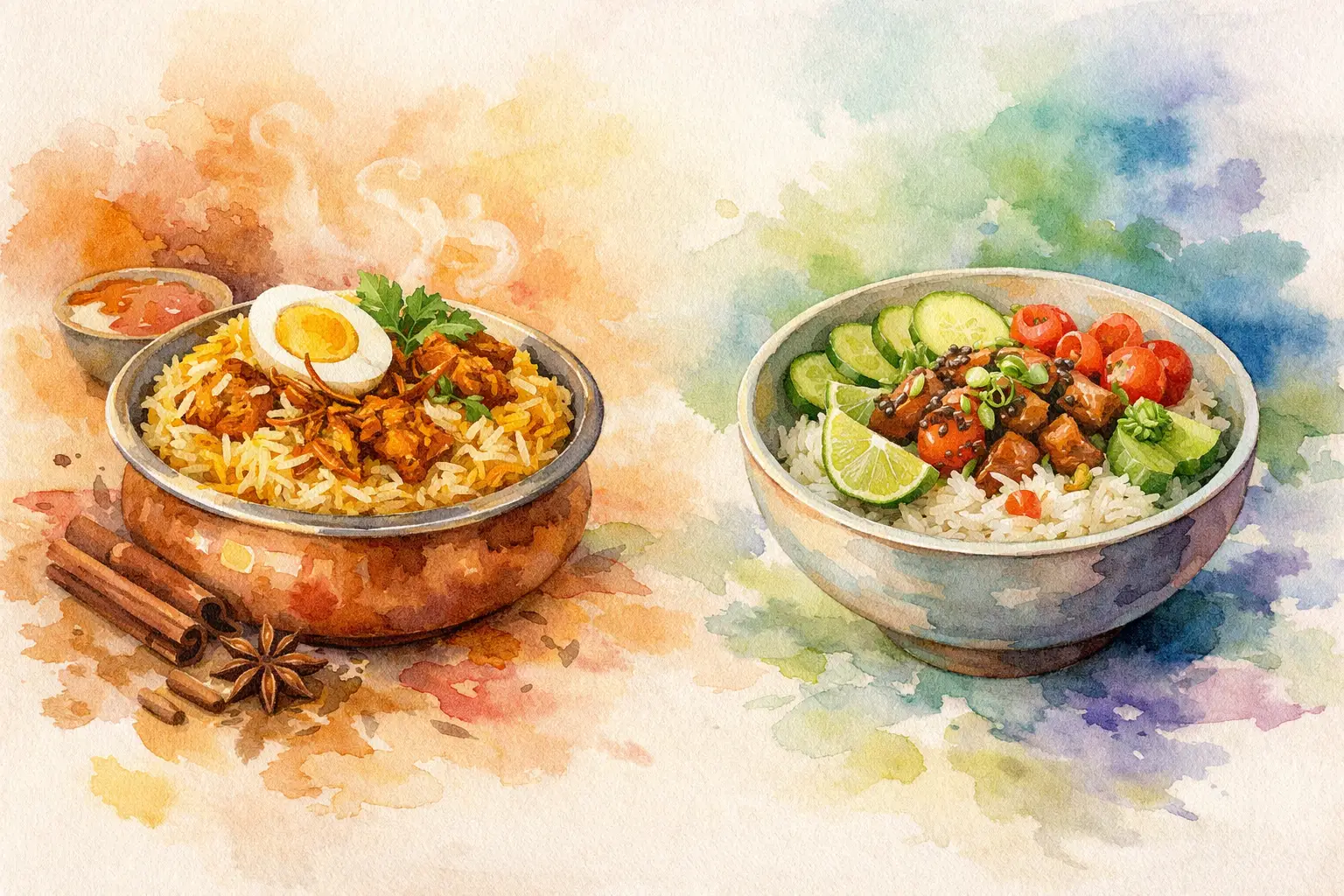
At a glance, biryani and rice bowls can look similar because they both arrive built around rice, protein or vegetables, and bold seasoning. The difference starts with how the dish is composed.
A biryani is cooked as a complete dish with layers of fragrant rice, spices, herbs, and typically a protein or vegetables. The flavor develops from the way everything comes together during cooking, not from toppings added at the end. Good biryani has depth in every spoonful. You taste the basmati, the aromatics, the heat, and the richness all at once.
A rice bowl is more modular. It usually starts with a bed of rice and builds upward with a main, vegetables, sauces, herbs, or fresh garnishes. That makes it more adaptable. You can go hearty with grilled chicken and spiced sauce, or keep it fresh with lentils, salad, and a lighter finish. It often feels more structured and easier to customize around appetite, dietary needs, or the kind of meal you want after a long day.
When biryani is the right dinner
There is a reason biryani has such loyal fans. It is not just rice with flavor added. It is a full meal with its own rhythm and character. When made properly, the rice stays separate and aromatic, the spices are warm rather than muddy, and the protein or vegetables carry the same depth as the grains around them.
Biryani is often the better choice when you want dinner to feel generous. It suits evenings when you are hungry, sharing food, or looking for something that feels a little more special than a standard weeknight order. It has presence. Even when served simply, it feels complete.
That said, biryani is not always the lighter option. Because it is built through layering and slow flavor development, it can naturally feel richer and more intense than a bowl assembled with grilled items and fresh components. If you love that comfort, it is a strength. If you want something cleaner and more restrained, a rice bowl may suit you better.
Flavor and texture in biryani
The best part of biryani is the contrast. The rice is fluffy but seasoned. The spices are assertive but balanced. You may get tenderness from marinated chicken, lamb with deeper savoriness, or vegetables that have absorbed the masala without becoming heavy. Fried onions, mint, saffron notes, or yogurt on the side can add even more dimension.
It is a dish for people who want every bite to feel cohesive. You are not building the meal as you go. The kitchen has already done that work for you.
When a rice bowl dinner makes more sense
A rice bowl works beautifully when flexibility is the priority. Maybe one person wants grilled chicken, another wants a vegan option, and someone else is trying to keep dinner satisfying without feeling overly full afterward. A bowl format makes that easier.
Rice bowls also suit busy routines. They tend to feel neat, balanced, and straightforward to eat, whether you are dining in, taking food back to the office, or settling in at home with something dependable. For many people, that makes a rice bowl dinner a smart middle ground between comfort food and a more health-conscious meal.
This is especially true when the bowl is built with care. Fresh herbs, well-cooked rice, thoughtfully spiced protein, and crisp vegetables can create just as much satisfaction as a heavier dish. The difference is in the balance. A bowl can feel energized rather than indulgent.
Why rice bowls appeal to lighter eaters
Not everyone wants dinner to arrive with maximum richness. Sometimes you want clean flavors, visible ingredients, and the sense that each component has a purpose. Rice bowls deliver that well. They leave more room for freshness and texture, from crunchy vegetables to cooling yogurt or bright chutneys.
They are also easier to adjust for dietary preferences. Vegetarian, vegan, gluten-free, and high-protein choices often fit naturally into the bowl format without making the meal feel like a compromise.
Biryani or rice bowl dinner for different occasions
This is where the choice becomes practical.
For a cozy Friday night, biryani often wins. It brings warmth and a sense of occasion, especially if dinner is meant to be the centerpiece of the evening. For date night at home, it has that little extra drama. The aroma alone does a lot of the work.
For a quick midweek dinner, a rice bowl may be the better fit. It is easier to keep the meal focused, balanced, and tailored to your appetite. If you are eating earlier than usual, planning to get back to work, or simply want something filling without feeling slowed down, the bowl format has an advantage.
For group ordering, it depends on the table. If everyone wants one standout dish with broad appeal, biryani is a strong choice. If the group has mixed tastes and dietary needs, rice bowls are usually more forgiving.
Which is better for a health-conscious dinner?
There is no universal answer here, and that is worth saying clearly. Biryani is not automatically heavy, and rice bowls are not automatically light. The result depends on ingredients, cooking style, and portion balance.
A well-made biryani can be surprisingly balanced when the rice is properly cooked, the spices are handled with care, and the dish avoids unnecessary grease. At the same time, a rice bowl can become quite rich if it relies too heavily on creamy sauces or oversized portions.
What health-conscious diners often care about is how the food feels after eating. Does it satisfy without weighing you down? Does it taste fresh? Is the protein well cooked rather than buried in oil? That is where quality matters more than labels.
At a modern Indian kitchen that focuses on freshness and made-to-order cooking, both formats can work beautifully. You might choose biryani for its complete, spice-led comfort, or a rice bowl for its cleaner structure and easy customization. The better question is not which one sounds healthier on paper. It is which one is cooked with more care.
How to choose based on what you are craving
If you are craving aroma, warmth, and a dinner that feels deeply rooted in tradition, go for biryani. It is ideal when you want layered spice and a dish that tastes composed from the first bite to the last.
If you are craving freshness, contrast, and something that feels a bit more personalized, go for a rice bowl. It is ideal when you want room for greens, grilled elements, or a clearer separation of textures and flavors.
If you are stuck between the two, think about pace. Biryani invites you to settle in. A rice bowl is easier to fit around the rest of your night.
Why quality matters more than format
A forgettable biryani is just seasoned rice. A forgettable rice bowl is just assembly. What turns either one into a dinner worth ordering again is ingredient quality, spice control, and consistency.
That is why local diners looking for Indian food in Putney, Roehampton, Barnes, or nearby neighborhoods often care less about the category and more about who is cooking it. A refined kitchen that respects traditional recipes while keeping the food fresh and balanced will make both dishes more compelling. Cilantro London has built that trust by serving Indian food that feels authentic, polished, and lighter than the usual takeaway expectation.
So if you are weighing a biryani or rice bowl dinner tonight, choose the one that matches the kind of comfort you want. Some evenings call for rich, aromatic layers. Others call for a cleaner, more flexible plate. The good news is that when the food is made with care, you do not have to choose between flavor and feeling good afterward.