A memorable Indian meal is rarely built around one dish alone. The best vegan Indian sides bring contrast to the table: something crisp beside a slow-cooked curry, something bright beside warming spices, and something comforting to scoop up every last spoonful of sauce. For vegan diners, the choice is wonderfully generous, but it pays to know which dishes are naturally plant-based and which traditional recipes may contain ghee, yogurt, cream, or paneer.
At their best, vegan sides make an Indian meal feel abundant without becoming heavy. They add texture, freshness, and variety, whether you are putting together a relaxed takeaway dinner in Putney or planning a larger table for family and friends.
The Best Vegan Indian Sides for Balance and Flavor
1. Vegetable Samosas
A good vegetable samosa earns its place at almost any table. The pastry should be crisp and light, while the filling brings softly spiced potato, peas, and fragrant aromatics. Served with tamarind chutney or a fresh mint chutney, it offers the sweet, tangy, spicy contrast that gets a meal off to a lively start.
Samosas are satisfying, so they work best as a shared starter rather than an extra side alongside several rich dishes. If the rest of your order includes dal, vegetables, rice, and bread, one portion to share is often plenty.
2. Onion Bhajis
Onion bhajis are a classic choice for anyone who loves a little crunch. Thinly sliced onions are coated in seasoned chickpea flour and fried until golden, creating crisp edges with a tender, sweet center. Chickpea flour is naturally gluten-free, though cross-contact in the kitchen can matter for diners with allergies.
Because bhajis are fried, pair them with a lighter main or a cooling salad-style side. Their savory warmth is especially good with tomato-based curries and sharp chutneys.
3. Aloo Gobi
Aloo gobi is proof that simple vegetables can carry serious character. Potatoes and cauliflower are cooked with turmeric, cumin, ginger, and other spices until tender but not overly soft. The result is earthy, aromatic, and deeply comforting without needing dairy.
This is one of the most versatile vegan Indian sides because it can sit next to almost anything. Choose it with a lentil curry for a nourishing all-plant-based meal, or add it to a tandoori vegetable spread when you want more substance than a salad can offer.
4. Saag Aloo
Spinach and potato make a quietly excellent combination. Saag aloo brings the mineral richness of leafy greens together with soft, filling potato, often lifted by garlic, ginger, and warming spices. It is a smart option when you want your table to feel more balanced, especially if you have already chosen crisp starters or a rich chickpea curry.
Recipes vary. Some restaurant versions use ghee, butter, or cream for added richness, so vegan diners should always ask how the dish is prepared. A properly vegan version can be just as satisfying when the spices and fresh greens are given the attention they deserve.
5. Bombay Potatoes
Bombay potatoes are bolder and brighter than plain roasted potatoes. They are typically tossed with mustard seeds, turmeric, chili, and fresh herbs, creating a side with a lightly crisp exterior and a warmly spiced center. They bring immediate comfort to the plate, yet their citrusy or tomato-led seasoning can keep them from feeling too rich.
They are especially good for sharing with rice, dal, and a fresh salad. If you are choosing only one potato side, Bombay potatoes are ideal when you want more spice and a little more punch than aloo gobi.
6. Chana Masala
Chana masala can be a side or a main, depending on how hungry everyone is. Chickpeas are simmered in a tangy tomato, onion, and spice sauce, often with amchur or lemon adding a distinctive sharpness. It is hearty, high in plant protein, and full of flavor without relying on cream.
For a smaller meal, chana masala paired with rice and a vegetable side is enough on its own. For a fuller feast, serve it in a smaller portion beside a lighter vegetable dish and fresh chutney. The key is variety: chickpeas, potatoes, and bread all taste wonderful together, but they can make a meal feel overly starchy if there is no green or acidic counterpoint.
7. Tarka Dal
Few dishes feel as comforting as a bowl of dal. Lentils are gently cooked until creamy, then finished with a fragrant tempering of spices, garlic, and sometimes chili. It is warming, satisfying, and one of the most reliable ways to add depth to a vegan Indian meal.
The detail to check is the tempering fat. Traditional tarka may be made with ghee, while a vegan version uses oil. When prepared with care, the difference is not about compromise. The toasted spices, lentils, and garlic do the real work, creating a dish that feels both wholesome and generous.
8. Mushroom Bhaji
Mushroom bhaji is a strong choice for diners looking for a savory, less starchy vegetable side. Mushrooms soak up spice beautifully and develop a rich, almost meaty character when cooked with onions, tomatoes, garlic, and coriander. It has enough depth to stand alongside a simple dal or steamed rice without getting lost.
This side is particularly useful when sharing with guests who have different preferences. It brings a familiar ingredient to the table while still delivering the layered flavor expected from a well-made Indian dish.
9. Okra Bhaji
Okra bhaji deserves more attention than it gets. When cooked properly, okra becomes tender with lightly crisp edges, carrying cumin, coriander, chili, and a touch of acidity beautifully. It has a distinctive texture, so it may not suit every first-time diner, but fans of vegetable-forward Indian cooking often seek it out.
Order it when you want something fresher and lighter beside richer choices such as chana masala or vegetable biryani. Its gentle bitterness and spice bring welcome contrast.
10. Vegetable Biryani
Although it is substantial enough to be a main, vegetable biryani can be shared as a centerpiece side for a group. Fragrant basmati rice is layered with vegetables, herbs, and whole spices, giving every spoonful aroma and color. It is more celebratory than plain rice and makes an excellent choice for a vegan-friendly gathering.
Biryani preparation differs from kitchen to kitchen. Some versions are finished with ghee or served with raita, so confirm that the rice itself is vegan. Once that is covered, add a saucy dal or chickpea dish rather than another dry vegetable side, and let the biryani provide the fragrant foundation.
11. Steamed Basmati Rice
Never underestimate plain basmati rice. Its delicate aroma and separate, fluffy grains give spicy curries room to shine. It is the practical choice when your order already includes several boldly seasoned dishes, because it absorbs sauces without competing for attention.
Rice is also naturally vegan and usually gluten-free, making it a dependable table-filler for mixed dietary needs. A portion of basmati alongside tarka dal and a vegetable curry can be every bit as complete as a more elaborate feast.
12. Roti and Fresh Chutneys
Roti can be the perfect final addition, provided it is made without ghee or dairy. This whole-wheat flatbread is lighter than many restaurant breads and ideal for scooping up dal, chana masala, or the last bites of a vegetable curry. Naan is not always vegan because it may contain yogurt, milk, butter, or ghee, so it is worth asking rather than assuming.
Chutneys are small but essential. Mint and cilantro chutney offers green, herbal freshness; tamarind brings a dark, sweet-sour tang; and chili chutney adds clean heat. A spoonful can wake up fried starters, cut through potatoes, and make a simple rice-and-dal meal feel more complete.
How to Build a Vegan Indian Order That Feels Complete
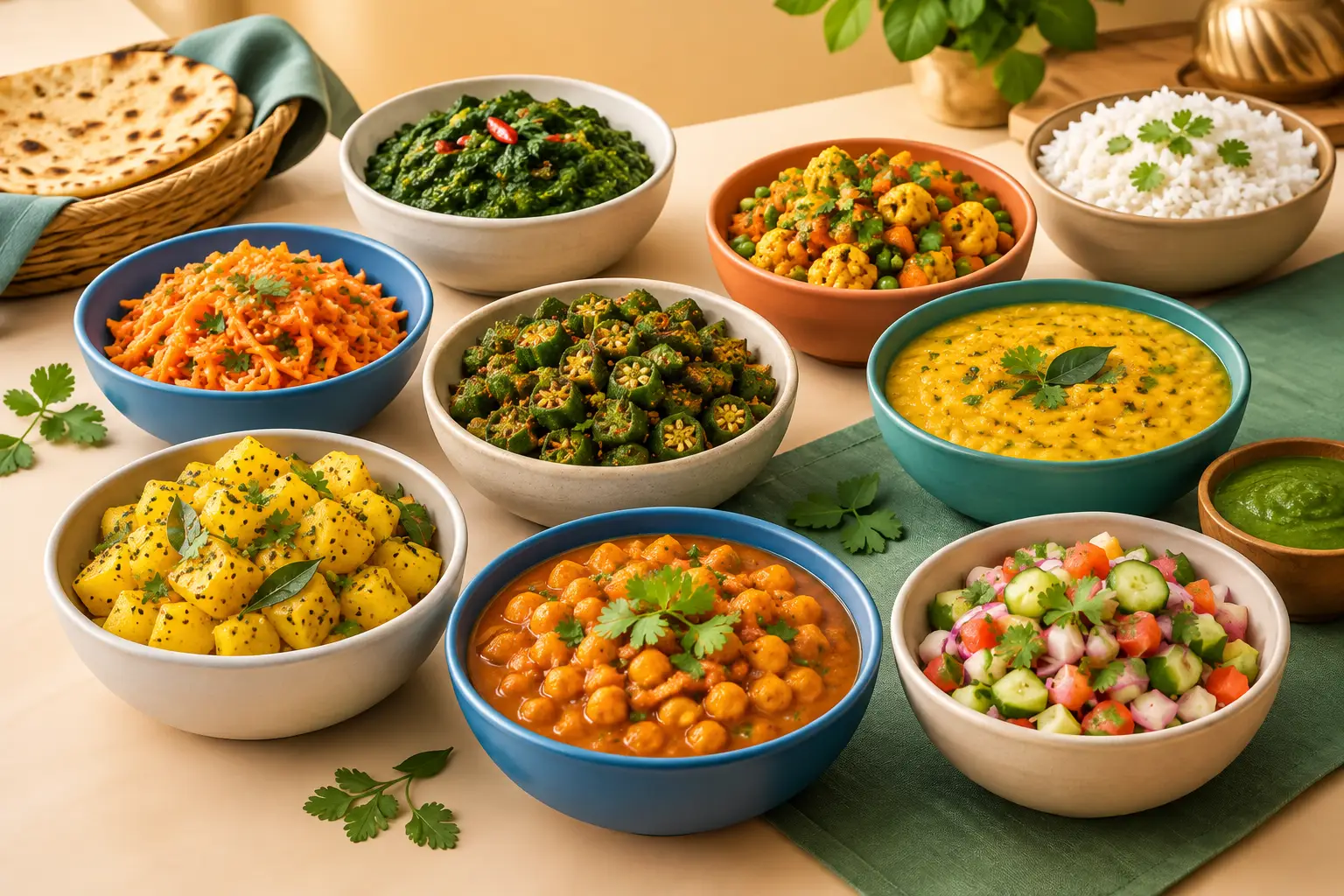
The most satisfying approach is to choose one crisp item, one hearty dish, one vegetable-forward side, and one base. For example, onion bhajis, tarka dal, saag aloo, and basmati rice create a comforting meal with plenty of contrast. For a more colorful spread, pair vegetable samosas with chana masala, okra bhaji, roti, and chutneys.
Be clear about vegan preparation when ordering. Dairy can appear in places that seem unexpected, including cooking fats, breads, sauces, and garnishes. A thoughtful restaurant will be happy to guide you toward dishes that suit your needs without losing the character of the cuisine. At Cilantro London, fresh preparation and balanced seasoning make it easier to enjoy authentic Indian flavors with confidence.
For your next shared meal, choose sides with different textures and temperatures, then leave room for a chutney that makes every bite feel newly made.