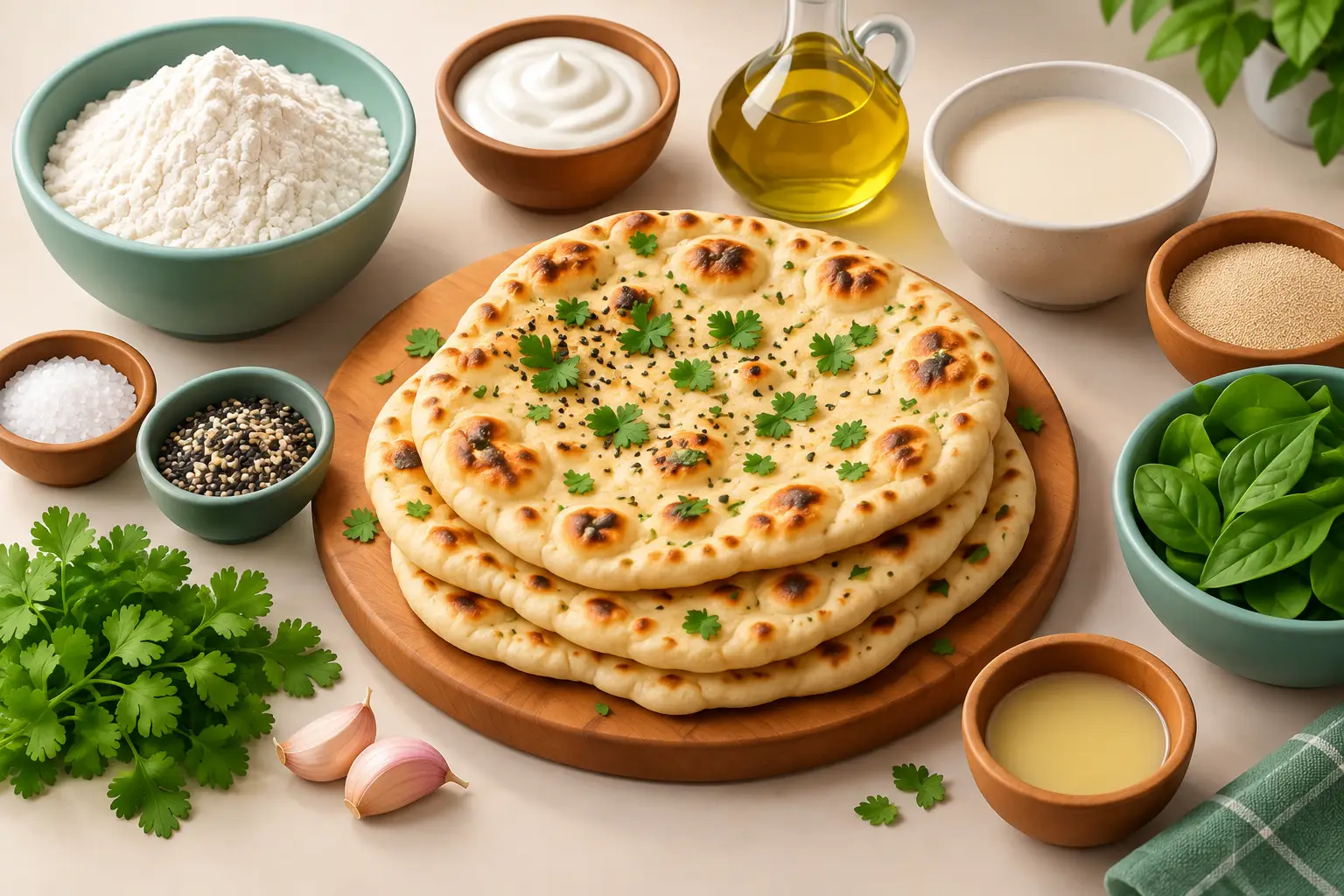
A warm naan should arrive soft enough to tear with your hands, lightly blistered from the oven, and fragrant before it ever reaches a curry. For vegan diners, though, that familiar basket can be less straightforward than it looks. Traditional naan often contains yogurt, milk, butter, or ghee, which makes understanding vegan naan ingredients essential when you want authentic Indian flavor without animal products.
The good news is that vegan naan does not need to feel like a compromise. With the right dough, careful proofing, and a hot oven or tandoor, it can be tender, chewy, and beautifully charred. The difference lies in how each ingredient is chosen and how the bread is finished.
What Makes Vegan Naan Ingredients Different?
Classic naan is an enriched flatbread. Flour provides structure, yeast gives the dough its gentle lift, and dairy traditionally adds softness, richness, and a slight tang. A thoughtful vegan version replaces those dairy elements while protecting the qualities people love most: a pillowy center, a little chew around the edges, and enough flavor to stand beside a richly spiced main.
Not every plant-based substitution works equally well. A dough made only with flour and water can be pleasant, but it may eat more like a simple flatbread than naan. A small amount of plant-based yogurt or a suitable nondairy milk brings moisture and tenderness, while oil keeps the finished bread supple rather than dry.
The best results come from balance, not from adding every possible substitute. Too much oil can make naan heavy. Too much plant-based yogurt can make the dough slack or introduce a flavor that distracts from the meal. The aim is a clean, warm bread with enough character to complement dal, chickpea curry, tandoori vegetables, or a bright, herb-led dish.
Flour Gives Naan Its Structure
Most vegan naan begins with white wheat flour, often all-purpose or bread flour. All-purpose flour creates a softer, more tender result, while bread flour has more protein and produces a slightly chewier texture. Many kitchens use a blend to get both qualities.
Whole-wheat flour can be included for a nuttier taste and more fiber, but it changes the result. It absorbs more liquid and can make the bread denser if it replaces all of the white flour. For diners looking for a lighter naan, a partial whole-wheat blend is usually more satisfying than an entirely whole-wheat dough.
For a gluten-free version, the approach needs to change rather than simply swapping the flour. Gluten is what allows traditional naan dough to stretch and puff. Gluten-free blends can make good flatbreads, especially with psyllium husk or other binders, but their texture is typically more delicate and less chewy.
Yeast, Water, and a Little Sweetness Build the Crumb
Yeast is responsible for the gentle rise that distinguishes naan from many unleavened Indian breads. When it has time to work, it creates small air pockets and a soft interior. Warm water activates the yeast, while a modest amount of sugar can support fermentation and encourage browning.
Some recipes use baking powder or baking soda alongside yeast, particularly when a quicker rise is needed. This can produce a softer, more cake-like bread, but too much chemical leavening can leave an unpleasant aftertaste. A well-proofed yeast dough generally has a more rounded flavor and a more satisfying pull when torn.
Salt matters just as much as the more noticeable ingredients. It sharpens the flavor of the dough and keeps the bread from tasting flat beside a well-seasoned curry. Even a simple vegan naan should not be bland.
Plant-Based Yogurt Replaces the Traditional Tang
Plain, unsweetened plant-based yogurt is one of the most useful vegan naan ingredients. It adds moisture, mild acidity, and a tender texture similar to dairy yogurt. Soy yogurt is often neutral and dependable in dough, while coconut yogurt can add richness but may leave a faint coconut note. Oat-based varieties can work well, provided they are unsweetened and not overly thin.
The label matters. A flavored or sweetened yogurt will alter the dough, and very thick varieties may need a little extra water. In a restaurant kitchen, consistency is key: the same dough should produce the same soft naan whether it is served at a table or packed carefully for a takeaway meal.
Nondairy milk can be used instead of yogurt, though it provides less tang. Unsweetened soy or oat milk tends to be more neutral than strongly flavored alternatives. For many recipes, a combination of water and plant yogurt delivers the most balanced result.
Oil Takes the Place of Butter and Ghee
Oil provides the richness traditionally associated with ghee or butter. Neutral oils, such as sunflower or canola oil, let the bread’s toasted flavor come through. Olive oil can work, but its flavor is more pronounced and may not suit every Indian meal.
The finishing step deserves just as much attention as the dough. Naan is often brushed after cooking to add sheen and flavor. For a vegan finish, use oil or a plant-based butter that has been checked for dairy-free ingredients. A sprinkle of flaky salt, fresh cilantro, or minced garlic can make that final brush feel generous without turning the bread greasy.
Vegan Naan Ingredients to Watch for on Menus
A naan described as vegetarian is not necessarily vegan. Dairy is common in both the dough and the finishing butter, and the most visible toppings do not always tell the full story. When ordering, it is worth asking how the naan is made rather than relying on its name alone.
Look out for these frequent sources of dairy:
- Yogurt or milk mixed into the dough for softness and flavor.
- Ghee or butter brushed over the naan after it leaves the tandoor.
- Garlic butter used on garlic naan, even when the dough itself is dairy-free.
- Cheese-filled naan or toppings that may be prepared alongside the vegan option.
Cross-contact is another practical consideration. In a busy kitchen, a vegan naan may be cooked in the same oven as other breads, or brushed using tools that have touched ghee. For many diners, shared cooking equipment is acceptable; for others, it is not. Clear communication allows the kitchen to guide you honestly and take appropriate care.
Flavor Still Comes From Heat, Fermentation, and Fresh Herbs
Naan does not need dairy to taste full-bodied. Much of its appeal comes from high heat. A tandoor creates quick blisters, light charring, and a smoky edge that cannot be replicated by richness alone. A very hot skillet or oven can also produce excellent results when a tandoor is not available.
Garlic, cilantro, nigella seeds, and green chili are all naturally vegan ways to add interest. Garlic naan can be made with fresh garlic warmed gently in oil, then finished with chopped cilantro. Nigella seeds bring a toasted, onion-like note that pairs especially well with lentil dishes and vegetable curries. Green chili adds brightness and heat, though it is best used with restraint so it does not overpower the bread.
There is also a case for serving plain vegan naan. With a deeply spiced curry, biryani, or a sauce with layers of tomato, ginger, and toasted spices, plain bread gives the meal room to breathe. More toppings are not always better.
A Lighter Choice Depends on the Whole Meal
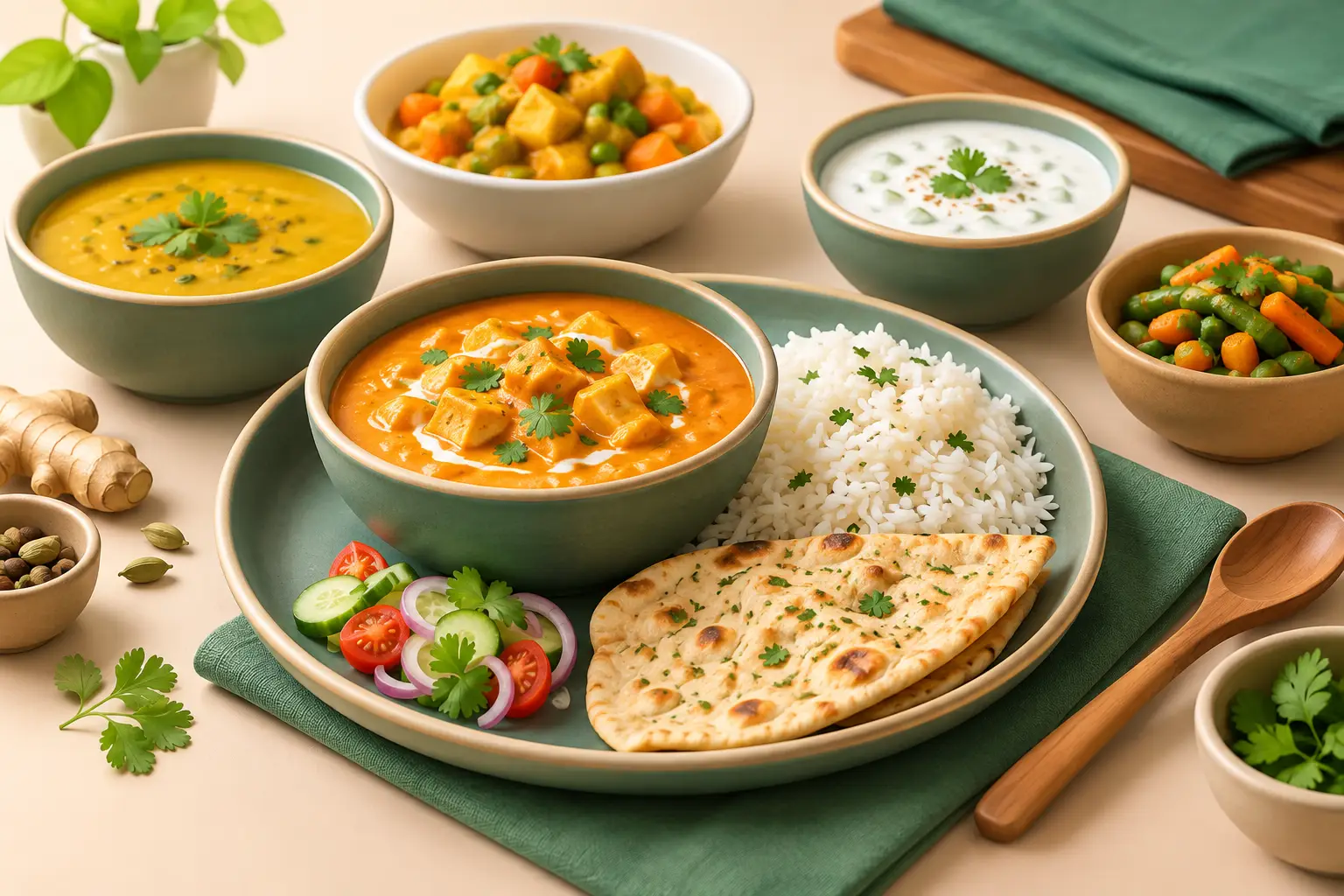
Vegan naan can fit comfortably into a fresh, balanced Indian meal, but “vegan” does not automatically mean light. Portion size, the amount of oil used, and what you pair it with all matter. A warm naan alongside a vegetable-based curry, salad, or dal can be satisfying without feeling overly rich.
For a lighter experience, choose naan that is freshly cooked and simply finished rather than heavily coated in oil or plant-based butter. Share a basket if you are ordering several dishes, especially when rice is also on the table. If you want the naan to be the centerpiece, pair it with a bright chickpea dish or tandoori vegetables instead of another starch.
Fresh preparation makes a real difference. Naan is at its best moments after cooking, when the outside is lightly crisp and the center is still steamy. During delivery, it should be packed in a way that protects its warmth without trapping so much steam that the bread turns damp.
Ordering Vegan Naan With Confidence
The simplest question is also the most useful: does the dough contain dairy, and is the naan finished with ghee or butter? If you are avoiding all animal products, ask whether the kitchen can use oil for the finish and whether a vegan preparation is available.
A good Indian restaurant will welcome the question and explain the options clearly. That care lets you enjoy the familiar comfort of naan with the confidence that every ingredient suits your table. Whether you are planning a relaxed dinner in Putney or choosing a takeaway to share at home, the right vegan naan should feel generous, fresh, and made to be scooped, torn, and enjoyed while it is still warm.