
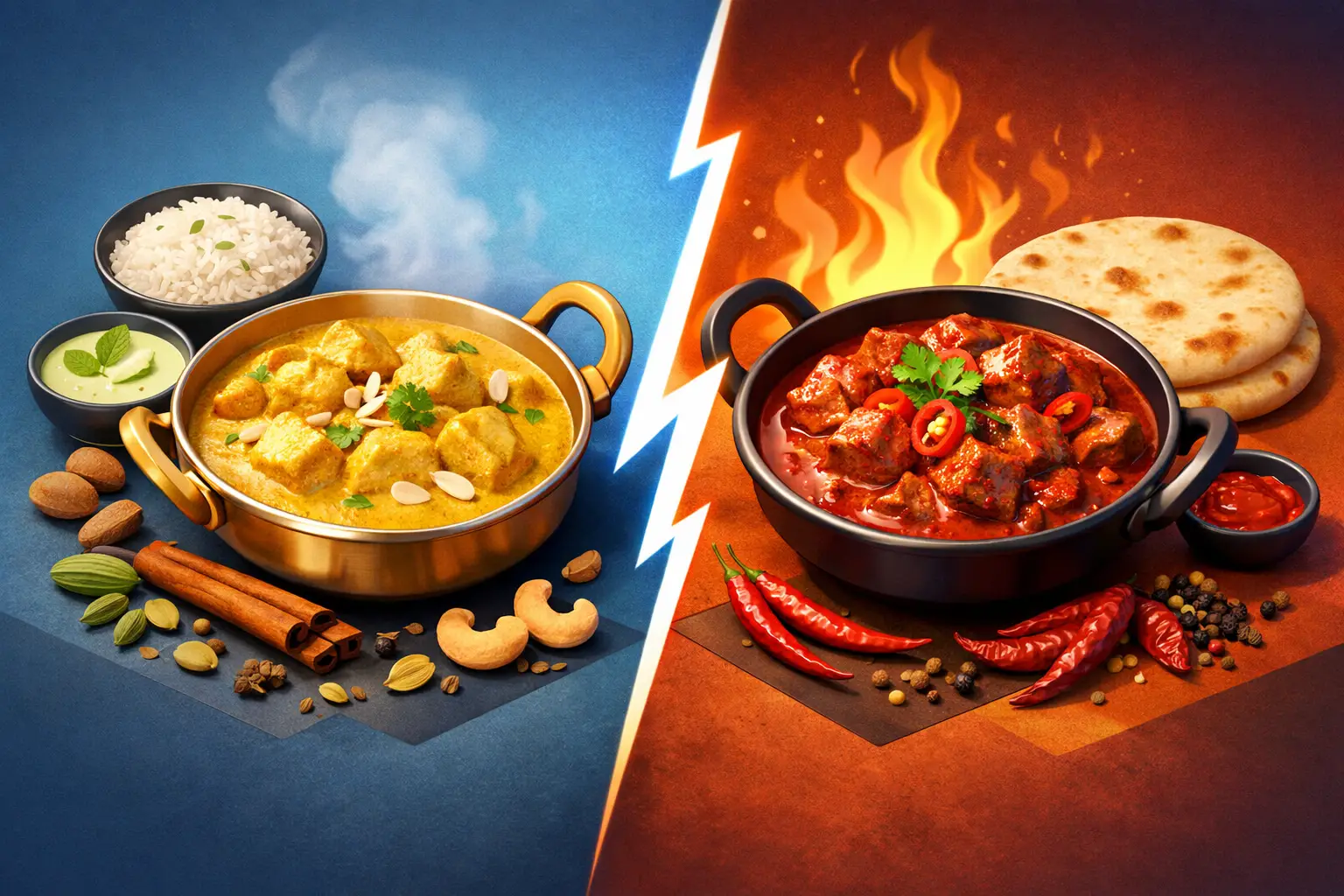
A curry menu can make two familiar names seem deceptively simple. In the korma versus vindaloo decision, though, you are choosing between two very different expressions of Indian cooking: one built around gentle richness and aromatic spice, the other around vinegar-led brightness, garlic, and assertive heat. Neither is simply “mild” or “hot.” The best choice depends on the flavors you want on the table and how you like a dish to feel from the first bite to the last.
Korma versus vindaloo at a glance
Korma is typically creamy, fragrant, and rounded. Vindaloo is usually tangy, savory, and hotter, with a sharper finish. Korma often lets nuts, dairy, or coconut soften the spices; vindaloo uses vinegar and a bold spice paste to create lift and intensity.
That contrast also affects what each curry does alongside rice, naan, and side dishes. A korma brings comfort and softness to a shared meal. A vindaloo can cut through richer foods and wake up the palate. Both have depth when they are prepared with care, toasted spices, and a sauce made to order rather than rushed into one generic base.
What makes a korma so comforting?
Korma has roots in the royal Mughal cooking traditions of the Indian subcontinent. The word is associated with braising, and a thoughtful korma is all about patient cooking. Meat or vegetables are gently simmered so the sauce carries spice without becoming aggressive.
The exact recipe varies by region, chef, and household. A korma may use yogurt, cream, ground cashews, almonds, coconut, or a combination of these ingredients. Fried onions often add sweetness and body, while cardamom, cinnamon, cloves, coriander, and cumin create a warm, perfumed background. The result should not taste like plain cream. It should taste layered, lightly sweet in places, savory at its core, and fragrant with whole spices.
Chicken korma is a natural first choice for diners who prefer tender meat and a mellow sauce, while lamb korma offers more savory depth. Paneer or vegetables work beautifully as well, especially when the sauce is balanced enough to let their texture come through. At Cilantro London, this kind of balance matters: richness should feel satisfying, not heavy or greasy.
Is korma always mild?
Most kormas are mild to medium in heat, but mild does not mean flavorless. A well-made korma has plenty of spice character, just without a strong chili burn. It is a good choice when you are sharing with children, ordering for a group with different heat preferences, or pairing several dishes together.
Still, recipes differ. Some versions bring more black pepper, green chili, or warming spice than diners expect. If you enjoy spice but want a creamy sauce, asking for a medium korma can be a better move than assuming every korma is completely gentle.
What gives vindaloo its signature tang?
Vindaloo comes from Goa, on India’s west coast, and its history reflects a meeting of Portuguese and Indian culinary traditions. It developed from a Portuguese preparation known as carne de vinha d’alhos, meaning meat marinated with wine and garlic. In Goa, local cooks adapted the idea with vinegar, garlic, chilies, and Indian spices, creating a curry with a distinctly sharp, savory identity.
A proper vindaloo is not just a red-hot curry. Vinegar is essential because it gives the dish its characteristic tang and helps balance its heat. Garlic is equally important, while cumin, mustard, turmeric, ginger, and chili may appear in the spice paste. The sauce should be lively and concentrated, with a slow-building warmth rather than heat for heat’s sake.
Pork is the traditional Goan choice, although chicken, lamb, beef, shrimp, and vegetables are widely used in modern restaurant menus. The protein takes on the flavors of the marinade, making vindaloo especially appealing to diners who enjoy bolder, more acidic curries.
How hot is vindaloo, really?
Vindaloo has a reputation as one of the hottest dishes on a British Indian menu, and it can certainly be fiery. But the heat level is not fixed. One kitchen may prepare a medium-hot vindaloo that highlights vinegar and spice, while another may make it intensely hot with several varieties of chili.
Heat should support the flavor, not erase it. If you love chili but still want to taste the garlic, toasted spices, and tangy sauce, choose a heat level that lets those details remain clear. If you are new to vindaloo, pairing it with plain basmati rice and a cooling side can make the experience much more enjoyable.
Creamy or tangy: choosing the right curry
Choose korma when you want a silky, aromatic curry with gentle warmth. It is particularly good for a relaxed dinner, a family meal, or a spread that already includes a spicy starter or tandoori dish. Its richness makes it feel special, though those avoiding dairy or nuts should always check the preparation first.
Choose vindaloo when you want brightness, chili heat, and a more direct savory punch. Its vinegar-forward profile is a great fit for diners who find creamy curries too soft or who enjoy a curry that lingers with spice. Vindaloo can be lighter in texture than korma because it does not depend on a nutty or creamy sauce, but the overall meal still depends on the protein, cooking fat, and portion size.
There is also no rule that says everyone at the table must choose the same intensity. A korma and a vindaloo make an excellent shared order: the korma provides a mellow contrast, and the vindaloo adds edge. Spoon each over rice separately at first, then try a small mix if you enjoy discovering how creamy and tangy flavors work together.
The best sides for each dish
Korma benefits from sides that either carry its sauce or add freshness. Plain basmati rice is ideal when you want the aromatic sauce to lead. A simple naan is equally welcome for scooping up every last spoonful, while a crisp salad or lightly spiced vegetable side can prevent the meal from feeling too rich.
Vindaloo calls for something that calms and absorbs. Steamed basmati rice is often the best partner because it softens the heat without competing with the vinegar and garlic. Naan can work too, especially for diners who enjoy a heartier meal, but avoid piling on too many heavily spiced sides if you want the vindaloo’s flavor to stay distinct. Yogurt-based accompaniments can offer welcome relief, provided they suit your dietary needs.
For a balanced takeaway in Putney or a sit-down meal with friends, consider the whole table rather than one curry in isolation. A tandoori starter, a vegetable dish, one mild curry, and one hotter option give everyone room to eat at their own pace.
Dietary and ingredient considerations
Korma is often the dish that requires the closest attention for diners with nut or dairy allergies. Cashews, almonds, yogurt, cream, ghee, and coconut can all appear, and recipes are not interchangeable. A vegan korma may use coconut milk or a carefully prepared nut-free alternative, but it should never be assumed vegan or allergen-free without confirmation.
Vindaloo may be naturally free from cream, yet that does not automatically make it suitable for every diet. The protein, stock, cooking fat, and any accompanying dishes all matter. Vegetable and plant-based versions can be full of character, especially when the vinegar, garlic, and spice paste are given time to develop. For gluten-free diners, the curry itself may be suitable, but cross-contact and sides should be checked with the restaurant.
A more satisfying way to order
The korma versus vindaloo question is less about bravery and more about mood. Order korma when you want warmth, fragrance, and a velvety sauce. Order vindaloo when you want tang, garlic, and a confident chili kick. If you cannot decide, make the meal more interesting: choose one for comfort, one for contrast, and let a bowl of rice bring the two together.

