A cashew-rich korma can look much like a creamy curry made with yogurt, and ground almonds may be stirred so smoothly into a sauce that they are impossible to spot. That is why knowing which Indian dishes contain nuts matters, particularly for guests with a nut allergy or anyone ordering for a group. Indian food offers extraordinary variety, but ingredients and preparation can differ by region, chef, and restaurant.
The reassuring part is that many familiar dishes are naturally nut-free by recipe. The essential step is not to make assumptions based on a dish name alone. Ask how the sauce is made, whether nuts are used as a garnish or thickener, and whether your meal can be prepared safely around other nut-containing dishes.
Which Indian Dishes Contain Nuts Most Often?
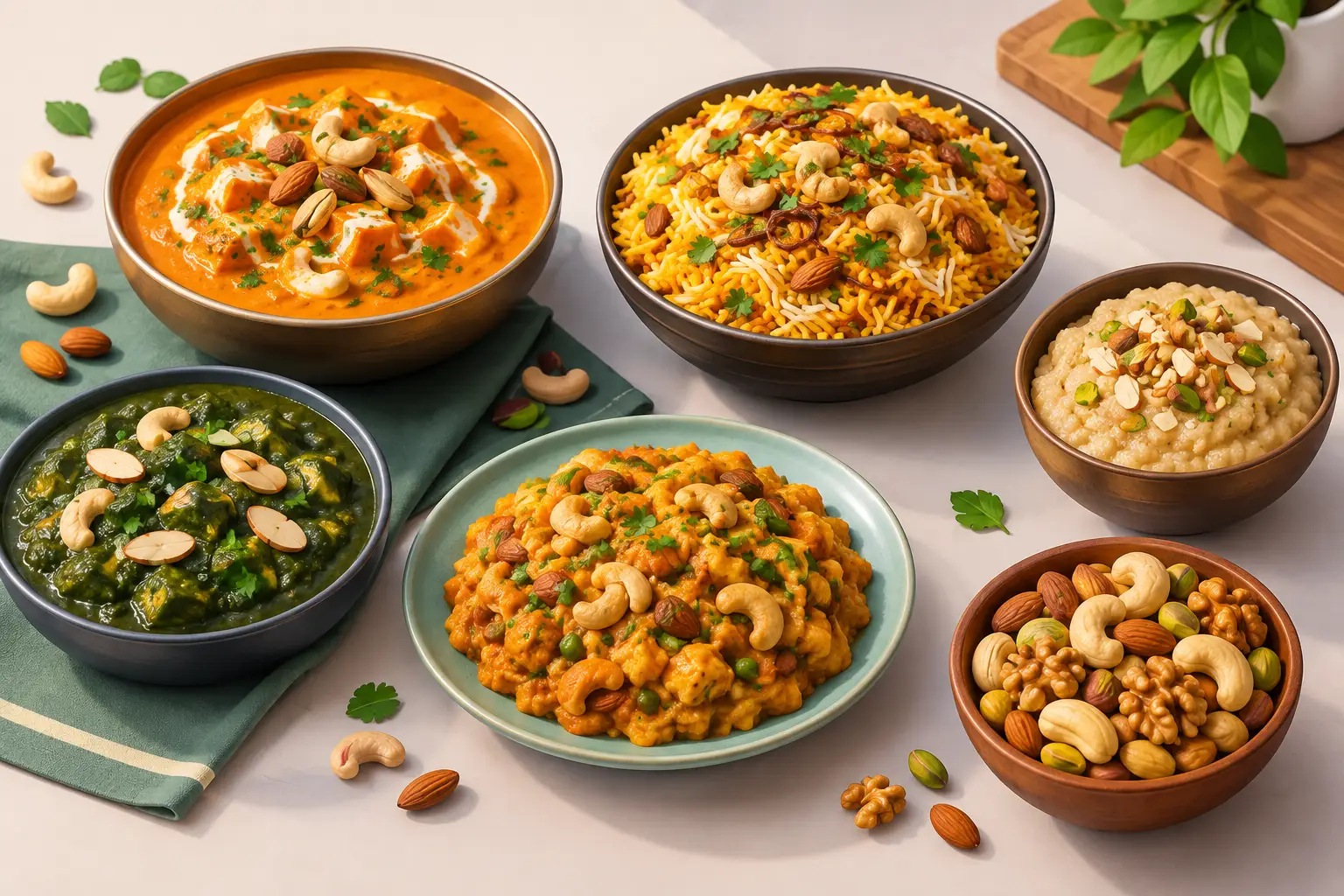
Nuts are most common in richer North Indian and Mughlai-style cooking, where they add body, gentle sweetness, and a luxurious texture. Cashews are especially popular because they blend into silky sauces. Almonds, pistachios, and, less often, walnuts may appear as a paste, slivers, or finishing garnish.
Korma and creamy Mughlai curries
Korma is one of the first dishes to check. Many versions use cashew paste, ground almonds, or both to create their signature mellow, velvety sauce. Chicken korma, lamb korma, vegetable korma, and navratan korma can all contain nuts, although some recipes rely on yogurt, cream, coconut, or seeds instead.
Other creamy Mughlai curries may follow a similar approach. Dishes described as shahi, meaning royal, or malai, meaning creamy, sometimes include cashew or almond paste. That does not mean every creamy curry contains nuts, but it is a sensible reason to ask before ordering.
Pasanda, navratan, and festive dishes
Pasanda often features tender meat in a rich sauce, frequently enriched with almonds or cashews. Navratan korma, traditionally made with a colorful mix of vegetables, fruit, and paneer, may contain cashews, almonds, or pistachios. Its name refers to nine jewels, so it is often designed as a celebratory, generously garnished dish.
Biryani and pulao can also include fried cashews, toasted almonds, or pistachios, especially in festive recipes. They may be mixed through the rice or scattered on top just before serving. A plain basmati rice or everyday vegetable pulao is less likely to contain nuts, but the recipe still decides the answer.
Indian sweets and desserts
Dessert is an obvious area for caution. Kheer, firni, kulfi, gajar ka halwa, and many milk-based sweets are commonly finished with pistachios or almonds. Some recipes include ground nuts in the mixture itself, while others use a visible garnish that may be omitted.
Barfi, ladoo, and other confectionery can be more difficult to assess because nuts may be central to the recipe. Kaju katli, for example, is a cashew sweet. Badam-based desserts use almonds, and mixed sweet boxes can carry a significant risk of cross-contact even when one piece appears nut-free.
Snacks, breads, and chutneys
Most everyday savory snacks do not automatically contain tree nuts, but there are exceptions. Cashews are sometimes added to rich stuffing, rice dishes, or special-occasion samosas. Almond flakes might appear on naan or as a garnish for a chef’s special.
Chutneys deserve a direct question. Coconut chutney is not made with tree nuts, despite the name, but recipes can vary and may be made near nut ingredients. Some regional chutneys use peanuts, which are legumes rather than tree nuts but are still a serious allergen for many people. Peanut chutney is particularly common in parts of South India.
Dishes That Are Often Nut-Free, With a Few Caveats
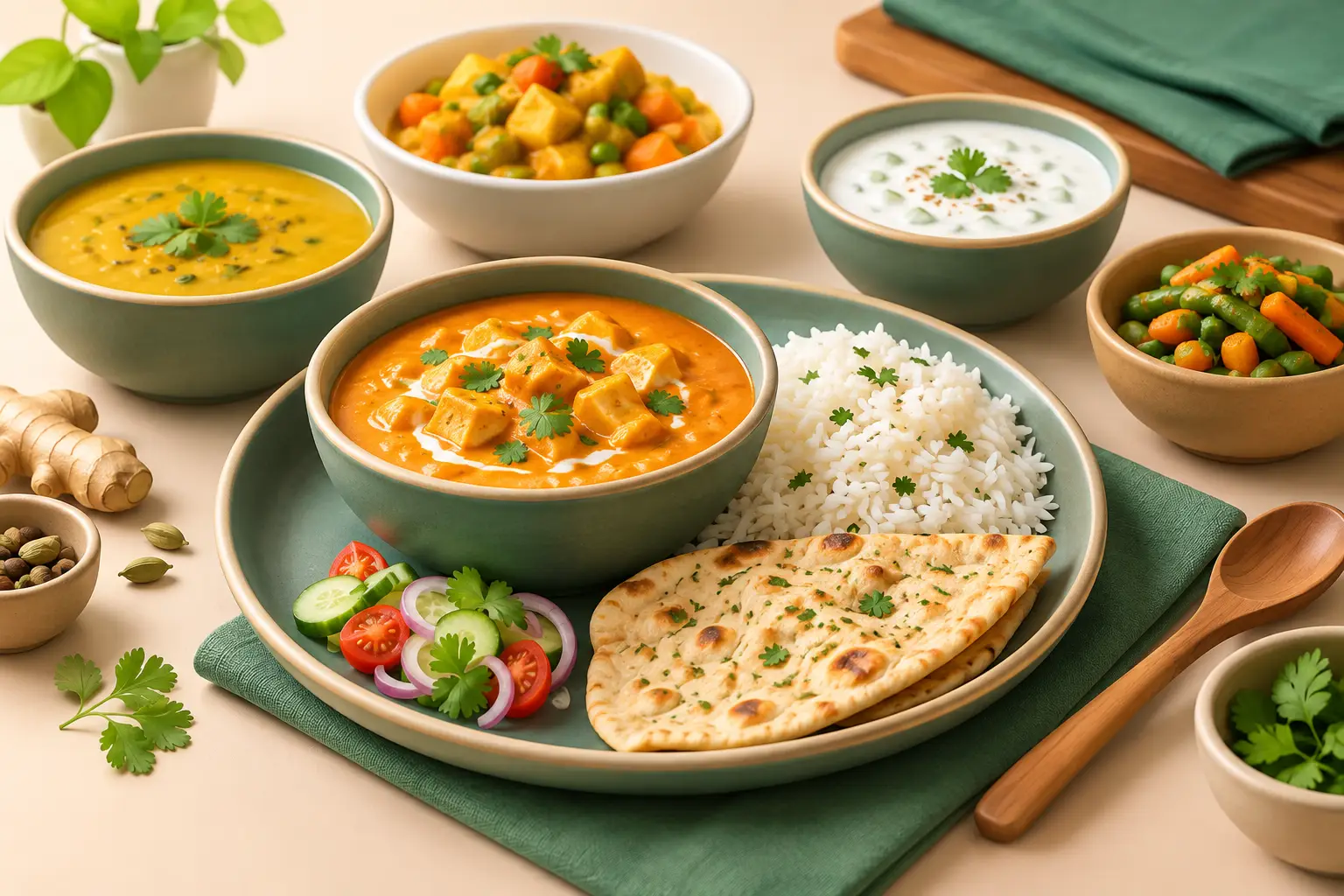
Many classic curries are usually built on onions, tomatoes, ginger, garlic, spices, and herbs rather than nuts. A tomato-forward chicken curry, lamb rogan josh, vindaloo, madras-style curry, or jalfrezi may be nut-free by its standard recipe. The same is often true of tandoori chicken, seekh kebabs, grilled paneer, and dry vegetable dishes such as aloo gobi or bhindi.
Still, “usually” is not a promise. A chef may add cashew paste to soften a sauce, finish a dish with almond flakes, or use a pre-prepared base sauce that contains nuts. Restaurant kitchens also handle ingredients side by side, which matters greatly for someone with a diagnosed allergy.
Dal dishes are commonly a good option because lentils, beans, tomatoes, onions, spices, and butter or ghee are their usual foundations. But dal makhani and other richer preparations should be checked for cream, dairy, and kitchen cross-contact as well as nuts. Dietary questions are best handled one ingredient at a time rather than by relying on broad labels such as “light” or “vegetarian.”
Why Nuts Appear in Indian Cooking
Nuts are not simply decorative. In many traditional recipes, they are used instead of flour or excess cream to thicken a sauce naturally. Cashews create a round, smooth finish; almonds add delicate richness; pistachios bring color and a slightly sweet flavor. In celebratory dishes, nuts also signal hospitality and abundance.
That range is part of what makes Indian cuisine so rewarding, but it explains why two versions of the same dish can be quite different. A home-style curry from one region may be entirely nut-free, while a restaurant version with the same name may use a cashew-based gravy. Neither is necessarily more authentic. They simply reflect different culinary traditions and house recipes.
How to Order Indian Food More Safely With a Nut Allergy
If you have an allergy, be clear and specific when you order. Saying “no nuts” is helpful, but saying whether you need to avoid cashews, almonds, pistachios, walnuts, peanuts, or all tree nuts gives the kitchen better information. Mention the severity of the allergy and ask whether cross-contact can be avoided.
The most useful questions are straightforward: Does the sauce contain cashews or almonds? Are nuts used in the rice, garnish, or marinade? Is peanut oil or peanut chutney used anywhere near this dish? Can the kitchen prepare it separately from nut-containing foods?
Avoid treating a removed garnish as a complete solution. If pistachios are sprinkled on top of a dessert, they may be easy to leave off. If cashews are blended into a korma sauce, the dish cannot be made nut-free after cooking. For severe allergies, a restaurant’s ability to manage cross-contact is just as important as the ingredients listed on the menu.
At Cilantro London, sharing dietary requirements when you order or book gives the team the best chance to guide you toward a suitable choice. A thoughtful restaurant will explain what is in the dish rather than guessing, and will be honest if a safe preparation cannot be guaranteed.
A Note on Peanuts, Coconut, and Seeds
These ingredients are often grouped together in casual conversation, but they are not the same. Peanuts are legumes, not tree nuts. Coconut is botanically a fruit, and most people with tree-nut allergies can tolerate it, though individual medical advice should always come first. Sesame, melon seeds, pumpkin seeds, and poppy seeds are seeds, but they can also cause allergic reactions and may be used in Indian sauces and garnishes.
For that reason, do not assume a dish is safe merely because it is labeled “nut-free.” Ask about the specific ingredients you need to avoid. If your concern is medical, follow your clinician’s advice and carry any prescribed medication when dining out.
A great Indian meal should feel generous, relaxed, and full of flavor, not uncertain. Tell your server what you need, choose dishes whose preparation has been clearly explained, and let the kitchen help you find a meal you can enjoy with confidence.