A curry should leave you satisfied, not ready for a nap. Knowing how to choose lighter curry means looking beyond whether a dish is spicy or mild and paying attention to the cooking method, sauce, protein, and sides. The good news is that a lighter choice does not mean settling for bland food. Indian cooking has always had the tools for depth of flavor: toasted spices, ginger, garlic, herbs, tomato, citrus, and slow-cooked onions.
The difference often comes down to richness. Cream, butter, ghee, nuts, cheese, fried ingredients, and oversized portions all have a place on a menu, especially when you want a celebratory meal. But for a weekday dinner, a work lunch, or a takeaway you want to enjoy without feeling weighed down, a few smart menu cues can make all the difference.
Start With How the Curry Is Cooked
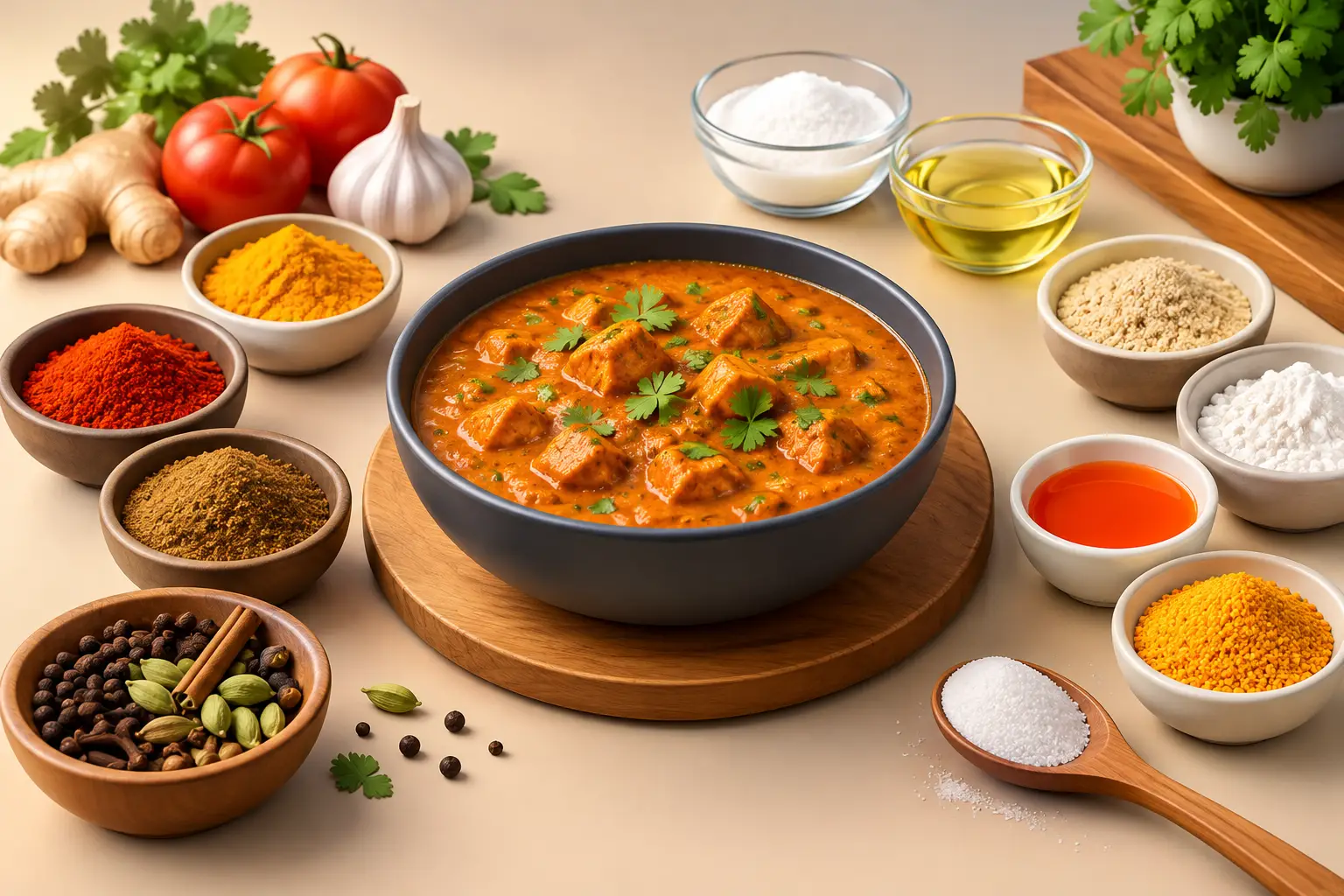
The name of a dish can be useful, but preparation tells you more. Look for curries built around tomatoes, onions, herbs, lentils, vegetables, or stock rather than cream, butter, coconut cream, or ground nuts. A tomato-based sauce can still be full-bodied and fragrant, particularly when it is cooked slowly with cumin, coriander, turmeric, and whole spices.
Tandoori cooking is another excellent starting point. Chicken, fish, paneer, or vegetables cooked in a clay oven gain char, smokiness, and tenderness without needing a heavy sauce. Pairing a tandoori dish with a fresh salad or a lighter curry creates a meal with plenty of flavor and contrast.
Grilled, roasted, steamed, and simmered dishes are generally easier choices than items described as battered, fried, creamy, buttery, or stuffed. This is not a rule that requires perfection. It is simply a helpful way to decide where you want the richness in your meal. You might choose a deeply spiced grilled main and then enjoy a small, creamy side, rather than making every part of the order rich.
Read the Menu for Richness Cues
Menus often tell you exactly what to expect, if you know which words to notice. Terms such as korma, makhani, malai, pasanda, buttery, creamy, or cashew-based usually point toward a richer sauce. These dishes can be wonderfully comforting, but they are not usually the lightest choice.
On the other hand, dishes described as tomato-based, ginger-forward, herb-led, roasted, grilled, lentil-based, or prepared with fresh vegetables often offer a fresher profile. Jalfrezi-style curries, for example, commonly feature peppers, onions, tomatoes, and a brighter sauce. Bhuna-style dishes may have a thicker, reduced texture from slow cooking rather than from added cream, though recipes vary from kitchen to kitchen.
Do not assume that a vegetarian dish is automatically lighter. Paneer is satisfying and protein-rich, but it is a cheese and can make a meal more substantial, especially in a creamy sauce. Vegetable curries, chickpeas, lentils, spinach, okra, eggplant, and cauliflower can be excellent choices, but the sauce and cooking method still matter.
Ask a Simple Question When Ordering
If a menu description is brief, ask which curries are made without cream or with a lighter sauce. A good restaurant should be able to guide you toward dishes that suit your preferences, whether you are avoiding dairy, choosing vegan options, eating gluten-free, or simply looking for a fresher dinner.
You can also ask for the sauce to be less oily where possible, or request a protein and vegetable dish with the sauce served more lightly. Not every recipe can be altered without changing its character, and that is fair. Authentic cooking deserves respect. But many kitchens can help you find a dish that matches the way you want to eat.
Choose Protein and Vegetables With Balance in Mind
Lean proteins such as chicken breast, fish, prawns, and legumes are natural partners for lighter curries. Their flavor holds up well against aromatic spices, and they do not need a thick sauce to feel satisfying. Tandoori chicken, grilled fish, prawn curries with tomato and herbs, and dal are all dependable options when you want a meal that feels complete without being overly rich.
Vegetables do more than add color to the table. They bring texture, freshness, and volume, helping the meal feel generous without relying on cream or fried sides. Spinach, green beans, peas, peppers, cauliflower, mushrooms, and eggplant all work beautifully with Indian spices.
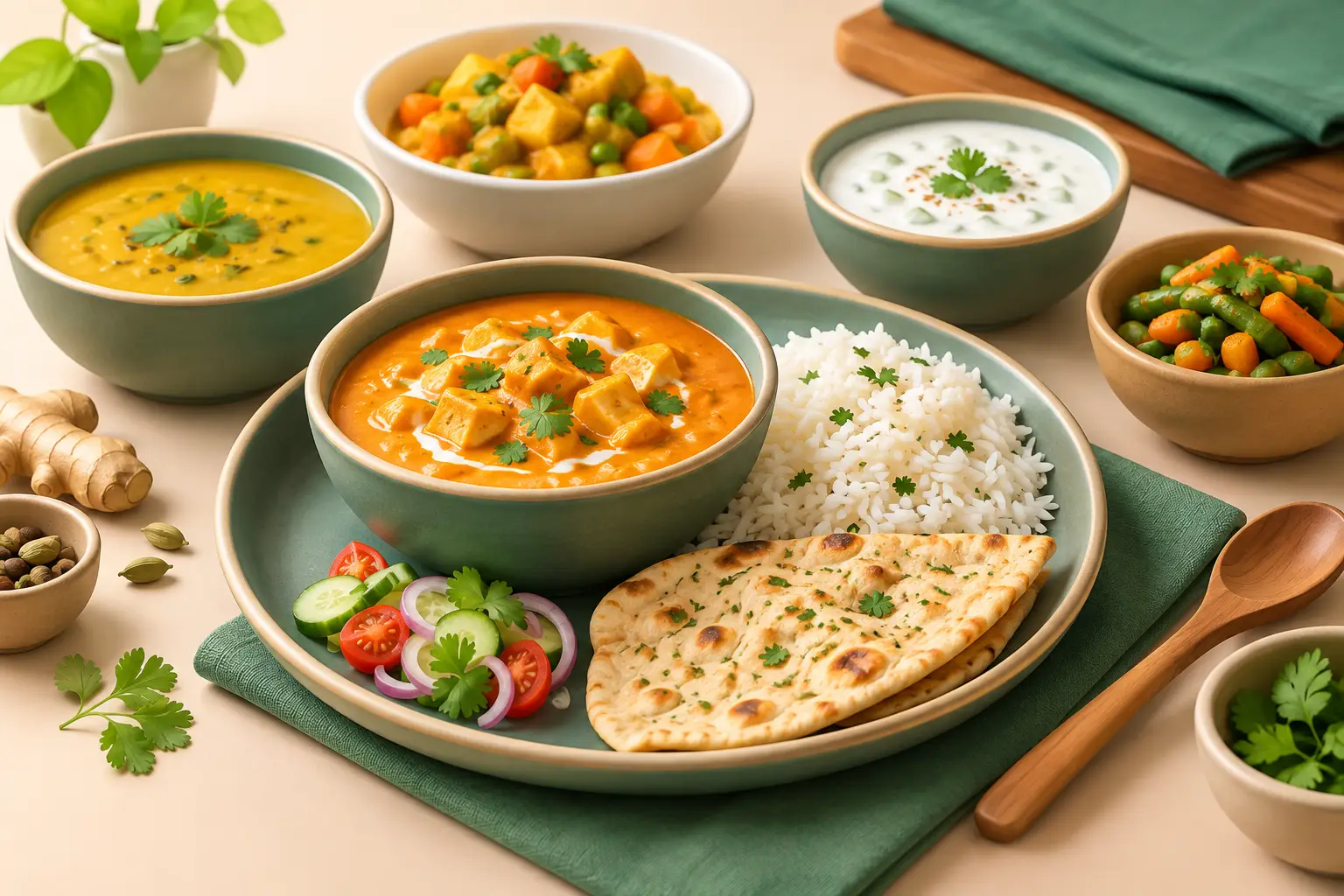
A balanced order might include one protein or lentil-based main, one vegetable side, and a fresh accompaniment. If you are sharing, this approach lets everyone enjoy variety without ordering several heavy curries that taste similar after the first few bites.
The Side Dishes Matter More Than You Think
A lighter curry can become a very heavy meal when paired with multiple fried starters, rich breads, and large portions of rice. There is no need to avoid these favorites entirely, but choosing your sides with intention keeps the meal more comfortable.
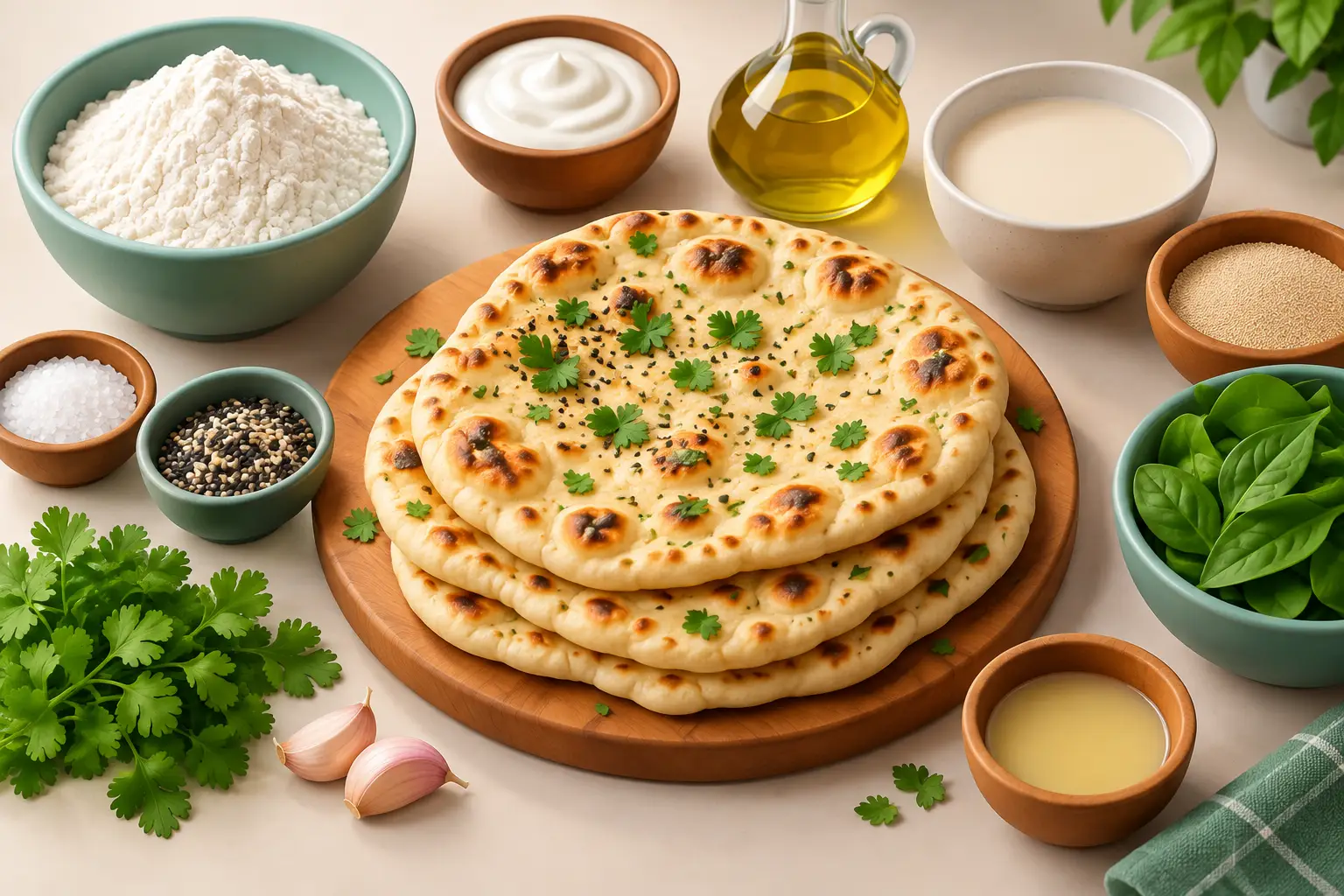
Plain basmati rice is often a lighter partner than a buttery rice dish, and a modest serving allows the curry to remain the focus. Whole-wheat roti or a simple naan can work well for sharing. If you are choosing a richer bread, consider balancing it with grilled vegetables or a crisp salad rather than adding another creamy dish.
Raita can be refreshing, especially with spicy food, but it is still dairy-based. A chopped salad with cucumber, tomato, onion, lemon, and herbs offers a brighter alternative. Pickles and chutneys can add a lot of character in small amounts, though they may be salty or sweet depending on the recipe.
For starters, look beyond fried options. Tandoori bites, grilled prawns, chicken tikka, vegetable skewers, or a simple lentil soup can set the tone for a lighter meal while still feeling special.
Spice Does Not Equal Heaviness
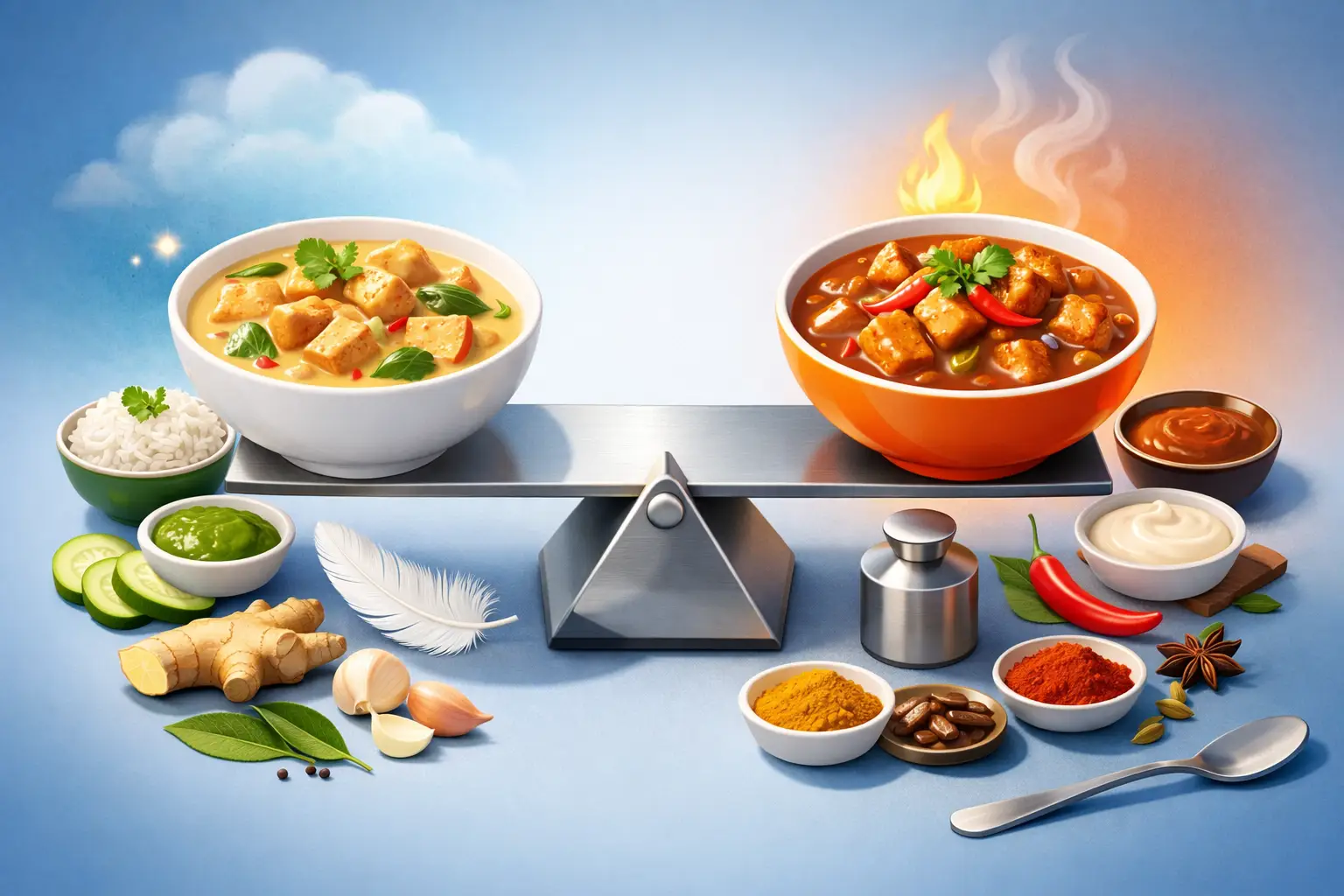
One common mistake is ordering the hottest curry in the belief that heat makes it lighter. Chili can make a dish feel lively, but it does not tell you whether the sauce is cream-based, buttery, or oil-rich. Heat and richness are separate choices.
Instead, think about the kind of spice you enjoy. Fresh green chili, black pepper, ginger, mustard seeds, cumin, and tangy tamarind can all create excitement without needing a heavy sauce. A medium-spiced tomato and herb curry may feel brighter and more satisfying than an extra-hot creamy curry.
If you are sensitive to spice, do not feel that you need to choose a mild, rich dish by default. Many lighter curries can be prepared mild while retaining their aromatics. Fragrance comes from far more than chili.
How to Choose Lighter Curry for Takeaway
Takeaway presents one extra consideration: food continues to sit in its containers on the journey home. Fried items can lose their crispness, while thick, rich sauces can feel even heavier after traveling. Curries with fresh vegetables, grilled proteins, and tomato or herb-led sauces tend to arrive well and reheat beautifully if needed.
When ordering for a group, choose contrast rather than duplicates. One lentil dish, one grilled item, one vegetable curry, and one brighter sauce gives the table a better range of textures and flavors. It also makes it easier for vegetarian, vegan, and gluten-free diners to find something they can enjoy.
At Cilantro London, the aim is to make authentic Indian food feel as appropriate for a relaxed Tuesday at home as it does for a dinner with friends. Freshly prepared dishes, thoughtful spice, and balanced choices can give you all the comfort of curry without the familiar post-takeaway heaviness.
The best lighter curry is not the one with the fewest ingredients. It is the one where the ingredients have been chosen with care: vibrant spices, a well-made sauce, good protein or vegetables, and sides that let every flavor come through.