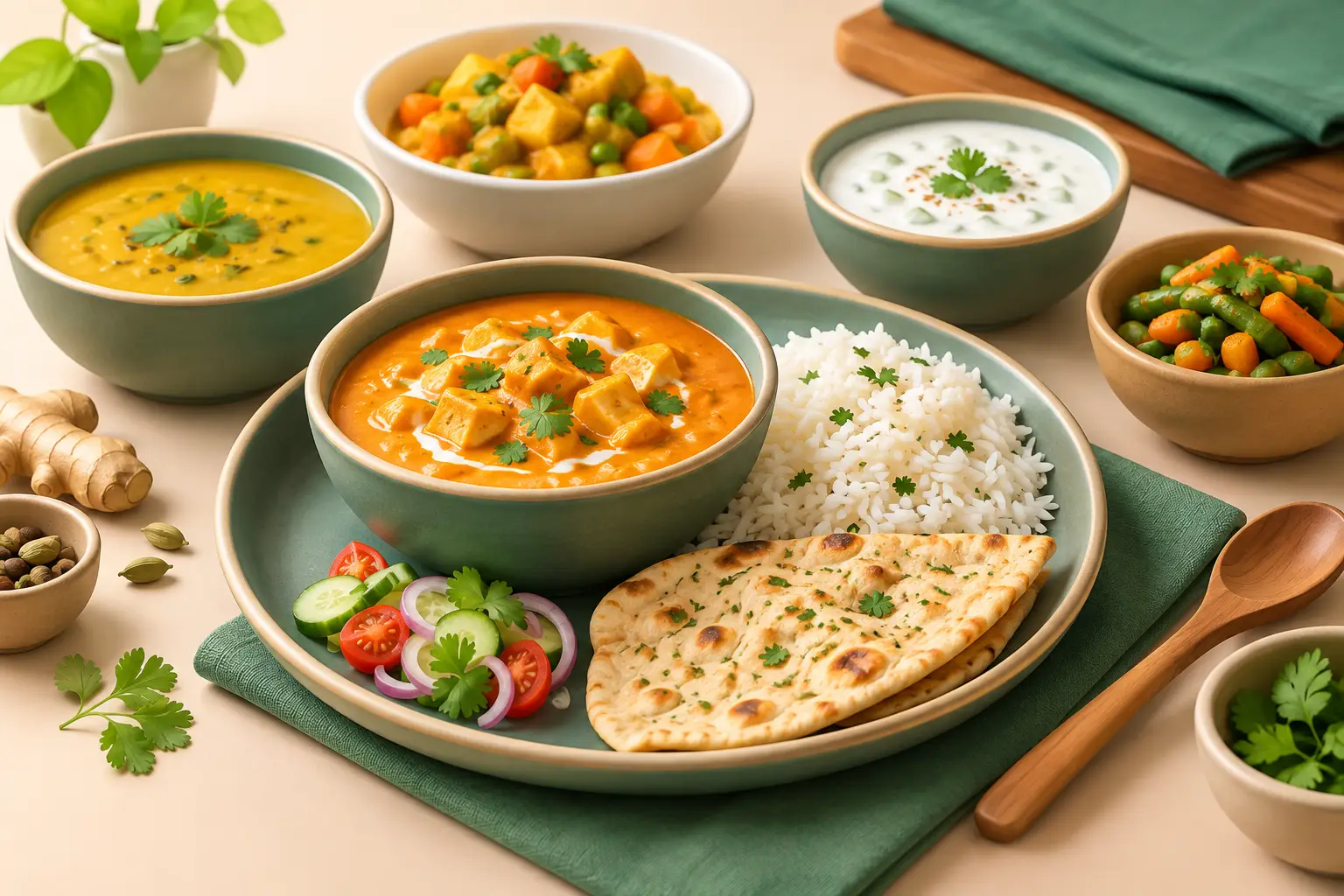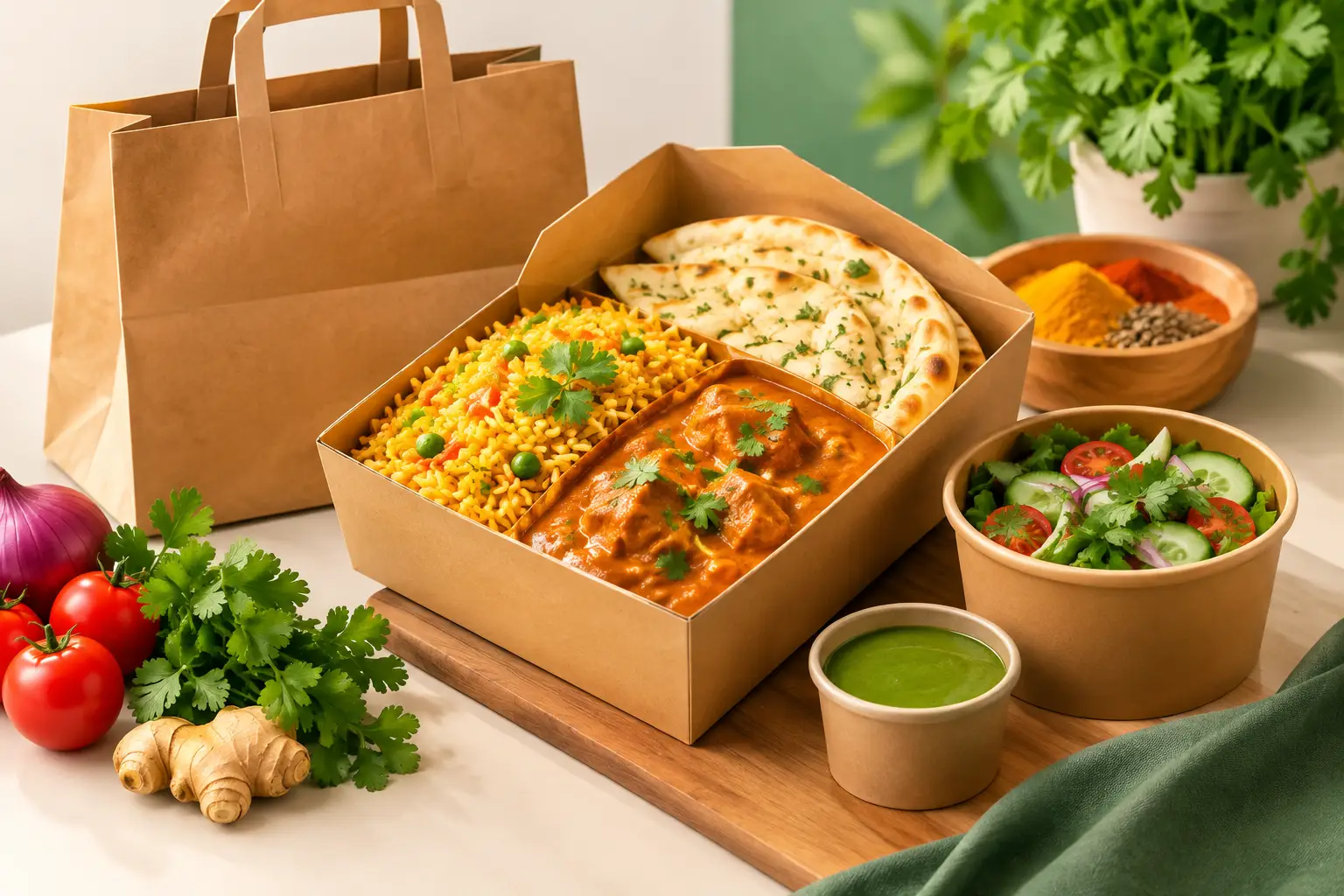
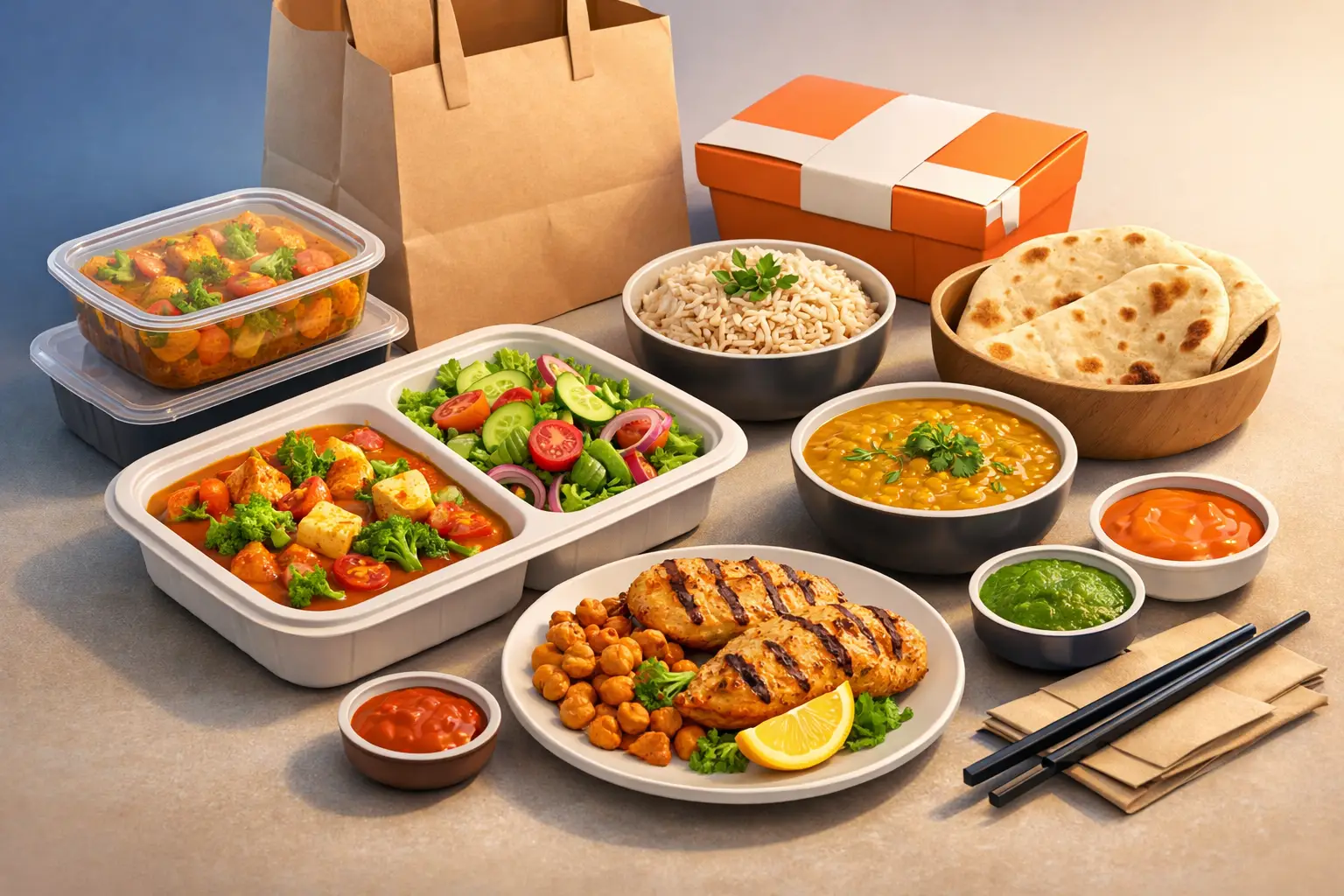
A great Indian dinner does not need to arrive swimming in sauce or leave you reaching for the couch. This healthy Indian takeaway order example is built around the things that make a meal feel genuinely satisfying: spice, char, vegetables, protein, fiber, and enough comforting carbs to make it feel like dinner rather than a compromise.
The goal is not to make Indian food bland or overly restrictive. Authentic Indian cooking has always had plenty of naturally balanced dishes, from lentils and grilled tandoori specialties to vegetable-led curries and fresh salads. The difference is knowing how to build an order that gives each element a role.
A Healthy Indian Takeaway Order Example for Two
For a balanced shared meal, start with one grilled tandoori main, one lentil or chickpea dish, a vegetable side or salad, and one bread or rice dish to share. For example, order tandoori chicken, dal, a dry vegetable preparation or crisp salad, and one plain roti or a portion of steamed basmati rice.
This combination works because it avoids making every dish rich in the same way. The tandoori dish brings leaner protein and smoky flavor from the grill. Dal provides plant protein and fiber, along with the warmth of tempered spices. Vegetables add freshness, texture, and color, while the rice or roti gives the meal its comforting foundation.
If you are vegetarian, swap the tandoori chicken for grilled paneer, tandoori vegetables, or a chickpea-based main. Paneer can be a satisfying choice, though it is naturally richer than chicken or vegetables, so pairing it with dal, greens, and roti rather than another creamy curry keeps the whole table in balance.
For one person, the same formula still applies. Choose a tandoori main or a bean and lentil dish, add a vegetable side, then select either rice or bread. If the portions are generous, save half for tomorrow’s lunch instead of adding extra dishes just because they look tempting on the menu.
Start With the Cooking Method, Not the Dish Name
When you are deciding what to order, the preparation method often tells you more than the name of the dish. Tandoori, grilled, roasted, steamed, and dry-style dishes are usually excellent places to begin. They tend to showcase marinades, herbs, spices, and the heat of the oven rather than relying on a large amount of cream, butter, or oil for their character.
That does not mean a curry is off the table. A tomato-based, spinach-based, lentil-based, or vegetable-forward curry can be a lovely choice, especially when shared with a grilled item. The useful question is whether the order has contrast. Two creamy mains with fried starters, naan, and rice may be delicious, but it is likely to feel heavy. One sauce-based dish alongside grilled protein and vegetables is a much more comfortable middle ground.
A menu description can also help. Look for words such as tomato, ginger, garlic, turmeric, spinach, lentil, chickpea, grilled, and seasonal vegetables. If you are unsure how a dish is prepared, it is perfectly reasonable to ask whether it can be made with less oil or whether a lighter sauce option is available.
Build Flavor With Sides That Pull Their Weight
Sides are where a healthy order can quietly go off course. It is easy to treat them as an afterthought, then add fried snacks, buttery breads, and another starch without realizing the meal has become much larger than planned.
A fresh salad, cucumber-based side, sautéed greens, okra, cauliflower, or mixed vegetables can bring brightness to richer spices. These dishes also make it easier to enjoy a smaller portion of rice or bread without feeling shortchanged. A squeeze of lemon, crunchy onion, fresh herbs, and cooling yogurt can add as much satisfaction as another heavy sauce.
Bread and rice do not need to be avoided. They are part of the pleasure of Indian food and especially welcome when there is a fragrant curry or dal on the table. The simplest approach is to choose one. A plain roti is often a lighter partner for a shared meal, while steamed basmati rice can be a better fit if you are ordering dal or a saucier dish. Choosing both is fine for a larger group or a celebratory dinner, but for a regular weeknight, one shared starch is usually enough.
What to Order When You Want a Curry
Sometimes a curry is exactly what you want, particularly on a cool evening in Putney or after a long day. A health-conscious order should still feel generous, so there is no need to replace every curry with a salad.
Choose one curry with a clear base, then round it out thoughtfully. A spinach-based dish can bring earthy depth. A tomato-led curry may feel bright and tangy. Lentil and chickpea dishes are naturally hearty without depending on cream. If you love a richer butter, korma, or coconut-forward dish, share it and pair it with tandoori vegetables, grilled chicken, or a lighter dal rather than ordering two equally rich mains.
Portion size matters here. The sauce is often where flavor concentrates, so you do not have to avoid it. Spoon it over a moderate serving of rice or use roti to enjoy it slowly, then let the vegetables and grilled dishes fill the rest of the plate. This is a more satisfying strategy than ordering a light meal and feeling hungry again an hour later.
Smart Swaps Without Losing the Treat
The best swaps are the ones you will actually enjoy. Asking for less oil can suit some dishes, but a well-made curry still needs enough fat to carry spices and create a rounded flavor. Rather than trying to strip everything back, make one or two choices that create balance.
Skip a fried starter if you are already ordering naan and a rich curry. Choose grilled starters when you want something to share before the main. Pick plain yogurt or raita over extra creamy sauces when you want a cooling element. If dessert is part of the plan, keep the main meal simple and let the sweet course be the occasion.
Alcohol can also change how a takeaway meal feels. A crisp sparkling water, unsweetened drink, or a simple glass of wine may suit a spice-led dinner better than several sugary beverages. There is no single correct order, but small choices like these help you finish the meal feeling comfortably full rather than overly full.
Make It Work for Dietary Needs
Indian cuisine is particularly generous for varied diets, but it is still worth being specific when ordering. Vegetarians can build a substantial meal around lentils, chickpeas, vegetables, and paneer. Vegans should ask about dairy in sauces, breads, and marinades, as ghee, cream, butter, and yogurt may be used in traditional recipes. Gluten-free diners should also confirm the ingredients and kitchen handling, especially around breads and fried items.
If you are ordering for a family or group, create a table that gives everyone an option rather than trying to find one dish that suits every requirement. A grilled main, a vegan lentil dish, a vegetable side, and rice can cover a lot of ground while still feeling like one coherent meal.
At Cilantro London, made-to-order Indian dishes make this kind of balanced, personal ordering feel natural, whether you are planning a quiet dinner at home or feeding a table of friends.
The Order to Remember
When the menu feels full of possibilities, return to a simple pattern: one grilled or tandoori dish, one plant-forward dish, one vegetable side, and one shared starch. Add a curry because you truly want it, not because every Indian takeaway order is supposed to include one.
A healthier choice is not the smallest order or the least flavorful one. It is the order that lets the spices, ingredients, and care in the cooking come through, while leaving you happy to enjoy the rest of your evening.