A memorable buffet does more than place a row of curries beside a stack of plates. The best Indian buffet example gives every guest an easy, generous way to build a meal that feels abundant without becoming overly heavy. It balances familiar comfort dishes with brighter flavors, includes clear choices for different diets, and keeps the entire table looking fresh from the first serving to the last.
For a family celebration, office lunch, birthday meal, or relaxed gathering at home, Indian food is especially well suited to sharing. The key is not serving everything. It is choosing dishes that complement one another, travel well, and leave room for guests to enjoy a little variety.
An Indian Buffet Example That Feels Complete
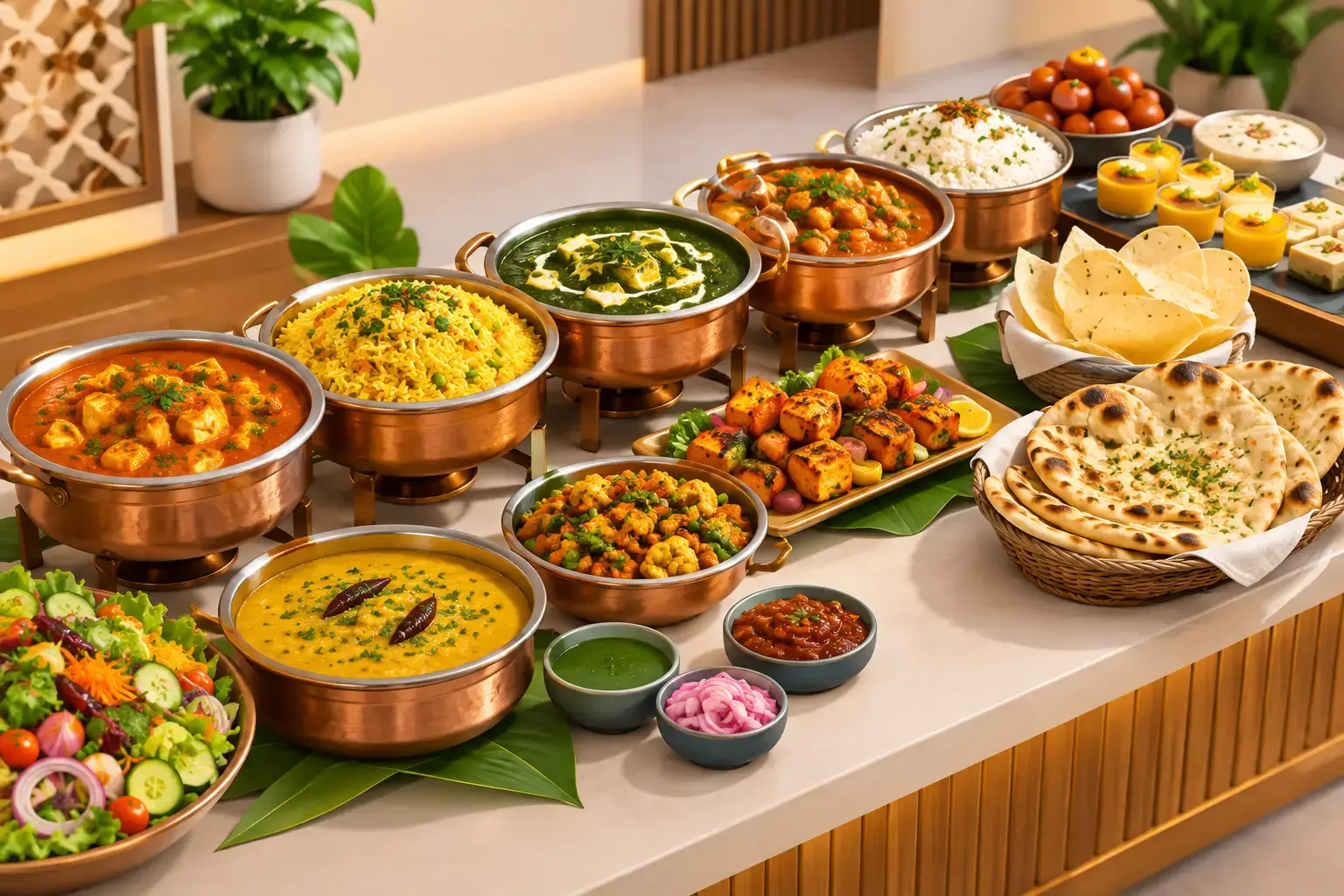
Picture a buffet for 12 to 16 guests. Start with two appetizers, three mains, two satisfying side dishes, a fresh salad, breads, and one dessert. This creates a full meal without overwhelming the table or producing large amounts of waste.
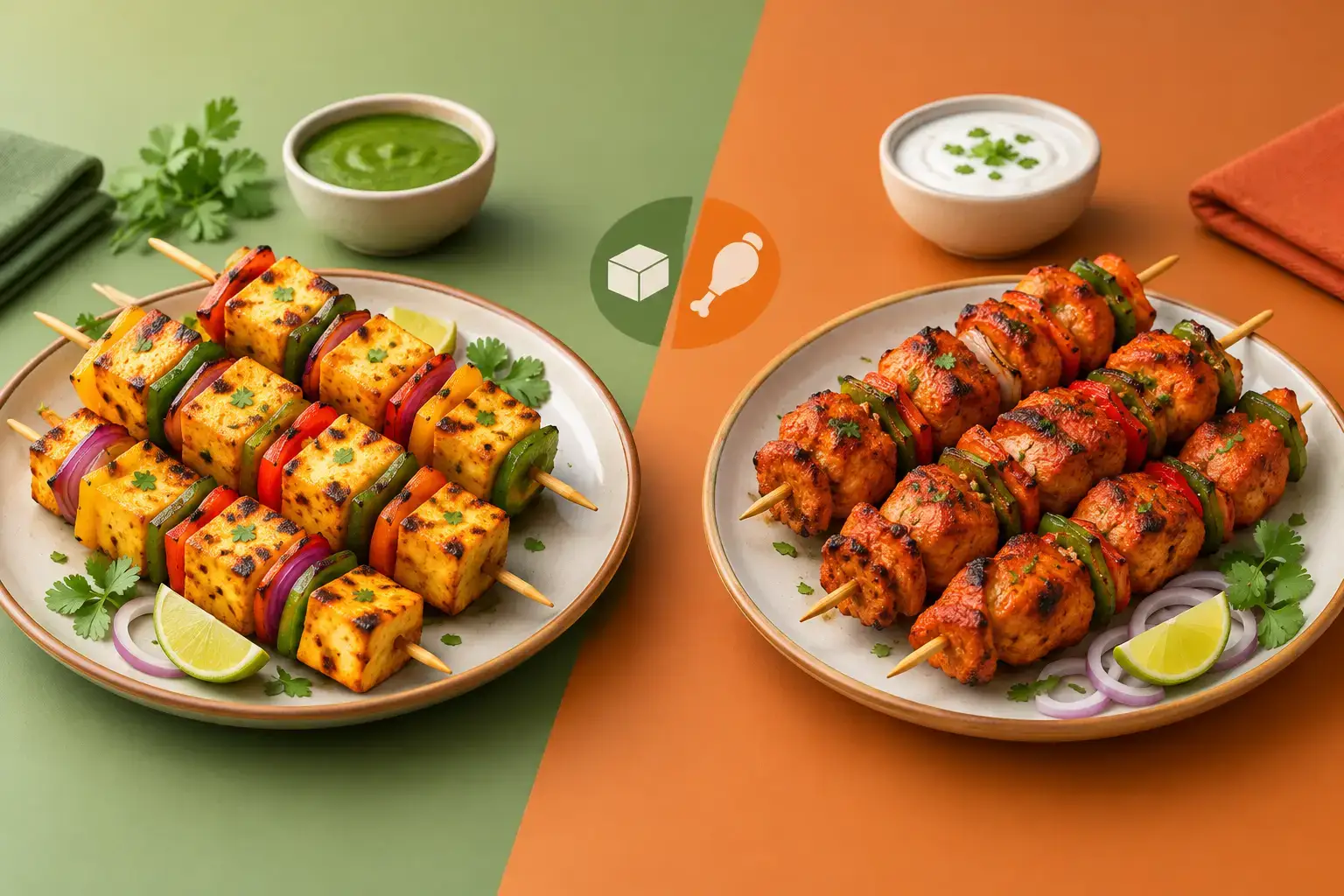
Begin with a vegetable starter and a tandoori option. Crisp onion bhajis or vegetable samosas bring familiar texture and warmth, while chicken tikka offers a smoky, gently charred contrast. For a more health-conscious group, grilled paneer tikka or tandoori vegetables can take the place of, or sit alongside, the chicken. The tandoor brings depth of flavor without relying on a heavy sauce, which helps the opening course feel light and inviting.
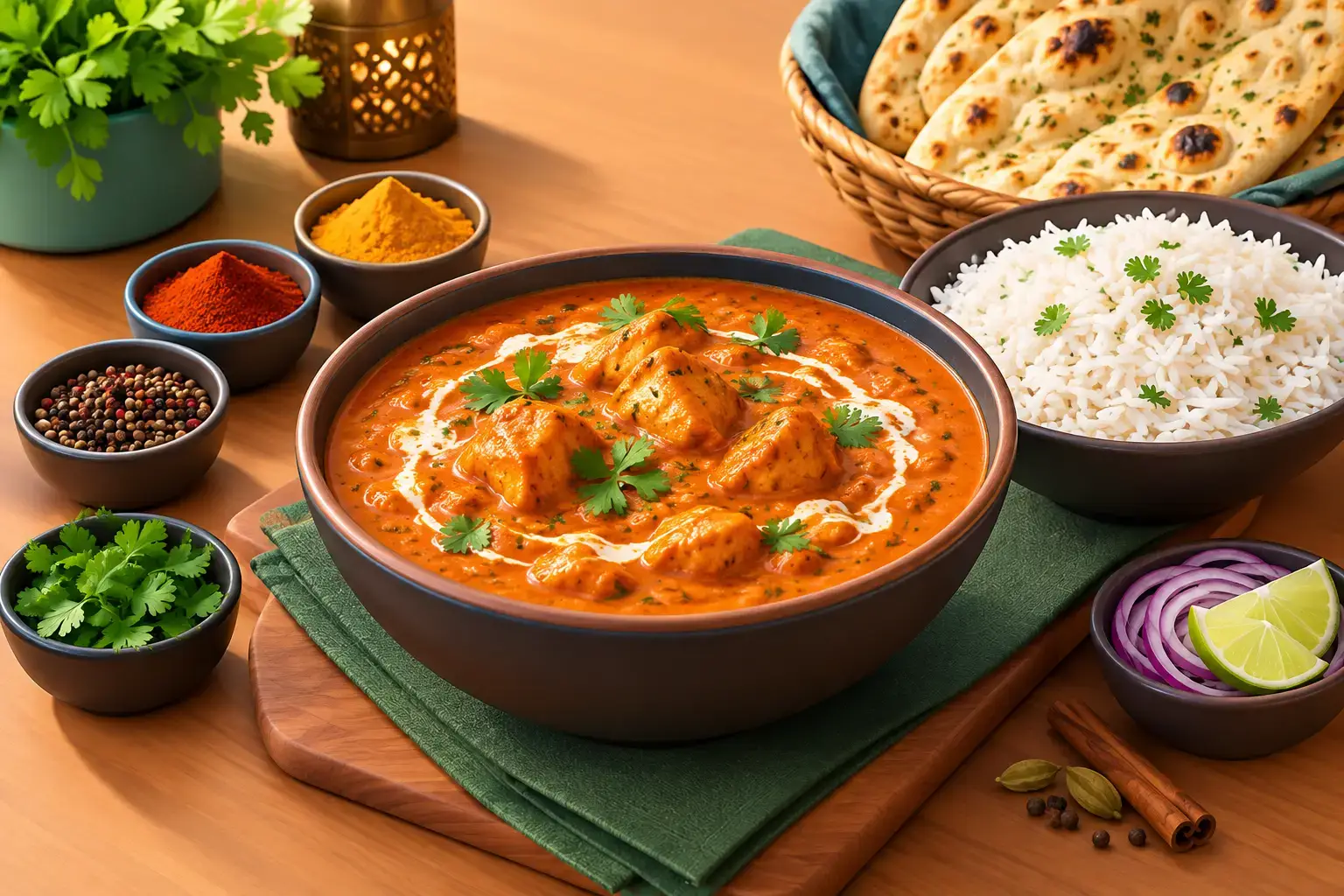
For the mains, choose one creamy dish, one tomato-based curry, and one plant-forward option. Butter chicken or chicken korma is often the comforting crowd-pleaser, particularly for guests who prefer mild spice. A chicken tikka masala or lamb rogan josh adds a richer, more aromatic option with a deeper sauce. Then include chana masala, dal makhani, or a mixed vegetable curry so vegetarian guests have a main dish that feels just as considered as the meat selections.
The supporting dishes matter as much as the curries. Fragrant basmati rice gives guests a simple base, while vegetable biryani provides a more celebratory choice. Serve warm naan alongside it, perhaps with garlic naan as an additional option. A crisp kachumber salad of cucumber, tomato, red onion, lemon, and herbs is a welcome counterpoint to the warm dishes. It cuts through the richness and adds color to the buffet.
Finish with mango kulfi, gulab jamun, or a light cardamom rice pudding. One dessert is usually enough after a generous meal. If the occasion calls for it, add fresh fruit on the side rather than another rich sweet.
Why Balance Matters More Than a Long Menu
Indian cuisine has extraordinary regional range, but a buffet works best when each dish has a clear role. Too many creamy curries can make the spread feel repetitive. Too many intensely spicy dishes can limit choice for children or guests who are less familiar with Indian food. And several rice dishes plus several breads can leave little room for the flavors that make the meal special.
A balanced table includes richness, heat, acidity, freshness, and texture. Think of a buttery curry beside a bright chickpea dish, soft rice beside crisp salad, and tender grilled tikka beside warm naan. Guests should be able to create a comforting plate, a lighter plate, or a fully vegetarian plate without having to ask what is available.
This is also where portions become easier to plan. When the menu has variety, people naturally take smaller portions of each item and return for favorites. For a lunch gathering, lighter dishes and more salad may be the right choice. For an evening celebration in cooler weather, a richer lamb curry and dal can be particularly welcome. The best menu depends on the occasion, the guest list, and the time of day.
A sensible menu for mixed dietary needs
Dietary inclusivity should be built into the menu rather than added as an afterthought. A buffet needs at least one substantial vegetarian or vegan main, not simply a side of vegetables. Chana masala, dal tadka, aloo gobi, and vegetable jalfrezi all offer real flavor and satisfying texture.
Gluten-free guests can often enjoy rice, many curries, tandoori dishes, and salads, but recipes and preparation matter. Naan contains wheat, and sauces may vary. Label dishes clearly and keep serving utensils separate where possible. If you are ordering food for a group, share dietary requirements in advance rather than relying on guests to work it out at the table.
Heat is worth handling with the same care. A mild curry, a medium-spiced curry, and a hotter option give everyone a place to start. Chili sauces, pickles, and fresh chilies can be served separately, allowing guests who enjoy extra heat to add it without changing the dish for everyone else.
How to Set Up the Buffet So Food Stays at Its Best
Good food can lose its appeal if the setup is difficult to navigate. Arrange the buffet in the order people naturally build a plate: appetizers first, then rice and breads, followed by mains, vegetables, salad, and condiments. Put plates at the beginning and cutlery and napkins at the end, so guests are not trying to hold everything while serving themselves.
Keep hot dishes covered or in chafing dishes where possible. Rice can dry out quickly, so it benefits from being kept covered and replenished in smaller batches. Naan is at its best when served warm, not piled up hours ahead. If space allows, bring breads out gradually instead of putting all of them on the table at once.
Labels make a buffet feel more thoughtful and more relaxed. Name each dish and mark vegetarian, vegan, gluten-free, mild, medium, or hot choices. A simple card reading “Chickpea Curry – Vegan – Medium Spice” is enough to help guests choose confidently. It also reduces the familiar question of whether a dish contains dairy, nuts, or meat.
Do not forget condiments. Mint yogurt, mango chutney, lime pickle, and onion salad add personality without needing another full dish. They allow guests to adjust each bite and make even a simple plate of dal, rice, and naan feel more complete.
Choosing Between a Buffet and a Shared Meal
A buffet is ideal when guests arrive at different times, when there are varied dietary preferences, or when the gathering is large enough that plated service would feel formal and slow. It encourages people to mingle, return for another helping, and choose their own balance of dishes.
For a small dinner of six to eight guests, a shared table meal may be better. A few dishes placed in the center can feel warmer and create less work for the host. For a larger birthday, office event, or casual family celebration, a buffet gives more flexibility and prevents one person from having to serve everyone.
Quality should still come before quantity. Freshly prepared curries with layered spices, responsibly sourced ingredients, and tandoori dishes cooked with care will always make a stronger impression than an oversized menu of rushed options. That philosophy is at the heart of modern Indian dining: generous food with clarity, freshness, and real attention to flavor.
For gatherings around Putney and nearby neighborhoods, Cilantro London can help make group dining feel more considered, whether you are planning a meal to enjoy in the restaurant or arranging food for a special occasion. The right spread should feel welcoming from the first aroma to the final spoonful of dessert.
A well-planned Indian buffet leaves guests with choices, not confusion. Keep the menu focused, make room for vegetables and freshness, and let every dish earn its place on the table.