A great Indian meal deserves better than a blast of high microwave heat and a dry, rubbery finish. Knowing how to reheat Indian takeaway properly means protecting the things that made it special in the first place: fragrant spices, tender meat, fluffy rice, and sauces with real depth.
The best method depends on what is in your order. A creamy curry needs gentle heat and a little moisture. Tandoori dishes benefit from the oven or air fryer. Rice needs steam, while naan needs a short, hot finish. Reheat each element separately where possible, and your dinner can feel remarkably close to freshly served.
First, cool and store your takeaway properly
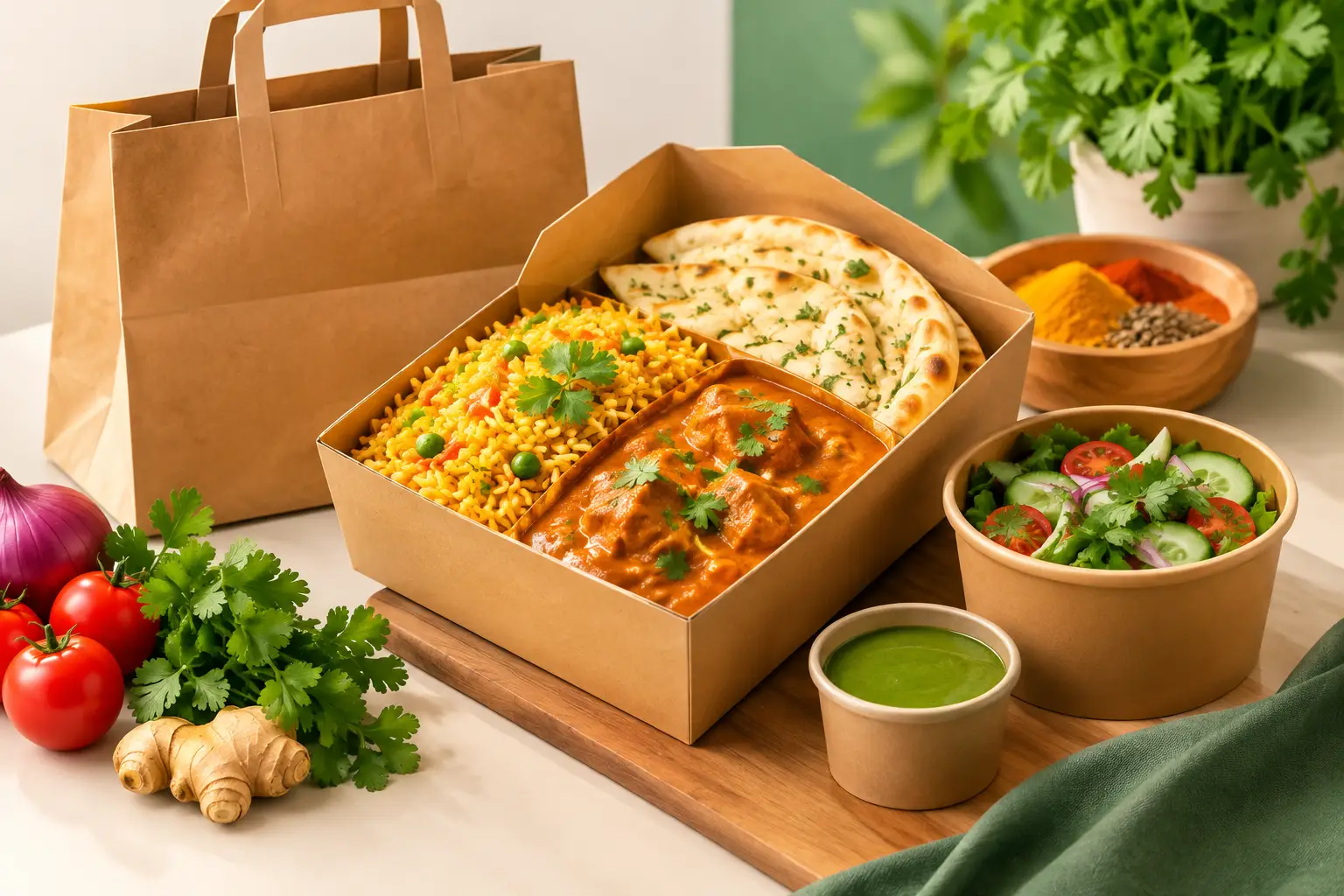
The secret to a better next-day meal starts before anything goes into the fridge. Refrigerate leftovers within two hours of delivery or collection. If your home is particularly warm, do it sooner. Transfer food from large takeaway containers into shallow, covered containers where practical, as this helps it cool faster and reheat more evenly later.
Keep curries, rice, breads, and dry grilled dishes separate. Rice absorbs sauce quickly in the refrigerator, naan turns damp if it sits beside a steaming curry, and crisp edges on tandoori dishes disappear when everything is packed together.
Most refrigerated Indian takeaway is best enjoyed within two days. This is especially true for rice, seafood, and dairy-rich dishes such as korma, paneer curries, or dishes finished with cream. When reheating, aim for the food to be piping hot throughout, not merely warm around the edges.
How to reheat Indian takeaway by dish
There is no single setting that suits an entire Indian feast. Taking a few extra minutes to heat dishes according to their texture makes a noticeable difference.
Curries, dal, and saucy dishes
The stovetop is the most reliable choice for curries, dal, chana masala, and lentil dishes. Spoon the food into a small pan and warm it over low to medium-low heat, stirring regularly. If the sauce has thickened overnight, add a splash of water. For a richer curry, a spoonful of milk, coconut milk, or stock can also work, depending on the dish.
Keep the lid partly on so moisture stays in the pan. Avoid boiling a cream-based curry aggressively, as it can split or lose its smooth texture. Gentle bubbling is enough. Chicken, lamb, vegetables, or paneer should be hot all the way through before serving.
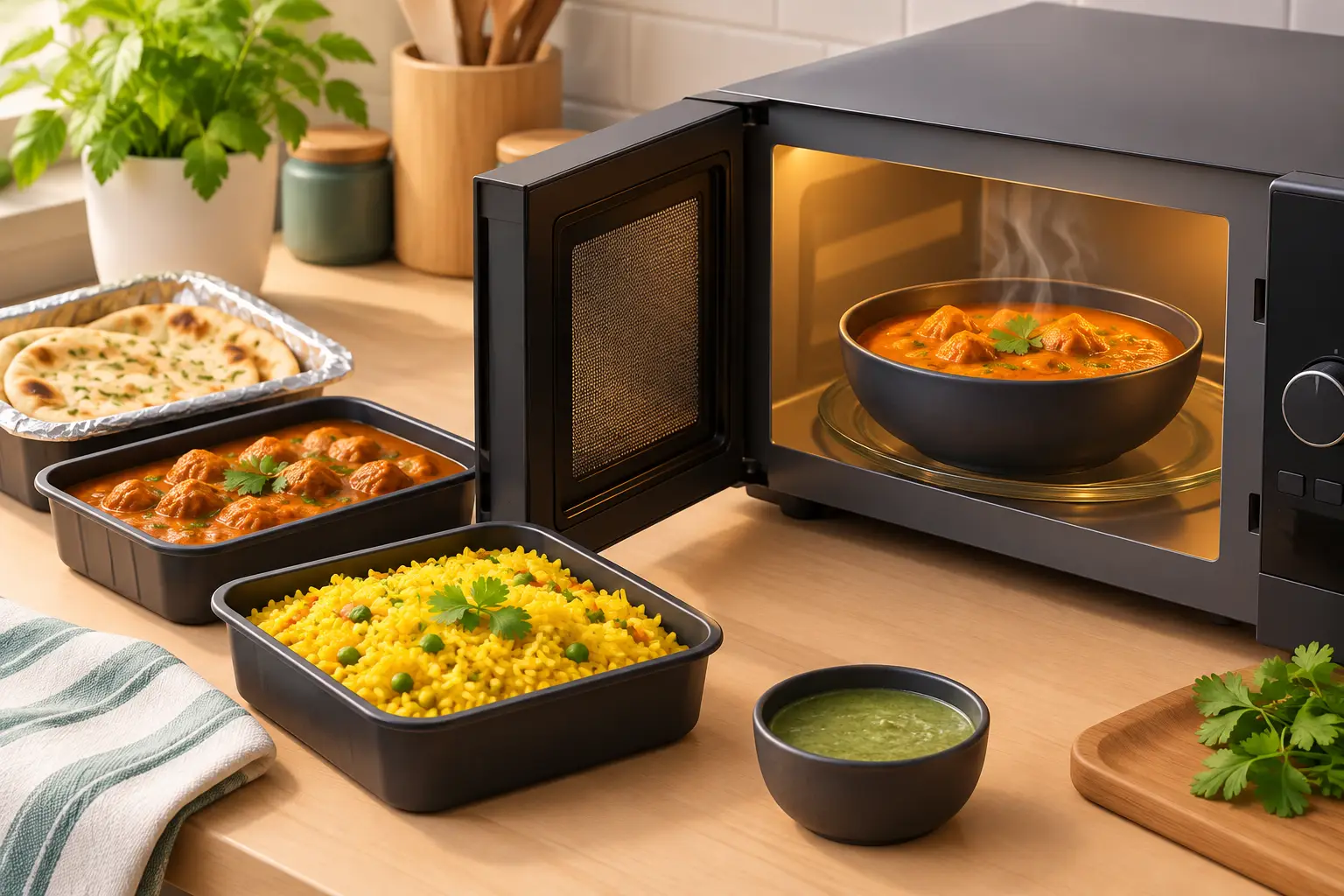
The microwave is useful when time is short. Use a microwave-safe bowl, cover it loosely, and heat in 60-second intervals, stirring between each one. A little water added before heating helps revive the sauce. This is particularly helpful for tomato-based curries, dal, and vegetable dishes that naturally thicken in the refrigerator.
Biryani and plain rice
Rice is where reheating needs the most care. It should be chilled promptly after your meal and reheated only once. For the best result, place it in a microwave-safe bowl, break up any compacted sections with a fork, and sprinkle over one or two teaspoons of water. Cover the bowl and microwave until steaming hot, fluffing halfway through.
For a larger portion, use a covered skillet over low heat with a small splash of water. The trapped steam warms the grains without making them wet. Biryani benefits from this method because it helps preserve the separate grains, aromatic spices, and layered texture rather than turning everything soft.
Do not leave reheated rice sitting out while you finish other jobs in the kitchen. Serve it promptly alongside the curry or tandoori dish.
Naan, roti, and other breads
Naan is at its best when it is soft in the middle with a little warmth and char at the edges. Skip the microwave if you can, as it often makes bread chewy. Instead, wrap naan loosely in foil and warm it in a 350°F oven for five to eight minutes.
If you prefer a slightly crisper base, warm naan in a dry skillet for around 30 seconds per side. Add a light brush of butter or ghee after heating if that suits the dish. Roti and paratha can also be revived in a skillet, although paratha may need a minute longer to regain its delicate crispness.
Tandoori chicken, kebabs, and grilled dishes
Tandoori chicken, lamb chops, seekh kebabs, and grilled paneer need dry, circulating heat. An oven set to 375°F works well. Place the food on a tray, cover loosely with foil for the first few minutes to keep it from drying out, then uncover briefly to restore the outside texture.
An air fryer is a good alternative for smaller portions. Heat at around 350°F, checking after four or five minutes. The exact timing depends on thickness, so cut into the largest piece to make sure the center is hot. A small brush of oil or melted butter can help leaner grilled items stay succulent, but use a light hand so the spices remain the focus.
Avoid reheating tandoori dishes in a pool of curry sauce. Serve the sauce warmed separately, then bring the two together at the table.
Samosas, bhajis, and crispy starters
Crispy starters need the oven or air fryer, not the microwave. Arrange samosas, onion bhajis, pakoras, or spring rolls in a single layer and heat at 375°F until hot and crisp. In an air fryer, start checking after four minutes; in an oven, allow closer to eight to 12 minutes depending on size.
If a starter has become slightly dry from refrigeration, serve it with freshly warmed chutney or raita rather than trying to add moisture during reheating. Steam is the enemy of crisp pastry and fritters.
The simple rule: add moisture or preserve crispness
This is the easiest way to decide what to do when you are looking at a container of leftovers. Saucy dishes, rice, and lentils want a covered environment and a little added moisture. Breads need brief heat. Grilled meats and crisp starters want dry heat and space around them.
It also explains why reheating a whole mixed order together rarely works. The same microwave setting that gently steams rice can soften a samosa, while the oven heat that improves a kebab can dry out a curry. Separate dishes may take a few minutes longer, but the payoff is a meal with far more care and contrast on the plate.
Small finishing touches that make leftovers feel fresh
Once the food is hot, add brightness rather than more heat. A squeeze of lemon over tandoori chicken, chopped cilantro over dal, or a few sliced red onions beside a curry can lift flavors that have mellowed overnight. A cool spoonful of raita is especially welcome with biryani, kebabs, and spicy curries.
Taste before adding salt. Refrigeration can make flavors seem quieter at first, but salt can quickly overpower a reduced sauce. If a curry needs something, it is often a splash of water, a little lemon, or fresh herbs rather than extra seasoning.
At Cilantro London, our dishes are prepared with fresh ingredients and balanced spice, so a careful reheat lets those details come through again rather than masking them with excessive heat or oil.
A final word on food safety
Use clean utensils, keep leftovers refrigerated, and reheat only the portion you plan to eat. Food should be steaming hot in the center, particularly chicken, lamb, seafood, and rice. If you are unsure how long something has been in the refrigerator, or it smells, looks, or tastes unusual, it is better not to take the chance.
Set the table while the food warms, heat the naan last, and bring everything together as soon as it is ready. That small bit of timing turns a convenient leftover dinner into a properly comforting meal.