A memorable curry is not simply hot, creamy, or rich. It has layers: the gentle sweetness of cooked onion, a bright lift from ginger, warmth that builds rather than overwhelms, and a finish that makes you want another spoonful. The best curry ingredients work together in balance, giving every dish its own character while staying true to the regional traditions behind it.
For diners who love Indian food but prefer a fresher, lighter meal, understanding those ingredients makes a real difference. A thoughtful curry does not need excessive oil, sugar, or heavy cream to feel satisfying. It needs good produce, carefully chosen spices, and the patience to cook each element properly.
The Curry Ingredients That Build the Foundation
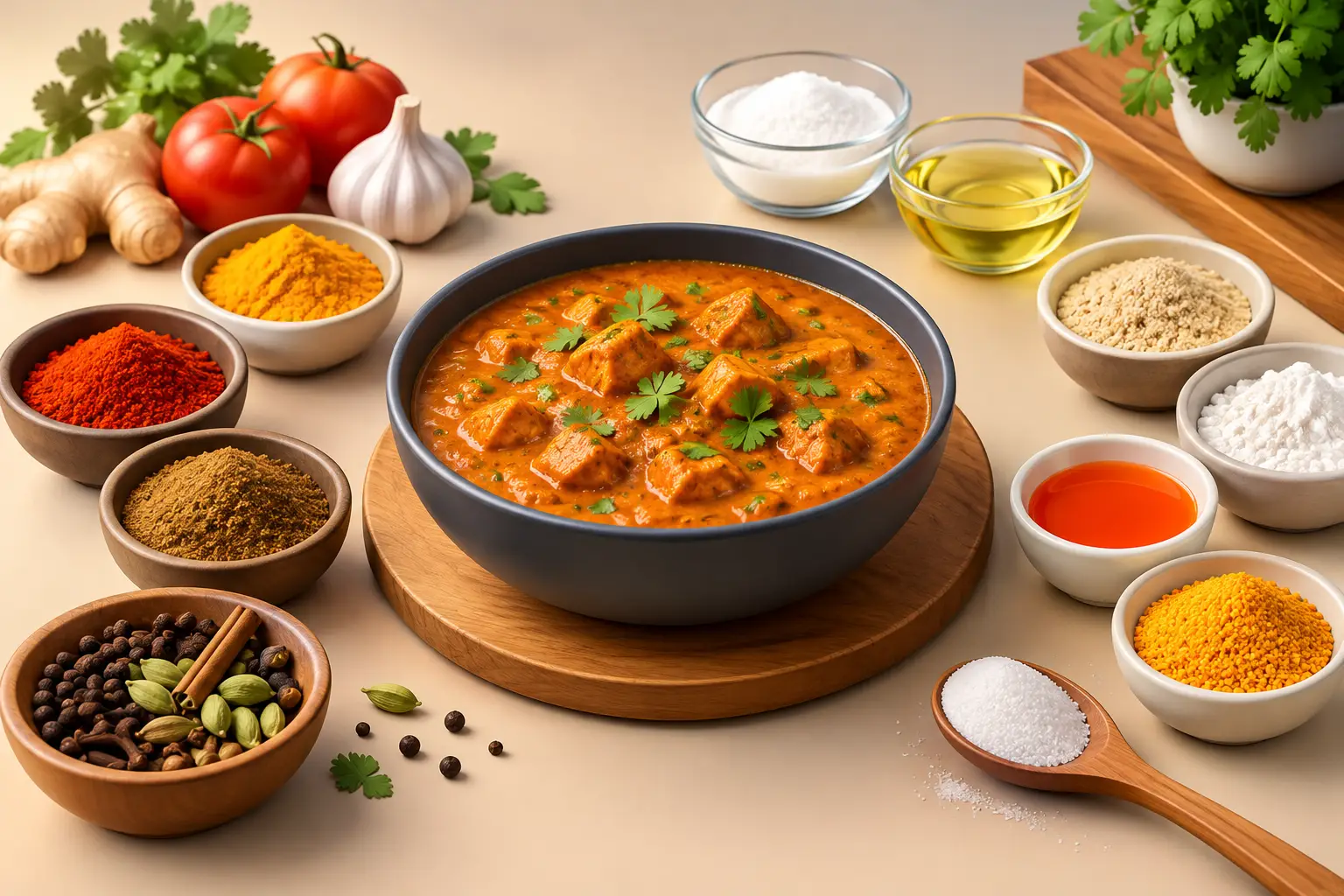
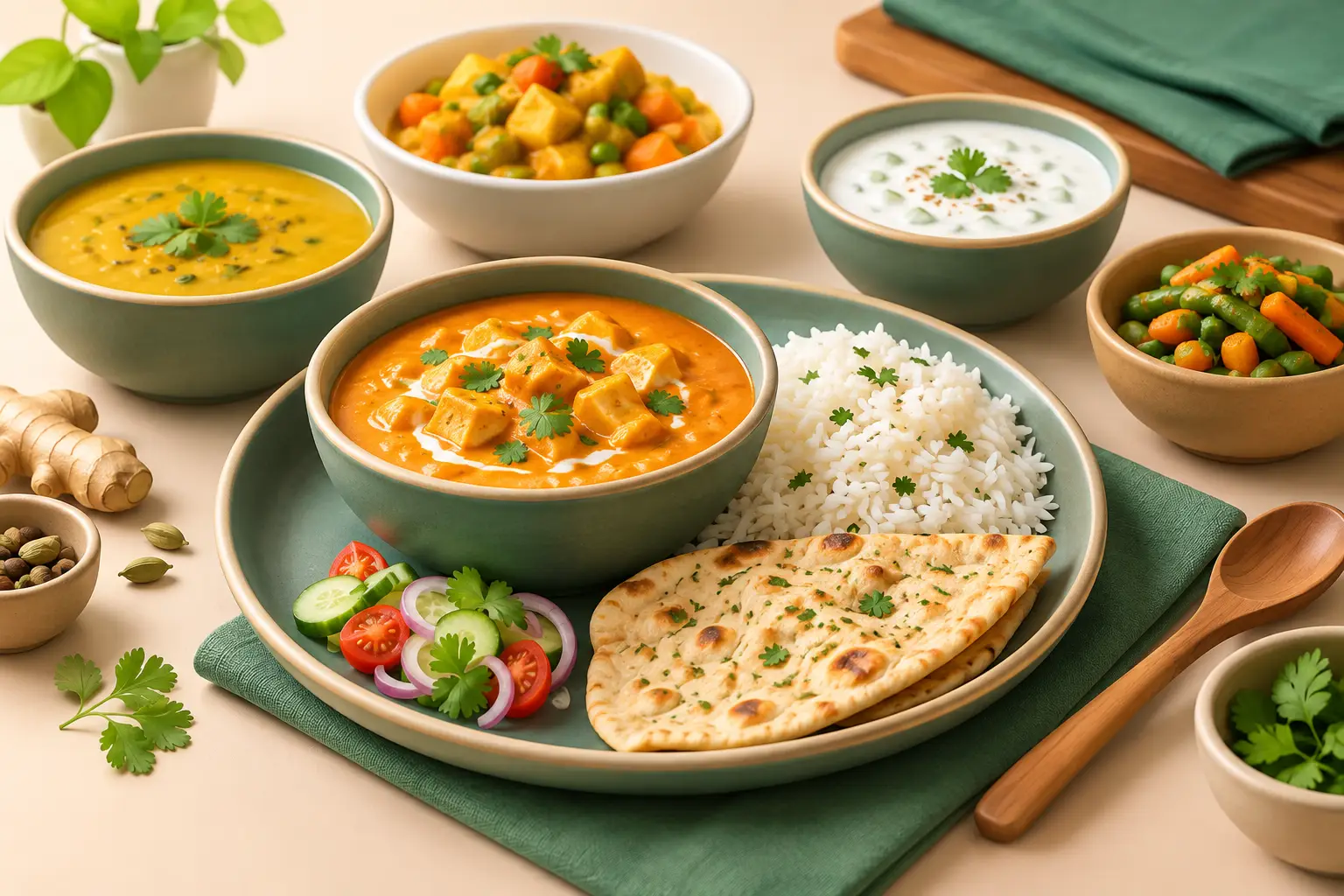
Most Indian curries begin with a few essential building blocks, but the proportions and cooking methods change dramatically from one dish to another. That is why a tomato-based chicken curry, a fragrant lentil dal, and a creamy vegetable korma can all be called curry while tasting completely different.
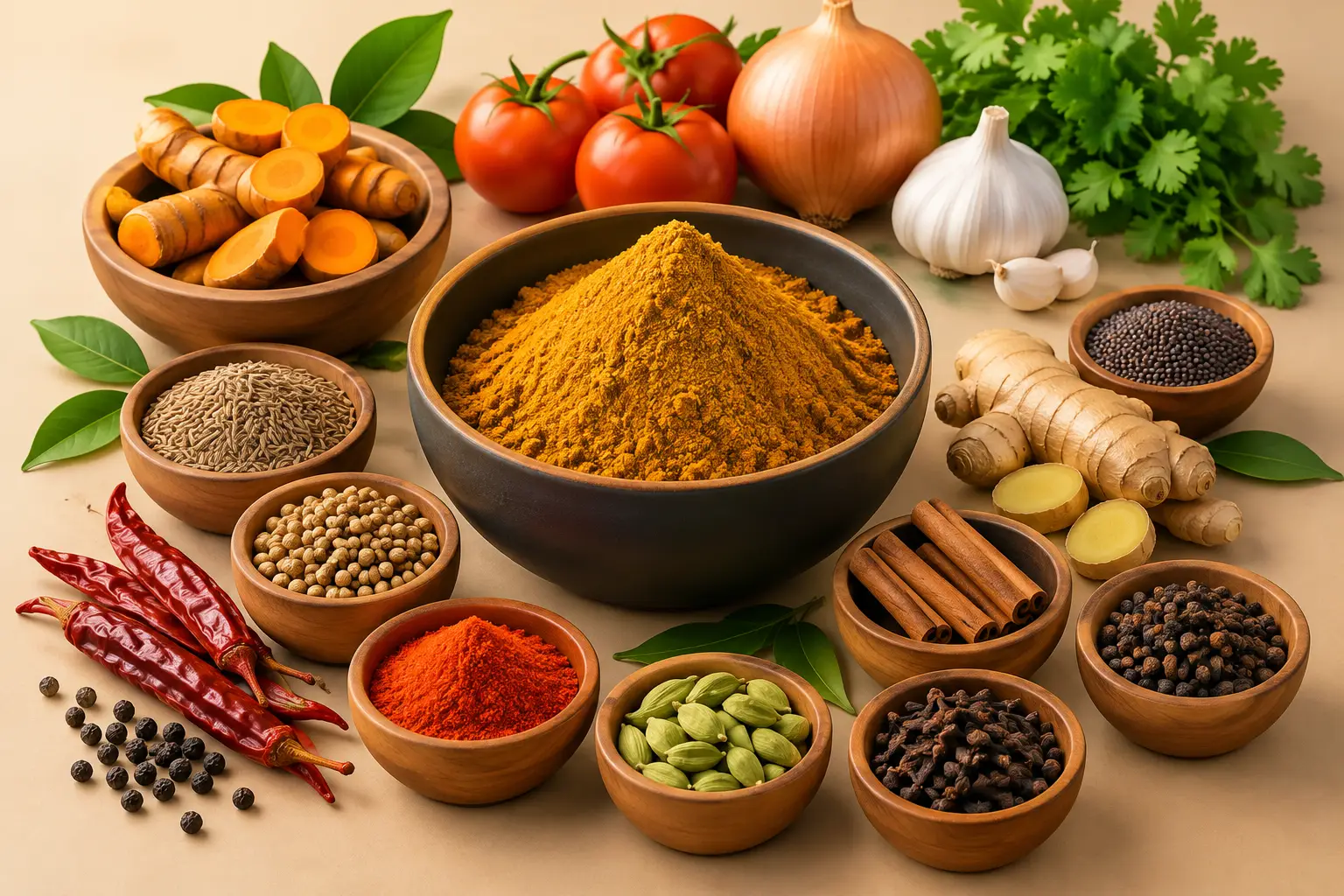
Onion is often the starting point. Cooked slowly, it brings natural sweetness and body to a sauce. Cooked until golden, it develops deeper savory notes. In a lighter preparation, the aim is not to drown onions in oil, but to give them enough time and heat to soften and caramelize naturally.
Ginger and garlic follow closely behind. Freshly prepared ginger adds peppery brightness, while garlic supplies a fuller, savory depth. Together, they form a familiar aromatic base in many North Indian dishes. Their freshness matters: ginger that is lively and sharp and garlic that has not been sitting too long create a cleaner, more vivid flavor.
Tomatoes bring acidity, color, and a natural sweetness once cooked down. They are particularly important in many restaurant-style sauces, where they balance richer ingredients such as yogurt, butter, or ground nuts. Depending on the recipe, tomatoes may be fresh, pureed, or simmered into a concentrated masala.
Whole Spices and Ground Spices Have Different Jobs
Indian cooking is often described as spice-forward, but that does not mean every curry should be aggressively spicy. Heat is only one part of the picture. Spice blends can be floral, earthy, citrusy, smoky, sweet, or gently bitter, and the timing of each addition changes the result.
Whole spices are commonly warmed at the beginning of cooking. Cumin seeds, mustard seeds, cinnamon, cloves, cardamom, bay leaves, and black pepper release their aromas into a small amount of hot oil or ghee. This early step is called tempering, and it gives a curry a rounded, fragrant base. It is a small detail with a noticeable effect.
Ground spices are usually added once the aromatics have softened. Turmeric offers its golden color and subtle earthiness. Coriander brings a warm, lemony quality. Cumin adds nutty depth, while chili powder or fresh chilies provide heat. Garam masala is often added toward the end, preserving its perfume rather than cooking it away.
The trade-off is worth remembering at home and when choosing a takeaway: more spice does not automatically mean more flavor. Too much turmeric can become bitter, too much chili can hide the dish’s other ingredients, and overcooked ground spices can taste dusty. A well-made curry lets the spices support the main ingredient, whether that is tender chicken, lamb, paneer, chickpeas, or seasonal vegetables.
Why freshness matters in a spice cabinet
Spices lose their character over time. A jar of ground coriander may still look fine months later, but its citrusy aroma can fade, leaving a flat result. Whole spices generally keep their flavor longer, especially when stored away from heat and light. Toasting and grinding them as needed creates a more aromatic curry, though a carefully maintained ground-spice blend can still deliver excellent results on a busy weeknight.
The Ingredients That Create Texture and Balance
A curry sauce needs more than spice. It needs a base that carries flavor and gives the dish the right texture without making it feel heavy.
Yogurt is a classic choice. It adds gentle tang, helps tenderize meat in marinades, and brings a creamy finish without relying solely on cream. For the smoothest sauces, yogurt should be added carefully over moderate heat so it does not split. It is especially useful in dishes where the spices need a little cooling balance.
Coconut milk provides a different kind of richness. Often associated with South Indian and coastal cooking, it is naturally sweet, fragrant, and silky. It pairs beautifully with curry leaves, mustard seeds, tamarind, seafood, and vegetables. However, coconut milk has a distinct flavor, so it is not a universal substitute for dairy in every Indian curry.
Cashews, almonds, and seeds can also create body. Ground cashews make sauces lush and mild, while poppy seeds, sesame, or melon seeds appear in regional recipes for a more subtle creaminess. These ingredients are useful for vegetarian dishes, but they should be handled with care for guests with nut allergies.
Lentils and chickpeas bring another kind of substance. They thicken naturally, carry spices well, and make a meal feel generous without requiring a heavy sauce. A properly cooked dal should be comforting but never dull, lifted by a final tempering of cumin, garlic, chili, or fresh curry leaves.
Fresh Finishes Are What Keep a Curry Lively
The final minute of cooking can be as important as the first. Fresh cilantro, mint, sliced green chili, lemon juice, and julienned ginger bring contrast to cooked spices and slow-simmered sauces. They keep the dish from tasting one-note.
Cilantro is especially valued for its clean, citrusy edge. Used in the sauce and scattered just before serving, it can brighten richer dishes without adding heaviness. Mint works beautifully with yogurt-based accompaniments and grilled dishes, while lemon or lime can sharpen a curry that feels too rich or too sweet.
Tamarind is another ingredient that deserves attention. Its sweet-sour intensity gives many South Indian dishes their distinctive tang and works particularly well with lentils, fish, and vegetables. A little goes a long way. The goal is balance, not an overly sour sauce.
How Lighter Curries Still Deliver Depth
A fresh, health-conscious approach to Indian food is not about stripping a dish of its character. It is about respecting the ingredients enough to use them with intention. Good-quality protein, vegetables cooked until tender but not lifeless, measured oil, and a sauce built from aromatics rather than shortcuts all make a difference.
For example, a chicken curry can feel deeply satisfying with tomatoes, ginger, garlic, warming spices, and yogurt instead of a large amount of cream. A vegetable curry can gain richness from roasted squash, lentils, or a small amount of coconut rather than an oily sauce. Vegan dishes can be full-bodied when chickpeas, cauliflower, spinach, eggplant, and carefully tempered spices take center stage.
Dietary needs also change the ingredient conversation. Gluten-free diners should watch for prepared sauces or spice mixes with unnecessary additives, while dairy-free diners may prefer tomato, coconut, or lentil-based curries. Nut-free options require particular care where cashew-based sauces are common. The answer is not one universal recipe, but a kitchen that understands what each ingredient contributes and can prepare dishes thoughtfully.
What to Look for When Ordering Curry
A restaurant-quality curry should smell fragrant before the first bite. You should be able to recognize its main ingredient, not just a blanket of sauce. The spice level should suit your preference, but the dish should still have acidity, aroma, and depth beneath the heat.
At Cilantro London, that balance is central to the cooking: authentic recipes, made-to-order preparation, and ingredients chosen to create generous flavor without the greasy finish often associated with a standard takeaway. Whether you are planning a relaxed dinner in Putney or ordering a comforting meal at home, choosing a curry built with care makes all the difference.
The next time you read a menu, look beyond the word “curry.” Notice the tomato, yogurt, coconut, lentils, fresh herbs, and spices that shape the dish. Those details are where comfort food becomes something far more memorable.