A great Indian dinner should leave you comfortably full, not ready for the couch. So, what is a healthy Indian dinner? It is a meal built around vegetables, satisfying protein, fragrant spices, and sensible portions, with richness used thoughtfully rather than piled on. Indian food has always offered the ingredients for this kind of eating. The difference lies in how a dish is prepared and what you choose to pair it with.
For diners who love the warmth of a curry but want a fresher, lighter evening meal, the answer is not to avoid Indian cuisine. It is to look beyond the assumption that every Indian dinner has to be creamy, fried, or heavy. A balanced meal can still be deeply aromatic, generously spiced, and genuinely comforting.
What Makes a Healthy Indian Dinner?
Healthy means something slightly different for every guest. Someone fueling up after a long workday may want a protein-led meal with rice; someone else may prefer more vegetables and a lighter sauce. Dietary needs, appetite, and the rest of the day all matter. Still, a healthy Indian dinner usually has a few clear qualities: it includes a good source of protein, plenty of plant-based ingredients, a measured amount of starch, and cooking that lets flavor come from spices, herbs, tomatoes, onions, garlic, ginger, and fresh ingredients rather than excess oil or cream.
The goal is balance, not blandness. Turmeric, cumin, coriander, chili, cardamom, fenugreek, black pepper, and mustard seeds bring layers of flavor without relying on heavy sauces. A well-cooked tomato and onion base can be just as satisfying as a cream-based curry, particularly when it is finished with fresh cilantro, lemon, or warming whole spices.
Portion balance matters as much as the dish itself. A large serving of rice, naan, rich curry, and fried starter can turn even a thoughtfully cooked main into a meal that feels overly filling. Choose one main starch, add a vegetable side, and let the curry or grilled dish take center stage.
Start With Protein and Vegetables
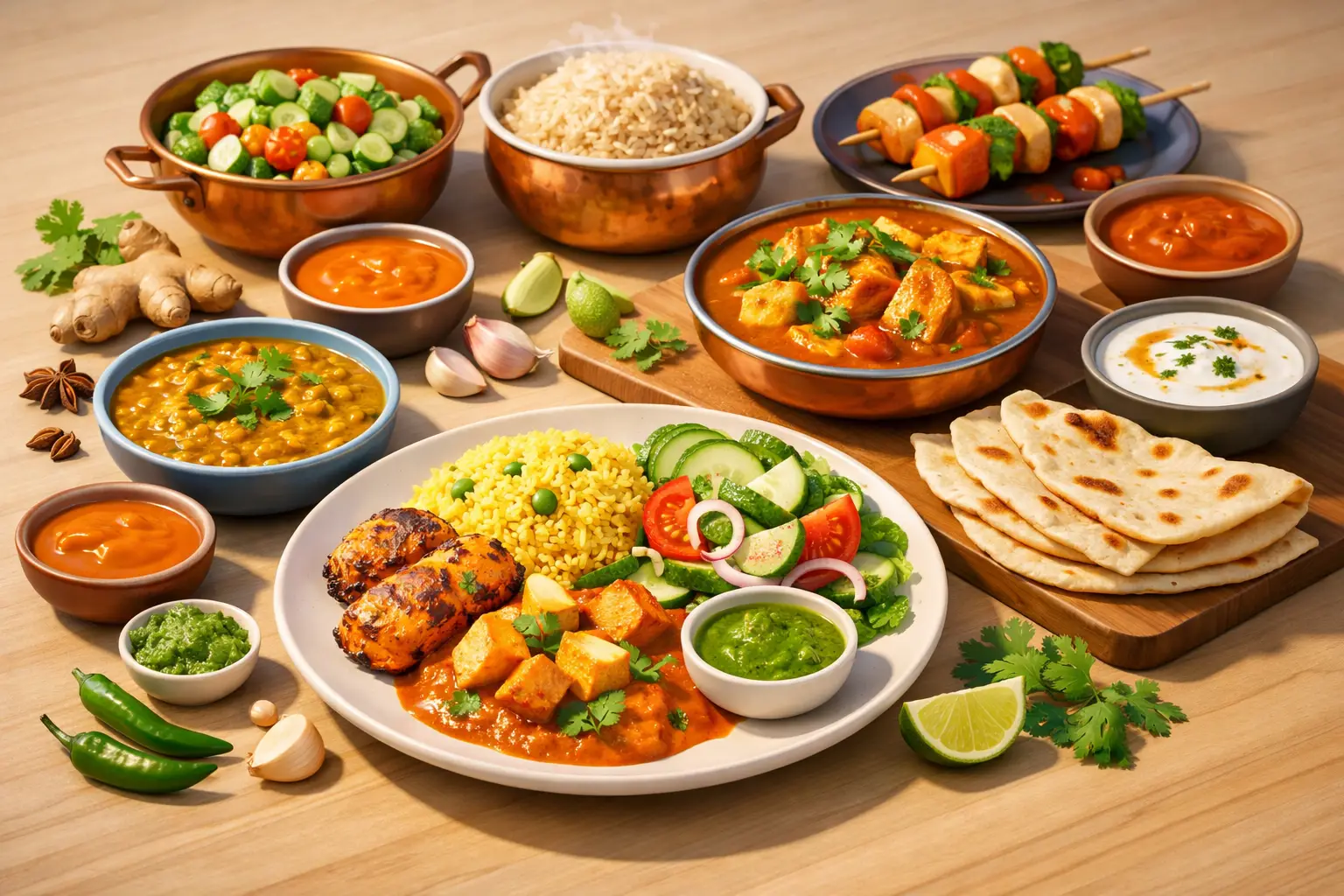
Protein gives dinner staying power. In Indian cooking, that can mean tandoori chicken, grilled fish, lentils, chickpeas, beans, tofu, paneer, or a combination of legumes and vegetables. Tandoori cooking is particularly useful for a lighter dinner because the intense heat creates char and depth of flavor without needing a heavy coating.
Lentil dishes deserve more attention than they often get. Dal can be nourishing, affordable, and full of character, especially when cooked with ginger, garlic, tomatoes, and a modest finishing tempering of spices. It is naturally satisfying and works beautifully with a vegetable curry or salad. The trade-off is that some restaurant dals can be finished with plenty of butter or ghee, so it is reasonable to ask about preparation if that is a priority for you.
Vegetables should be more than a token side. Look for dishes featuring spinach, eggplant, cauliflower, okra, peas, mushrooms, green beans, squash, or mixed seasonal vegetables. A dry-style vegetable dish, a lightly sauced curry, or a fresh salad can bring color and contrast to a meal centered on grilled protein or lentils.
Paneer can absolutely fit into a healthy Indian dinner, but preparation matters. Paneer is a good vegetarian source of protein and has a satisfying texture, yet it is richer than lentils or tofu. Pair it with vegetables and a tomato-forward sauce, rather than choosing it alongside multiple rich sides. The same principle applies to coconut-based curries: delicious and suitable for many diets, but often higher in fat, so balance them with vegetables and lighter accompaniments.
Choose Cooking Styles That Keep Flavor Bright
Certain menu words can help you choose a lighter meal without sacrificing authenticity. Tandoori, grilled, roasted, dry, steamed, tomato-based, spinach-based, and lentil-based dishes are often strong places to start. They are not automatically low-calorie, and recipes vary from kitchen to kitchen, but they generally point toward fresher preparations than deep-fried starters or cream-heavy gravies.
That does not mean favorites such as korma, makhani-style dishes, or biryani are off limits. A healthy approach does not turn dinner into a rulebook. If you are craving a richer curry, share it, choose a vegetable side, and skip an additional fried dish. If biryani is the meal you really want, enjoy it with raita or salad and treat it as the main event rather than adding naan and another rice dish.
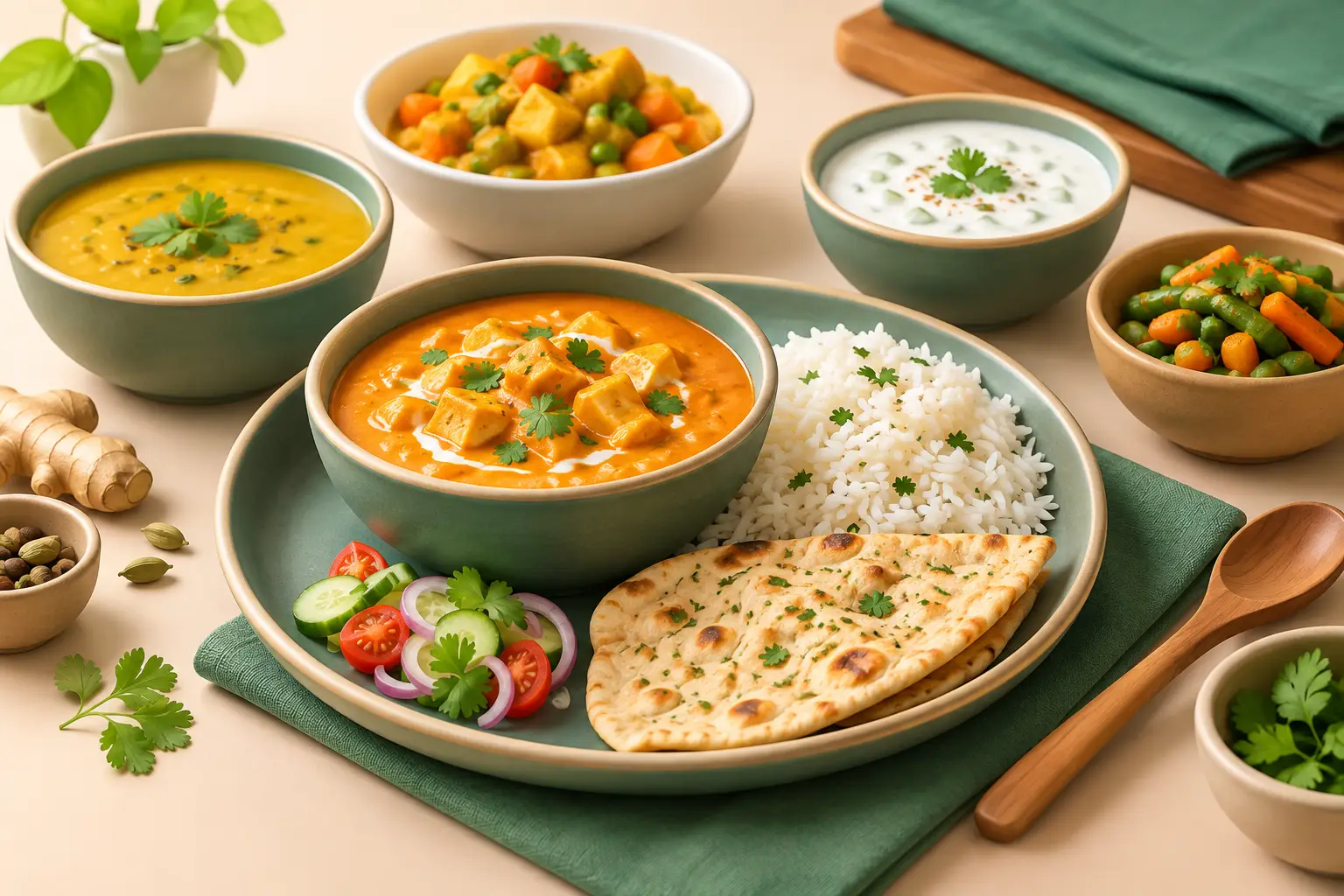
A useful way to build your plate is to think in four parts:
- A protein such as tandoori chicken, fish, dal, chickpeas, tofu, or paneer
- One or two vegetable-focused dishes or a crisp salad
- A modest portion of basmati rice or one flatbread
- A sauce or chutney that adds brightness, heat, and character
This approach is flexible enough for a weeknight delivery order, a family meal, or dinner out with friends. It also leaves room for the foods you genuinely enjoy, which is what makes healthy eating sustainable.
Rice, Naan, and Smart Portions
Carbohydrates have a place at dinner. Basmati rice can be a perfectly sensible choice, especially alongside dal, grilled dishes, and vegetables. Its light, separate grains make it easy to portion, and it is often a better fit for a saucy curry than adding several breads to the table.
Naan is delicious, but it is easy for it to become an afterthought that adds up quickly when rice is already on the order. For a lighter Indian dinner, choose rice or naan rather than both, unless you are sharing a larger meal. Plain roti or whole-wheat flatbread can also be a good option when available, offering a simpler accompaniment to grilled dishes and vegetable curries.
Be mindful of extras that arrive before the main meal. Papadums, fried appetizers, creamy dips, and sweet drinks can be enjoyable, but they can also crowd out the dishes you were most looking forward to. If you want a starter, sharing one is usually enough. A vegetable appetizer or grilled kebab can set the tone without making dinner feel heavy before the main course arrives.
A Healthy Indian Dinner for Different Dietary Needs
Indian cuisine is naturally welcoming to a range of dietary preferences. Vegetarians have strong options in dal, chickpeas, vegetable curries, paneer, and lentil-based dishes. Vegans can often enjoy chana, vegetable curries, dals prepared without dairy, salads, and rice, though it is always wise to check for ghee, cream, yogurt, or butter in sauces and breads.
For gluten-free diners, rice, many lentil dishes, grilled proteins, and vegetable curries can be excellent choices. Cross-contact and recipe details still matter, particularly with marinades, breads, and shared kitchen equipment. A quality restaurant should be happy to guide you toward choices that suit your needs rather than making you guess.
If you are watching sodium, richness, or spice levels, asking for a recommendation is far more useful than assuming mild means light. A mild curry may contain cream, while a hotter tomato-based dish may feel lighter. Heat is about chili; richness is about the ingredients and cooking method. They are not the same thing.
How to Order a Lighter Indian Meal Without Missing Out
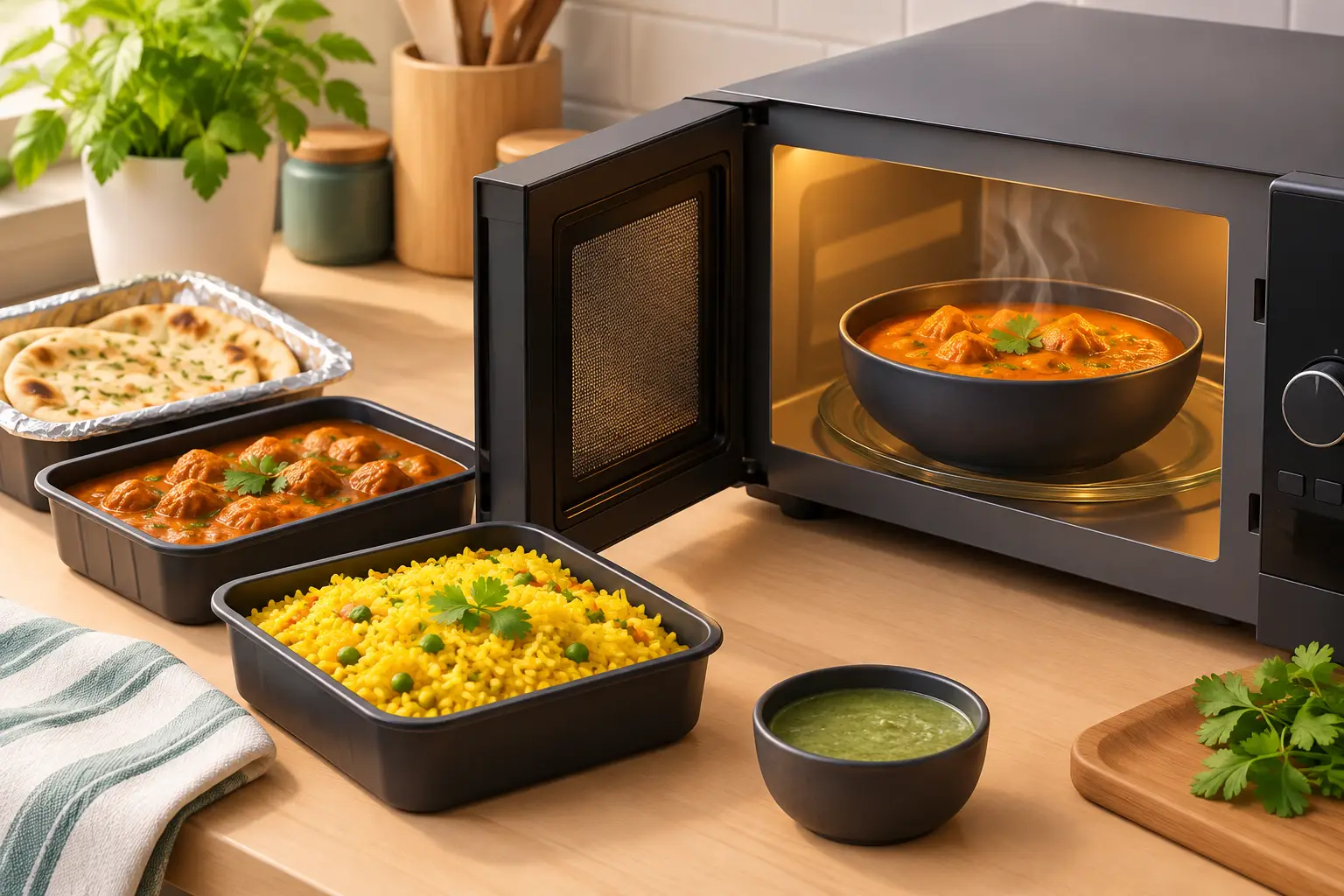
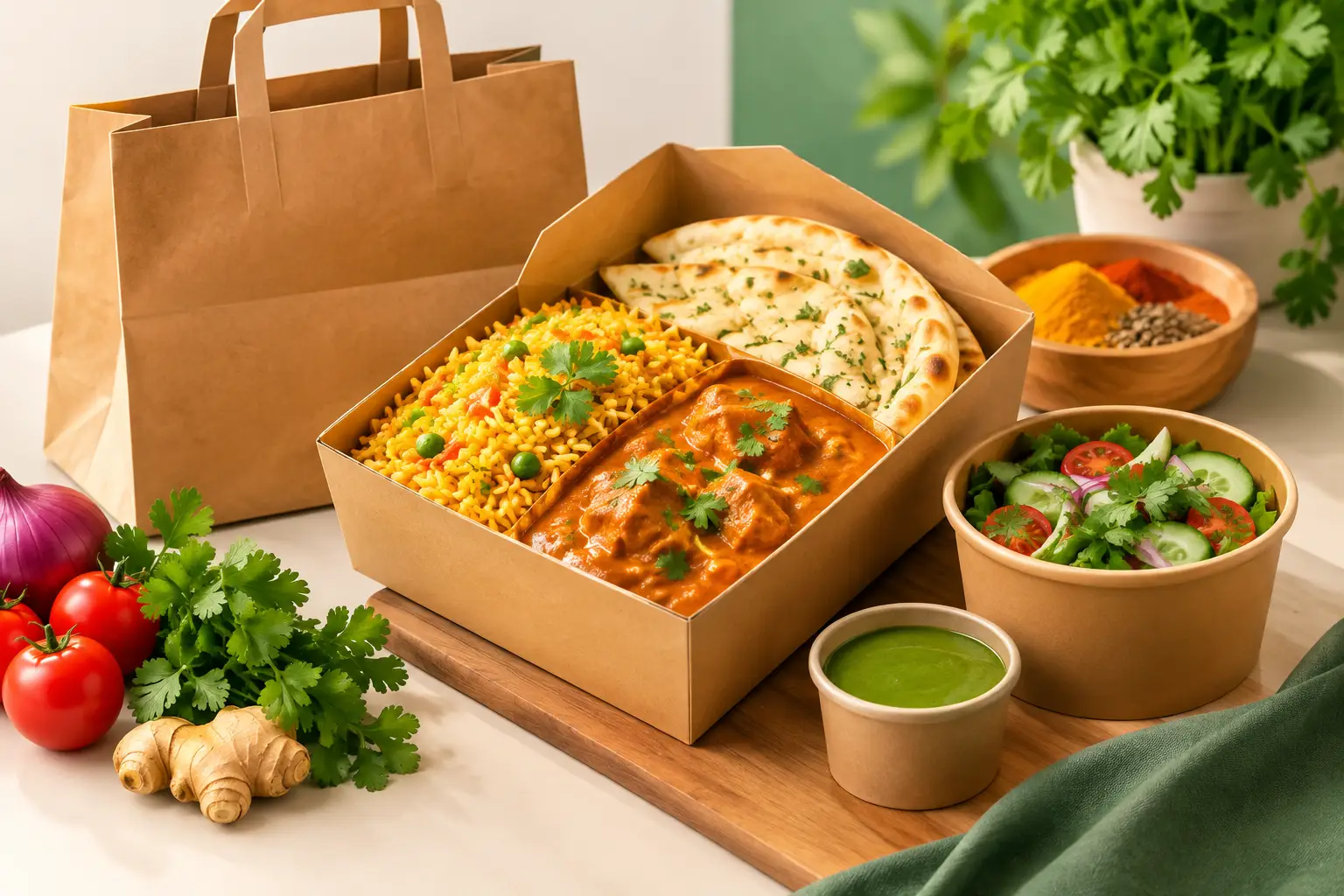
When ordering takeaway, begin with what you want dinner to feel like. If you want something fresh after a busy day, choose a tandoori or grilled main, a vegetable dish, and rice or roti. If comfort is the priority, select the curry you love and create balance around it with dal, greens, or salad instead of multiple fried sides.
At Cilantro London, the focus is on authentic recipes made with care, so guests can enjoy the spice depth and familiar comfort of Indian food in a more refined, less greasy style. That is particularly welcome when dinner needs to work for everyone at the table, from committed vegetarians to family members who want classic grilled chicken or a satisfying curry.
For Putney, Barnes, Richmond, and nearby diners, a good Indian dinner should fit real life: a quick meal after work, a relaxed family night, or a table shared with friends. Ordering thoughtfully does not make the experience less generous. It makes room for the flavors to shine.
The best healthy Indian dinner is the one that feels satisfying, colorful, and full of care – a meal you can enjoy slowly, share gladly, and look forward to ordering again.