You can usually tell within the first few bites whether a curry was sitting in a pan waiting for service or cooked with real attention when you ordered it. The difference shows up in the aroma, the texture of the sauce, the brightness of the spices, and how you feel after the meal. Made to order curries stand apart because they are prepared with timing, balance, and freshness in mind, not just speed.
For diners who love Indian food but want something more refined than the usual heavy takeaway, that difference matters. A curry should feel comforting and full of depth, but it should also taste clear, fresh, and well judged. When each dish is cooked to order, the kitchen has far more control over how the spices bloom, how the sauce reduces, and how the main ingredient actually holds its character.
What made to order curries really mean
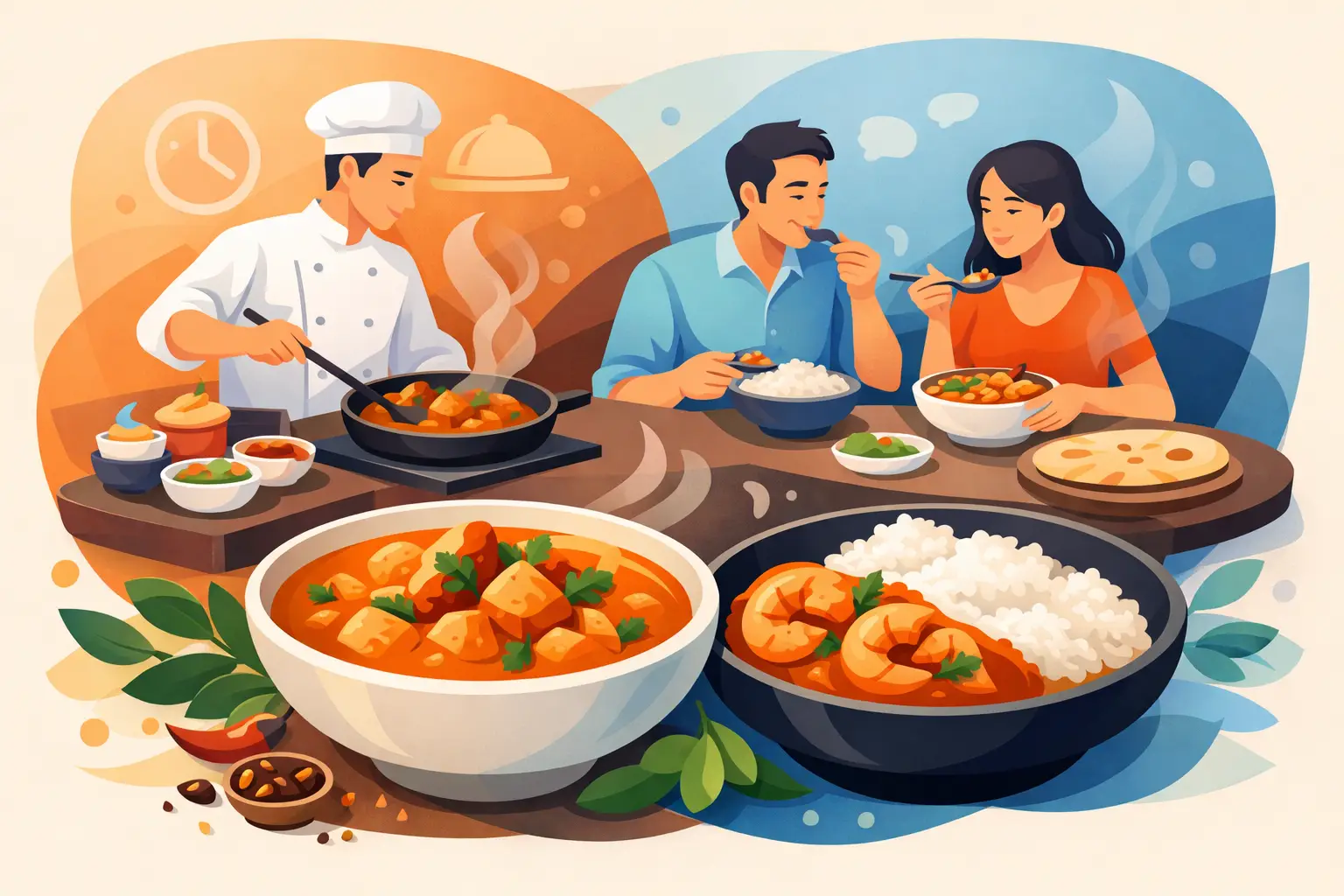
The phrase can sound simple, but in practice it says a lot about how a kitchen works. Made to order curries are not just reheated portions dressed up at the pass. They are assembled and finished when the ticket comes in, which means the sauce, protein, vegetables, and seasoning are brought together at the right moment rather than hours earlier.
That approach does not mean every single component starts from scratch the second you order. In any serious kitchen, some foundations are prepared in advance. Stocks are built, onions are cooked down, spice blends are measured, and marinades are developed with care. The point is that the final curry is cooked and balanced for your order, not pulled from a generic batch that has been losing detail over time.
That distinction is especially important in Indian cooking, where layering matters. Spices do not all behave the same way. Some need oil and heat to release their fragrance. Some become bitter if pushed too far. Others need a little time in the sauce to round out. A made to order approach gives the chef room to treat those ingredients properly.
Why made to order curries taste fresher
Freshness is not only about the ingredient itself. It is also about when flavor is activated. When garlic, ginger, green chili, and whole spices hit the pan at the right moment, they create a liveliness that is hard to fake later. You notice it first in the smell, then in the finish of the dish.
Batch-cooked curries can still be enjoyable, especially in very high-volume settings, but they often lose contrast. The sauce becomes more uniform, the spices flatten, and delicate notes get buried. In a made to order curry, the flavor feels more defined. Tomato tastes brighter. Fenugreek smells warmer. Fresh herbs stay fresh instead of wilting into the background.
This is one reason diners who care about quality often describe certain Indian meals as lighter, even when the dish is deeply satisfying. The food is not necessarily sparse or less generous. It simply has more clarity. You can taste the ingredients instead of just the weight of the sauce.
Texture is where the difference becomes obvious
A well-made curry is not just about heat or richness. Texture plays a huge role in whether a dish feels polished. Chicken should stay tender. Paneer should remain soft without turning rubbery. Vegetables should keep some structure rather than collapsing into the gravy.
Made to order cooking helps preserve that texture. If a curry sits too long, ingredients keep cooking in the residual heat. Seafood can toughen. Cream-based sauces can become heavy. Leafy herbs disappear. Potatoes can lose their edges and become dense. Even rice served alongside the dish can feel less distinct if timing is off.
When a kitchen prepares curries to order, it can match the cooking time to the ingredient. A lamb curry may need a developed base and slow-cooked meat, but the final finishing still matters. A prawn curry benefits even more from careful timing because a few extra minutes can change it completely. This is where restaurant-quality Indian food separates itself from food that is merely convenient.
Spice balance is easier to control
One of the biggest advantages of made to order curries is precision. Heat level is part of it, but not the whole story. Good spice balance is about depth, sweetness, acidity, warmth, and finish. It is about whether the chili supports the dish or overwhelms it.
When a curry is cooked for the individual order, seasoning can be adjusted in a way that feels intentional. That is helpful for guests who enjoy bold spice and for those who prefer something gentler. It also matters for dietary preferences and different styles of dining. A family order, a quick midweek takeaway, and a relaxed dinner out do not always call for exactly the same intensity.
There is a trade-off, of course. Cooking to order can take longer than serving from a large prepared batch. But for many diners, that extra care is exactly the point. If you want a curry that feels considered rather than standardized, a few more minutes are worth it.
A better fit for modern dining
Indian food has always offered variety, but expectations have shifted. Many people still want comfort and generous flavor, yet they are also looking for cleaner preparation, less grease, and dishes that suit the way they actually eat now. That might mean choosing grilled starters, lighter sauces, vegetarian options, or a curry that satisfies without feeling overly rich.
Made to order curries suit that shift naturally. They allow the kitchen to keep flavors authentic while preparing dishes with more control and less excess. That can mean a sauce that tastes silky without being oily, or a vegan curry that feels complete and layered rather than treated as an afterthought.
For local diners in Putney and nearby neighborhoods, this matters because Indian food is often part of real weekly life, not just a once-in-a-while indulgence. You might be ordering after work, planning a family dinner, or booking a table for a relaxed evening out. In all of those moments, quality and consistency matter just as much as convenience.
Dine-in, takeaway, and delivery all benefit
Some people assume made to order cooking only matters if you are eating in the restaurant. In reality, it matters just as much for takeaway and delivery. Food that starts with stronger texture and fresher balance tends to travel better. The dish still has structure when it reaches your table at home.
That does not mean every curry travels equally well. Creamy and delicate dishes may soften more quickly than drier or more robust preparations. But a kitchen that cooks to order can factor that in. It can finish the dish properly, pack it with care, and send it out at the right point instead of letting it sit.
This is where trust becomes a real part of the experience. When you order from a restaurant that takes made to order preparation seriously, you are not just buying dinner. You are choosing reliability – food that tastes as though somebody paid attention before it left the kitchen.
Why it matters for vegetarian, vegan, and gluten-free diners
Freshly prepared curries are also a better match for diners with specific dietary needs. Not every request can be accommodated in every dish, but cooking to order gives the kitchen more flexibility. Vegetarian and vegan curries benefit from the same depth and timing as meat-based dishes, and gluten-free diners often feel more confident when preparation is handled with care rather than guesswork.
That flexibility only works when the kitchen is organized and experienced. Made to order should never mean chaotic. At its best, it reflects strong systems, skilled chefs, and a genuine respect for the food.
That is why restaurants like Cilantro London place so much value on freshness, authenticity, and thoughtful preparation. The goal is not to make Indian food less flavorful or less traditional. It is to serve it at its best – balanced, vibrant, and suited to the way people want to eat now.
Choosing a curry that is worth ordering
If you are deciding where to book a table or order online, made to order curries are a good sign that the kitchen cares about more than volume. You are more likely to get a dish with distinct flavor, better texture, and a finish that feels satisfying rather than heavy.
That does not mean every diner wants the same thing every time. Sometimes speed matters most. Sometimes you want the richest, most indulgent dish on the menu. But when freshness, balance, and consistency are part of the brief, made to order preparation gives a curry its best chance to shine.
The next time you are choosing Indian food, pay attention to how the meal actually tastes and how it leaves you feeling afterward. A carefully prepared curry should offer comfort, depth, and warmth without losing its definition – and that is exactly why made to order is worth seeking out.