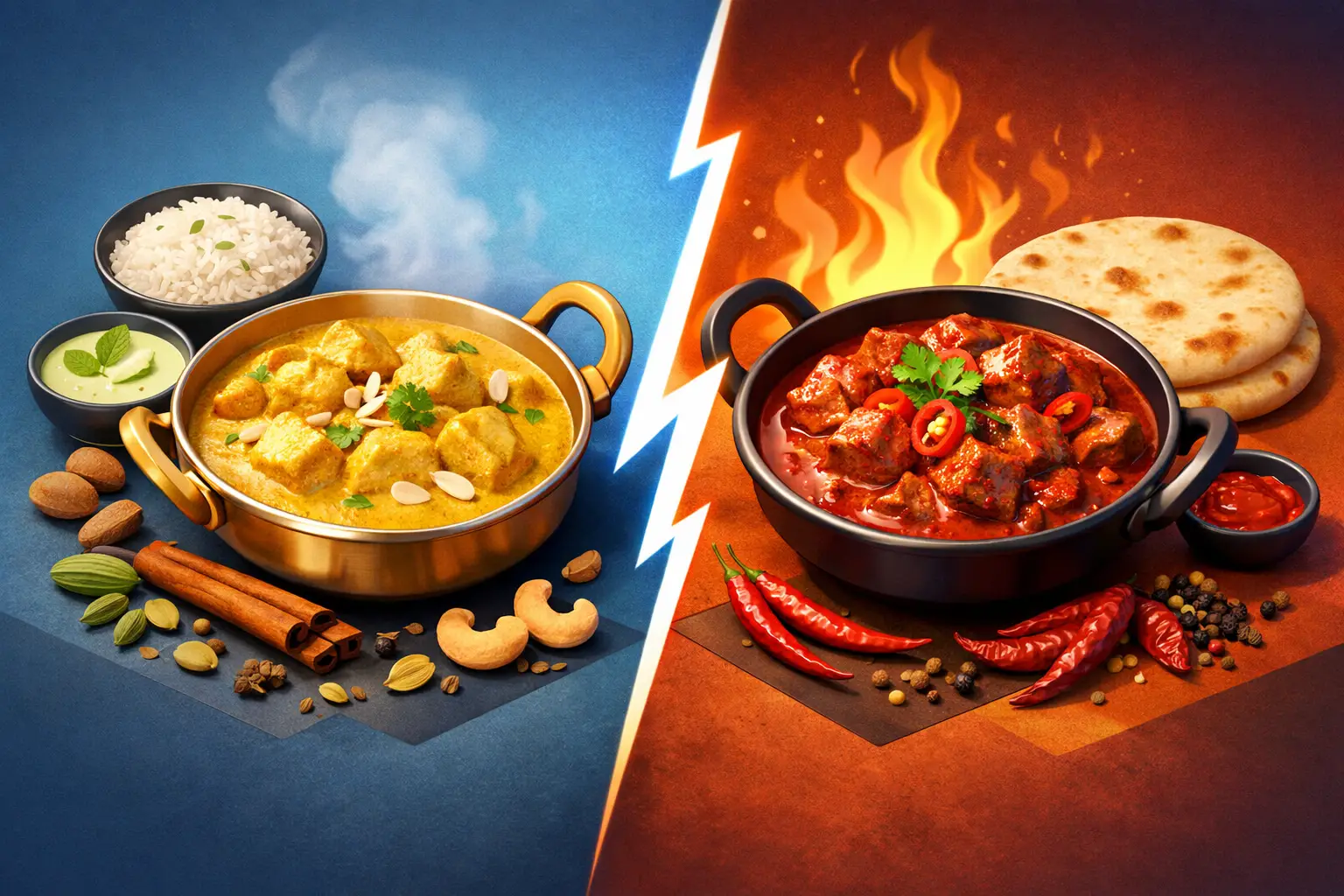
You see both on Indian menus all the time, sometimes side by side, and the names can sound close enough to blur together. But the tandoori vs tikka difference is real, and once you know what separates them, ordering becomes much easier. More than that, you start to notice how each dish brings its own texture, depth, and character to the table.
For diners who want Indian food that feels fresh, balanced, and full of flavor rather than heavy, this distinction matters. Tandoori and tikka are both rooted in traditional cooking, both often involve a spiced yogurt marinade, and both can be beautifully charred. Still, they are not interchangeable terms.
What is the tandoori vs tikka difference?
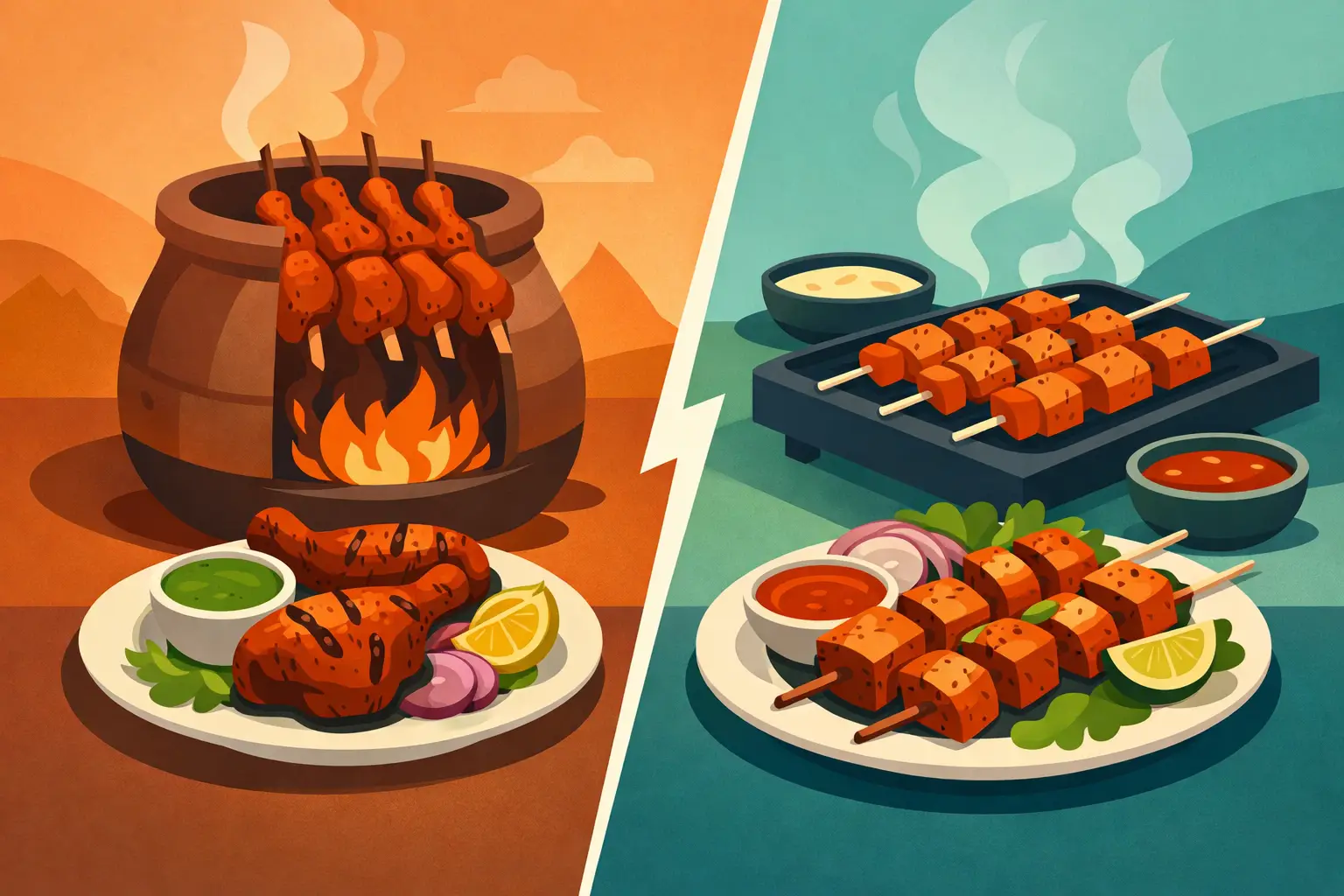
At the simplest level, tandoori usually refers to food cooked in a tandoor, the traditional high-heat clay oven that gives Indian grilled dishes their signature smoky edge. Tikka, on the other hand, refers more specifically to smaller boneless pieces of meat, fish, paneer, or vegetables that have been marinated and then cooked, often in a tandoor but sometimes by other high-heat methods.
So one key difference is that tandoori points to the cooking method and style, while tikka points more to the cut and format of the ingredient. That is why you might see tandoori chicken served on the bone, while chicken tikka usually arrives as boneless chunks.
This is also why the answer is not just about spice level. People often assume one is hotter than the other, but that depends on the kitchen, the marinade, and the recipe being used.
Tandoori: about heat, smoke, and structure
Tandoori dishes are built around the tandoor itself. This oven cooks at intense temperatures, which creates fast searing, a lightly blackened exterior, and a juicy center if handled properly. The result is food with a distinctive roasted quality that is difficult to copy exactly with standard oven cooking.
Traditionally, tandoori chicken is one of the most recognizable examples. It is often marinated with yogurt, ginger, garlic, lemon juice, and spices, then cooked on the bone. That bone-in preparation matters because it changes both the flavor and the eating experience. You get deeper savoriness, slightly more moisture, and a more substantial, rustic feel.
Tandoori dishes can also include lamb chops, king prawns, fish, and paneer. What ties them together is that they are usually presented as fuller cuts or pieces with more visual presence, often with a more pronounced char and a firmer outer texture.
For many diners, tandoori dishes feel a little bolder and more dramatic. They are ideal when you want that unmistakable grilled aroma and a dish that centers the ingredient itself rather than sauce.
Tikka: smaller pieces, more delicate bite
Tikka means pieces or chunks, and that definition goes a long way. Chicken tikka is typically made from boneless chicken cut into bite-size pieces, marinated in yogurt and spices, and grilled until lightly charred at the edges.
Because the pieces are smaller and boneless, tikka often cooks more evenly and feels easier to eat, especially in a casual dinner setting or as part of a mixed order. The texture is usually tender and approachable, with plenty of marinade flavor in each bite. Compared with a bone-in tandoori dish, tikka can come across as cleaner, neater, and slightly less intense in structure, even when the seasoning is rich.
That makes tikka a popular choice for people who want all the fragrance of Indian grilled food without dealing with bones or larger cuts. It is also one of the reasons tikka works so well in wraps, salads, rice bowls, and lighter mains.
Marinade matters, but it does not define the whole difference
One reason people confuse the two is that both often start with a similar marinade base. Yogurt is common because it helps tenderize the protein and carries spices beautifully. Garlic, ginger, cumin, coriander, chili, turmeric, garam masala, and lemon or lime may all appear in either style.
That said, a tandoori marinade may sometimes be a bit heavier in color, smokiness, or intensity, especially when applied to larger cuts that need stronger seasoning to penetrate. Tikka marinades can feel a little more precise because each smaller piece gets coated thoroughly and cooks quickly.
Still, this is not a rule you can apply rigidly. Every chef has a slightly different hand. Some tikkas are deeply spiced and boldly charred. Some tandoori dishes are surprisingly gentle and elegant. A good kitchen knows how to let the ingredient and the technique work together.
Texture is often the easiest way to tell
If you are trying to spot the difference on the plate, texture gives you one of the clearest clues.
Tandoori dishes, especially bone-in ones, usually have a more pronounced roasted exterior and a slightly meatier chew. They feel heartier and more traditional in presentation. There is often a stronger contrast between the charred outside and the juicy center.
Tikka tends to be softer, more uniform, and easier to cut or share. Because the pieces are smaller, the marinade and grilling effect are distributed more evenly. You get less variation from bite to bite, which many people actually prefer.
Neither texture is better. It depends on what kind of meal you want. If you are after bold grilled character and a classic tandoor experience, tandoori is often the better fit. If you want something lighter, neater, and easy to pair with other dishes, tikka usually wins.
Common menu confusion: tikka masala is not the same thing
Another source of confusion is chicken tikka masala. People see tikka on the menu and assume it is the same as any tikka dish. It is not.
Chicken tikka is the grilled boneless chicken itself. Chicken tikka masala is that tikka served in a sauce, usually creamy, spiced, and tomato-based in British Indian restaurant style. So tikka can be a standalone grilled dish or a starting point for a curry.
Tandoori dishes are less commonly turned into sauced mains in the same way, because their identity is tied more strongly to the direct oven-cooked style. When you order tandoori chicken, you are generally expecting the grilled dish, not a curry adaptation.
Which is healthier: tandoori or tikka?
If you are looking for a lighter Indian meal, both can be excellent choices. Since both are usually grilled rather than fried, they often feel fresher and less heavy than richer curry dishes with cream or butter-based sauces.
The healthier option depends on the exact recipe and what you eat alongside it. Bone-in tandoori chicken can be wonderfully satisfying with salad or grilled vegetables. Chicken tikka can be a very balanced choice if you want lean, boneless protein with clean flavors and easy portioning.
What matters most is preparation. Fresh marinade, quality ingredients, and careful cooking make a bigger difference than the label alone. In a kitchen that values made-to-order food and a more refined approach, both dishes can fit beautifully into a well-balanced meal.
How to choose between tandoori and tikka
If you are ordering for yourself, think less about which name sounds more authentic and more about what kind of experience you want. Choose tandoori if you enjoy fuller cuts, stronger smoky notes, and that classic clay-oven feel. Choose tikka if you want boneless pieces, even seasoning, and something easy to share or pair with rice, naan, or salad.
If you are ordering for a table, the best answer is often both. Tandoori gives you that striking grilled centerpiece, while tikka adds approachable, versatile bites that suit nearly everyone. They complement each other well, especially when the rest of the meal includes contrasting textures and lighter sides.
At a restaurant like Cilantro London, where Indian food is prepared with care, freshness, and a lighter touch, these distinctions become even more enjoyable. You are not just choosing between two menu labels. You are choosing between two different expressions of the tandoor tradition.
The tandoori vs tikka difference in one line
If you want the shortest answer, here it is: tandoori usually refers to a tandoor-cooked dish, often with larger or bone-in cuts, while tikka refers to smaller boneless marinated pieces cooked at high heat.
Once you know that, the menu starts to read differently. You notice the role of the oven, the cut of the protein, and the kind of texture each dish promises. And that makes it easier to order with confidence, whether you are planning a relaxed takeaway night or sitting down for a meal that feels just a little more special.
The best choice is the one that suits your appetite that day – smoky and bold, or tender and neatly grilled – because great Indian cooking has room for both.