Cold biryani has promise. Badly reheated biryani is a disappointment. If you want to know how to reheat biryani properly, the goal is simple: keep the rice fluffy, protect the moisture, and warm the center without turning the whole dish dry, greasy, or mushy.
That matters more with biryani than with many other leftovers. A good biryani is layered and balanced. The rice should stay separate, the spices should still feel fragrant, and the chicken, lamb, or vegetables should taste tender rather than tired. Reheating it carelessly in a blast of high heat can flatten all of that in minutes.
How to reheat biryani properly without drying it out
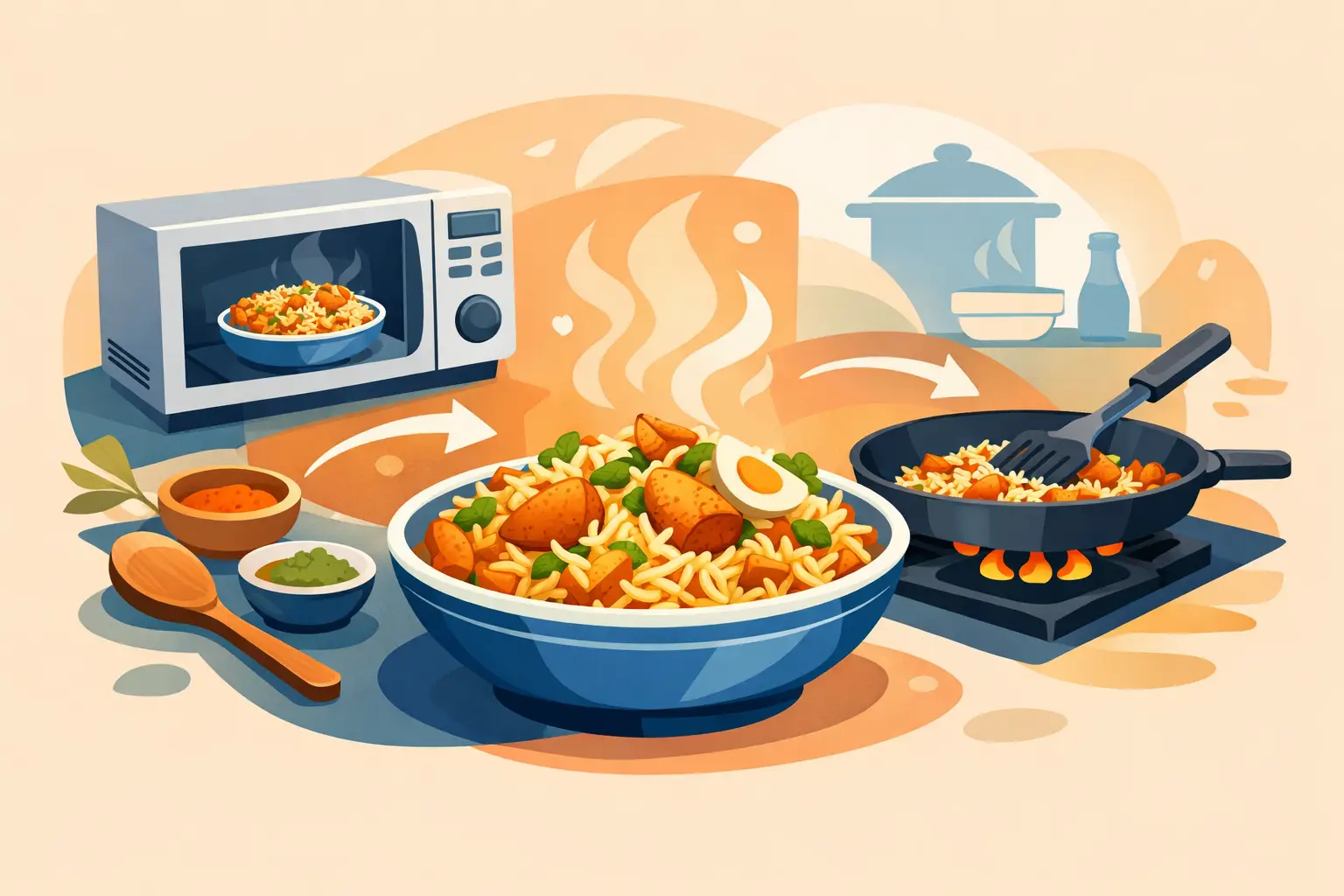
The best method for most people is the stovetop or the oven. Both give you more control than a microwave, and control is what biryani needs. Rice reheats well when there is a little moisture and gentle heat. Too much of either, and it loses texture.
Before you do anything, take the biryani out of the fridge and let it sit for 10 to 15 minutes if you have time. You do not need to bring it fully to room temperature, but taking the chill off helps it warm more evenly.
If the biryani looks slightly dry, add a teaspoon or two of water for a single portion, or a tablespoon or two for a larger amount. You can also use a little stock if you have it, but plain water is usually enough. You are not trying to soak the rice. You are creating just enough steam to wake it back up.
The stovetop method
For one or two portions, the stovetop is often the best choice. Put the biryani in a nonstick pan or shallow pot over low heat. Break up any compacted areas gently with a spoon, but do not stir aggressively. Biryani is layered by design, and rough mixing can crush the rice.
Sprinkle over a small amount of water, then cover with a tight-fitting lid. Let it heat slowly for about 5 to 8 minutes. Halfway through, gently turn sections from the edge toward the center so the heat spreads evenly.
This method works particularly well for chicken and vegetable biryani because it keeps the rice soft while helping the spices bloom again. If your biryani includes delicate toppings such as fried onions or fresh herbs, add those near the end if possible so they keep some texture.
The oven method
If you are reheating a larger tray or feeding a couple of people, the oven is the most reliable option. Preheat the oven to 300°F. Place the biryani in an oven-safe dish and spread it out evenly. Add a little water over the top, then cover the dish tightly with foil.
Bake for around 15 to 20 minutes, depending on the quantity. Check the center before serving, because that is where cold spots tend to hide. If needed, give it another 5 minutes.
The foil matters. Without it, the top layer dries out before the middle is hot. With it, the steam stays trapped and the rice remains much closer to its original texture.
Can you microwave biryani?
Yes, but this is the method most likely to produce uneven results. That does not mean it always fails. It just means you need to be more careful.
Place the biryani in a microwave-safe bowl and add a teaspoon or two of water. Cover it with a microwave-safe lid or plate, leaving a slight gap for steam to escape. Heat it in short bursts of 60 to 90 seconds rather than one long session. Stir or turn it gently between rounds, especially from the outside toward the center.
If your microwave runs hot, reduce the power slightly. High power can make the outer rice rubbery while the middle stays cool. For office lunches or quick weeknight dinners, the microwave is convenient. It is just not the best option if you want the biryani to taste as close as possible to freshly made.
How to reheat different types of biryani properly
Not every biryani behaves in exactly the same way. The rice needs care in every version, but the protein or vegetables can change the timing.
Chicken biryani
Chicken can dry out quickly, especially breast meat. Keep the heat low and avoid overcooking. If the chicken pieces are large, the stovetop with a lid or the covered oven method works better than an aggressive microwave reheat.
Lamb or mutton biryani
Lamb and mutton usually reheat well because they hold moisture better. They can even taste deeper the next day as the spices settle. Still, slow heat is the key. Too much direct heat can toughen the outer edges before the rice is warmed through.
Prawn biryani
Prawns are the most delicate. Reheat only until hot, no more. If you overdo it, they become firm and lose their sweetness. A gentle covered stovetop reheat is usually safer than a long oven session.
Vegetable biryani
Vegetable biryani is often the easiest to revive, but some vegetables soften more on reheating. If the dish already contains tender vegetables such as cauliflower or peas, handle it lightly and avoid repeated stirring.
Common mistakes that ruin leftover biryani
The biggest mistake is using high heat because you are hungry and in a hurry. High heat makes rice hard in some places, soggy in others, and can leave the bottom catching before the top is ready.
The second mistake is adding too much water. People often panic when biryani looks dry and pour in far more than needed. That turns defined grains into clumps. A light sprinkle is enough because the lid or foil traps steam.
Another common issue is reheating the same portion more than once. Every reheating round chips away at texture and freshness. If possible, warm only the amount you plan to eat.
There is also the fridge factor. Biryani should be cooled and refrigerated promptly after serving, ideally within two hours. If it has been left out too long, it is safer not to risk it. Great flavor should never come at the expense of food safety.
Should you add anything while reheating?
Usually, less is better. A splash of water is enough for most biryanis. If you want to freshen the dish a little, a spoonful of ghee can help restore richness, but only if the biryani feels leaner than it should. Too much fat will weigh it down.
Fresh herbs such as cilantro or mint added after reheating can lift the whole dish. A spoon of raita on the side also helps if the biryani has become more intense overnight. Lemon can work too, especially with chicken or vegetable biryani, but add it at the table rather than during reheating.
What if the biryani is still dry?
If it comes out hot but not quite right, do not keep blasting it with heat. Instead, add a tiny bit more water, cover it again, and let it sit off the heat for a minute or two. That resting time often does more than another full reheat cycle.
If the rice has already hardened from being overheated, there is only so much recovery possible. You may be able to soften it slightly with steam, but it will not fully return to the texture it had when fresh. That is why gentle reheating from the start makes such a difference.
The best way to enjoy biryani the next day
Biryani is one of those dishes that can be every bit as comforting the next day when treated with care. The spices settle, the aroma deepens, and the rice can still hold its shape beautifully if it is reheated slowly and with just enough moisture.
At Cilantro London, we believe Indian food should feel generous, balanced, and full of character from the first serving to the last. So if you are saving your biryani for tomorrow’s lunch or a quiet dinner at home, give it a little patience. A few extra minutes can bring back the warmth, fragrance, and comfort that made you order it in the first place.