You do not need to give up Indian food to eat a little lighter. The real trick in how to choose lighter Indian dishes is knowing where richness actually comes from and which parts of the menu bring flavor without the extra weight. Once you know what to look for, ordering becomes much easier, whether you are sitting down for dinner, planning a relaxed takeaway night, or choosing food for the whole family.
Indian cooking is often misunderstood as automatically heavy, but that usually comes down to a few specific choices. Cream-heavy sauces, large portions of rice, deep-fried starters, and buttery breads can turn a balanced meal into something far more filling than you intended. On the other hand, grilled meats, lentil-based dishes, tomato-led curries, dry vegetable sides, and fresh accompaniments can feel satisfying, polished, and full of spice without leaving you sluggish afterward.
How to choose lighter Indian dishes without losing flavor
The biggest mistake people make is assuming that “light” means bland. In a well-made Indian dish, flavor comes first from spices, aromatics, herbs, ginger, garlic, chilies, cumin, coriander, turmeric, black pepper, mustard seeds, and garam masala. Richness is only one part of the experience, and it is not always necessary.
A lighter order usually starts with the cooking method. Tandoori dishes are one of the easiest places to begin because they are typically marinated with yogurt, spices, and herbs, then cooked at high heat rather than submerged in oil or heavy sauce. That gives you char, depth, and moisture without the same richness you might find in a creamy curry.
You can also look at the base of a curry. Tomato-based sauces often feel brighter and less heavy than those built around cream, butter, or large amounts of ground nuts. Onion-based sauces can also be a good middle ground – full-bodied and deeply savory, but not always overly rich. If you love curry and do not want something too dry, this is often the smartest compromise.
Portion balance matters just as much as the dish itself. A lighter meal is rarely about one perfect order. It is usually about how everything works together. A grilled main with plain rice and a fresh salad can feel balanced. The same main with fried starters, buttery naan, and a creamy side will land very differently.
Start with dishes cooked in the tandoor
If you are scanning a menu and want the clearest route to a lighter meal, start with tandoori options. Chicken tikka, tandoori king prawns, grilled fish, and paneer tikka often offer the most straightforward combination of protein, spice, and clean preparation.
The marinade does a lot of work here. Yogurt tenderizes while spices build complexity, and the tandoor gives that unmistakable smoky edge. You still get the comfort and warmth people crave from Indian food, but the dish feels fresher and more refined than a fried appetizer or a cream-led curry.
This is also a good choice for takeaway if you want food that travels well without becoming greasy. Grilled dishes tend to hold their character, especially when paired with a simple side rather than covered in sauce.
Choose curries by sauce style, not just by name
This is where many people get caught out. Familiar curry names do not always tell you how rich a dish will feel, and recipes can vary from kitchen to kitchen. Still, there are patterns worth knowing.
Korma is usually one of the richest choices because it often includes cream, butter, and sometimes nuts or coconut. Makhani and butter chicken sit in a similar comfort-food category. These dishes are delicious, but if your goal is a lighter dinner, they are not usually the first place to look.
Jalfrezi, rogan josh, madras, and some bhuna-style dishes can be lighter depending on the kitchen and the amount of oil used. Jalfrezi often leans brighter, with peppers, onions, and a more direct spice profile. Bhuna is generally more reduced and less sauce-heavy, which some diners prefer because it feels intense without being overly creamy.
Dal can also be a smart choice, especially when you want something nourishing and satisfying. It depends on the version. A simple lentil preparation can feel wholesome and balanced, while a richer black dal finished generously with butter and cream may be more indulgent. This is a good example of why it helps to know the restaurant’s style.
If you are ordering from a restaurant that focuses on fresh, made-to-order food, the kitchen often has more control over richness and balance. That makes a real difference.
Be careful with the extras
A lighter main can quickly stop feeling light once the extras arrive. This is not about avoiding everything fun. It is about knowing what adds value and what simply adds bulk.
Fried starters such as samosas, pakoras, and bhajis are tempting, especially if you are sharing, but they can make the meal feel heavier before the main even begins. If you want a starter, look for grilled options, soups, or something with fresh vegetables and yogurt.
The same goes for breads and rice. You do not always need both. If your curry already comes with plenty of sauce, choosing either a plain naan or steamed basmati rice is often enough. Plain rice is usually the lighter option, while buttery naan, stuffed breads, or pilau rice can add more richness than people expect.
Sides matter too. A crisp salad, cucumber raita, or lightly spiced vegetable dish can bring freshness and contrast. Creamy or heavily fried sides do the opposite. Small decisions across the order make a bigger difference than trying to find one magically healthy dish.
Vegetarian can be light, but not always
People often assume vegetarian dishes are automatically lighter, and that is only partly true. Indian vegetarian cooking is wonderfully diverse, but richness can still come from cream, paneer, butter, ghee, frying, or heavy sauces.
If you want a lighter vegetarian meal, look for lentils, chickpeas, okra, aubergine, spinach, cauliflower, or mixed vegetables prepared with spices and herbs rather than cream. Chana masala, dry-style vegetable dishes, tarka dal, or saag made in a balanced way can all be satisfying choices.
Paneer is worth a closer look. It is a favorite for good reason – mild, comforting, and excellent with spice – but it is still a rich cheese. Grilled paneer tikka will usually feel lighter than paneer in a creamy sauce. So if you want the flavor and texture of paneer without the extra weight, the tandoor is again a smart place to begin.
Ask yourself what kind of meal you actually want
Sometimes the lightest choice is not the right choice for the occasion. If it is a date night, a celebration, or a proper Friday evening dinner, you may want a little indulgence. That is fine. Eating lighter does not have to mean ordering the most restrained thing on the menu every time.
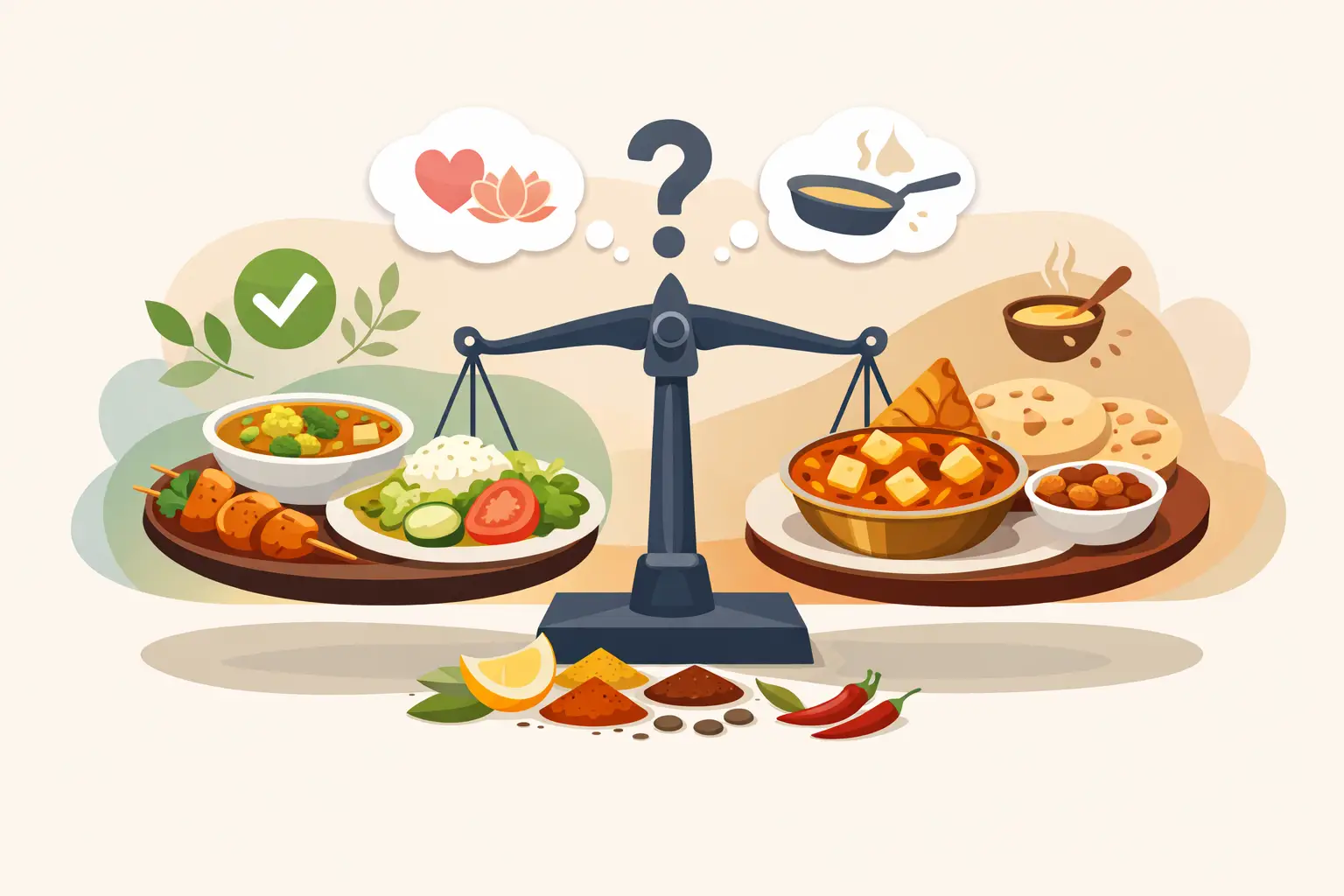
A better approach is to decide where you want the richness. Maybe you choose a creamy curry but skip fried starters and keep the sides simple. Maybe you go for grilled chicken or fish and save room for naan. Maybe you want a vegetarian spread, but balance one richer dish with fresher sides.
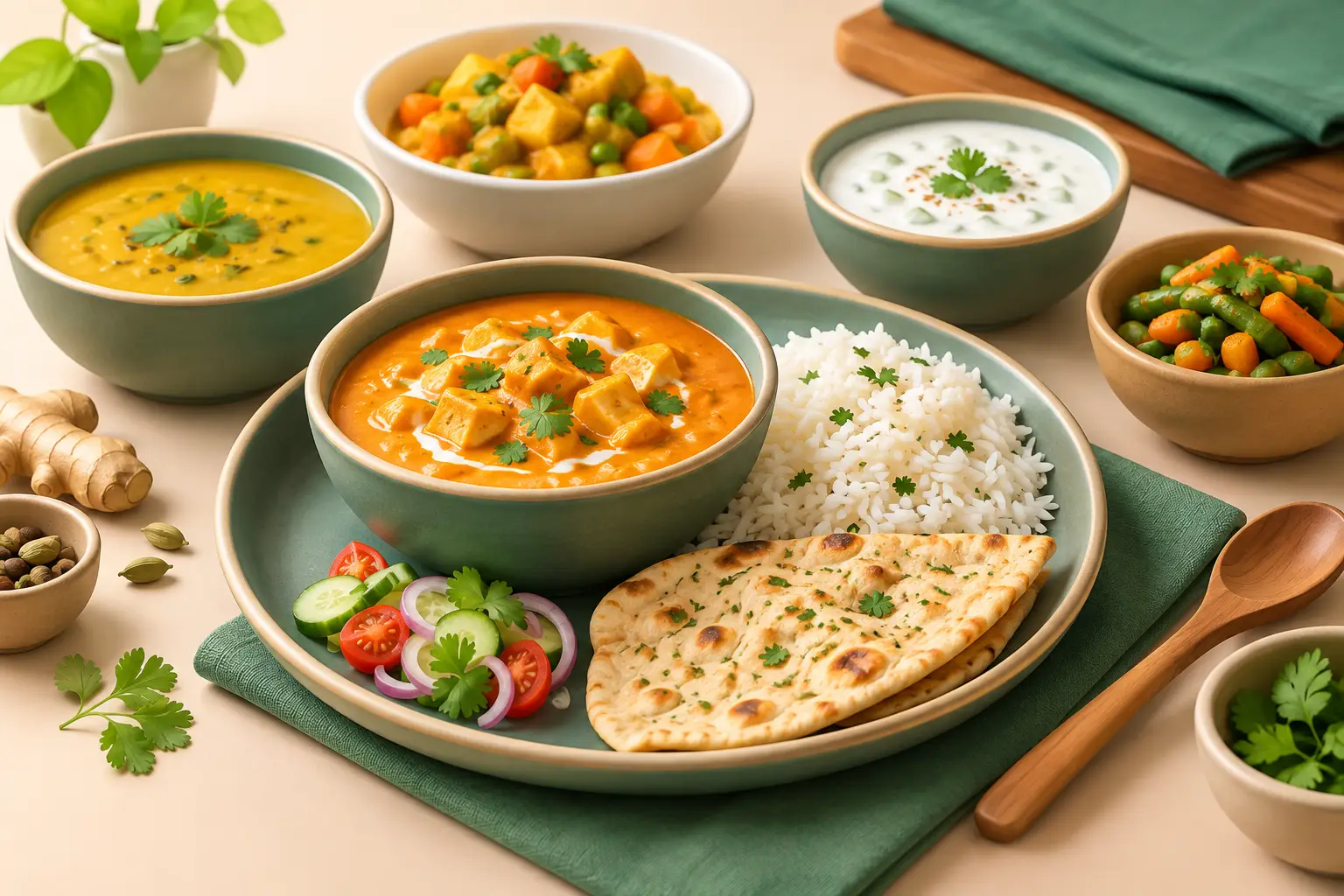
This is especially helpful when ordering for a group. Not everyone wants the same thing, and they do not need to. A good mixed order can include one indulgent dish, one grilled option, one vegetable side, one dal, and sensible portions of rice or bread. That way everyone gets variety without the table feeling overloaded.
How to spot a restaurant that does lighter Indian food well
The menu language tells you a lot. Restaurants that talk about freshness, grilled dishes, balanced preparation, dietary inclusivity, and made-to-order cooking are usually thinking carefully about how the food feels as well as how it tastes.
You can also look for range. A strong menu should give you real choice, not force you into a corner if you want something lighter. Tandoori dishes, salads, vegan options, gluten-free choices, and curries with different sauce styles all suggest a kitchen that understands modern dining without losing its roots.
That balance matters. The best lighter Indian dishes do not feel like compromises. They still taste authentic, layered, and satisfying. They simply rely more on spice, smoke, texture, and ingredient quality than on heaviness.
For local diners around Putney and nearby neighborhoods, that is often the difference between a meal you enjoy in the moment and one you are happy to order again midweek. At Cilantro London, that idea is built into the menu – authentic Indian food prepared with care, freshness, and a more balanced touch.
If you remember just one thing, make it this: choose dishes for how they are cooked, what the sauce is made from, and how the whole meal fits together. That is usually the simplest way to enjoy Indian food that still feels generous, comforting, and just right for the evening ahead.