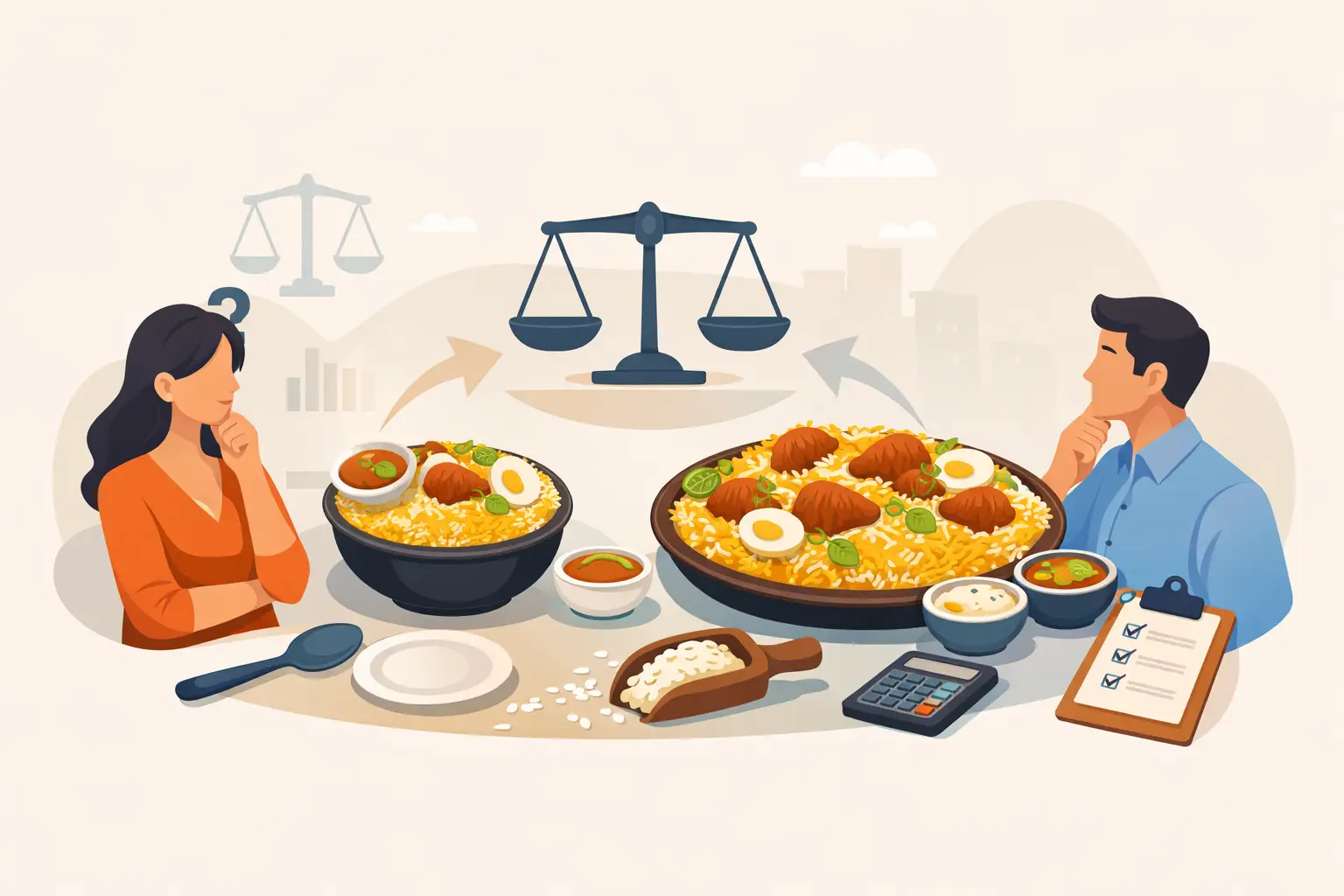
Ordering biryani should feel satisfying, not like a guessing game. Yet one of the most common questions we hear from diners is how to choose biryani portions when every table, appetite, and occasion looks a little different. A quick lunch for one needs a different approach than a family dinner, and a biryani ordered with starters and sides will stretch much further than one ordered on its own.
Why biryani portions can be tricky
Biryani is not a light, one-note dish. A well-made biryani brings together fragrant rice, marinated protein or vegetables, herbs, spices, and depth from slow cooking. Because it is a complete dish in many ways, it can be more filling than people expect, especially if you are ordering from a restaurant that prepares food fresh and with proper layering rather than padding the dish with extra oil.
Portion size also depends on the style of meal you want. Some guests want biryani to be the centerpiece. Others are building a broader spread with kebabs, curries, naan, or a fresh salad on the side. That difference matters. The same portion can feel generous in one order and surprisingly modest in another.
How to choose biryani portions for one person
For one diner, the first question is simple: is biryani your entire meal, or part of it?
If biryani is the main event and you are properly hungry, one standard restaurant portion is usually right for one adult. This is especially true for dinner, when you want something substantial and comforting. If you are adding only a light side, such as raita or a salad, a single portion should still feel balanced.
If you are ordering lunch, or you tend to eat lightly, one biryani may still work but could leave enough for later. That is not a bad thing. Biryani often holds up well as leftovers, and many people enjoy it just as much the next day.
Where diners misjudge things is by ordering biryani alongside several heavier extras. If you are starting with samosas, adding bread, and sharing another curry, one full biryani for one person can quickly become too much. In that case, think of biryani as one shared dish among several rather than your personal plate.
How to choose biryani portions for couples
For two people, portion choice depends less on headcount and more on eating style.
If both of you want biryani and nothing else, ordering one portion each is usually the safest route. It gives each person a proper serving and avoids the awkward moment where one shared dish suddenly feels very small halfway through dinner.
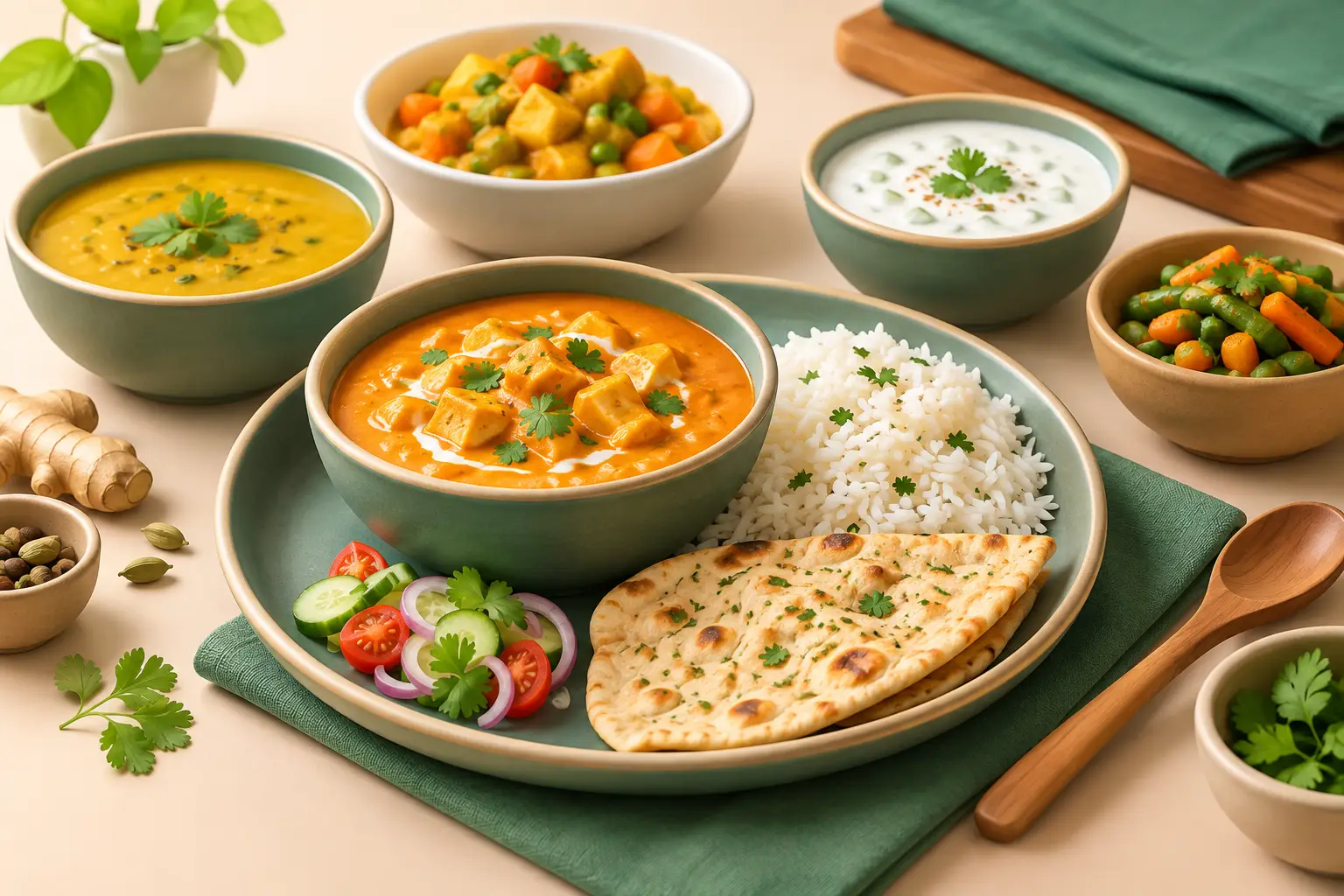
If you are the kind of couple who likes variety, one biryani plus one curry, bread, and perhaps a starter often makes a more satisfying order. Biryani is rich in flavor and texture, so it pairs well with a meal built around contrast. A cooling yogurt side, something from the tandoor, or a lighter vegetable dish can make dinner feel more complete without becoming too heavy.
This is also where appetite differences matter. If one person eats lightly and the other wants a hearty dinner, sharing one biryani with a side dish may be enough. If both of you arrive hungry, especially on a weekend evening, it is better to order a little more rather than leave the meal feeling skimpy.
Families need a different approach
Family orders are where portion planning becomes more practical. Children, teens, and adults all eat differently, and biryani tends to be more popular with some family members than others.
For a family of three or four, start by asking how central biryani will be to the meal. If everyone wants it, you will usually need more than one portion. If the table also includes curries, breads, and starters, biryani can play more of a supporting role.
A helpful rule is to think in terms of full eaters and lighter eaters. Two adults and two younger children do not need the same quantity as four hungry adults. Teenagers can easily eat adult portions, particularly if biryani is their favorite dish and there is not much else on the table.
Families also benefit from balance. A biryani-heavy order can feel filling very quickly, so adding a fresh side, grilled dish, or yogurt accompaniment keeps the meal lighter and more comfortable. That is especially useful if you want the food to feel generous without becoming overly rich.
Group orders and office meals
For four or more people, the smartest approach is rarely to count portions one by one. Instead, build the order around variety.
In group settings, some people want biryani, some prefer curry, and others will pick at shared sides. That means not everyone needs a full biryani portion to feel well fed. One of the easiest ways to avoid over-ordering is to combine a few substantial mains with rice dishes, breads, and a couple of starters.
If biryani is the star of the order, be more generous. If it sits alongside several dishes, it can comfortably serve as part of a shared spread. Office lunches and casual dinners often work best this way because people can help themselves without the meal feeling repetitive.
When ordering for a group, it is also worth considering how food will be eaten. A seated dinner allows for easier sharing. A standing office lunch or informal gathering usually calls for slightly more food, because people tend to take smaller portions at first and return for seconds.
Protein, rice, and sides change the portion equation
Not all biryanis feel equally filling. Chicken biryani, lamb biryani, and vegetable biryani can all satisfy, but the richness and density vary.
Lamb tends to feel heartier, so diners may be satisfied with slightly less, especially if other dishes are involved. Chicken is often the middle ground – substantial, familiar, and easy to pair with sides. Vegetable biryani can be wonderfully satisfying, but some guests like to add a side dish for extra variety or protein, particularly if they are sharing.
Sides matter just as much. Raita can make biryani feel fresher and more balanced without adding too much heaviness. Naan and other breads are delicious, but they make the meal significantly more filling. Curries add richness and variety, but they also turn biryani into one dish among many rather than the main focus.
So if you are wondering how to choose biryani portions, do not look at the biryani in isolation. Look at the whole order.
Appetite is personal, and occasion matters
A Friday night takeaway is not the same as a midweek dinner after a late meeting. The same person may want a lighter portion one day and a generous feast the next.
This is where honesty helps. If you know you are ordering for comfort after a long day, plan for a fuller meal. If you are eating earlier than usual, or ordering as part of a lighter routine, scale things back. There is no perfect universal formula because appetite shifts with schedule, weather, stress, and company.
Special occasions also change expectations. Date nights, family celebrations, and dinner with visiting friends usually benefit from a little abundance. Everyday ordering can be more streamlined. At a restaurant like Cilantro London, where dishes are prepared with freshness and balance in mind, that difference becomes even more noticeable. Food can feel refined and satisfying without the heaviness many people associate with takeaway, which makes portion choices a little more flexible.
Should you order extra for leftovers?
Often, yes – if you know you will enjoy them.
Biryani is one of those dishes that can make excellent next-day food when stored properly. For busy households or working professionals, that can be a real advantage. Ordering slightly more can turn tonight’s dinner into tomorrow’s lunch without any extra effort.
That said, leftovers should be a plan, not an excuse to over-order wildly. If your fridge is already full, or you know no one will eat it the next day, it is better to keep the order tighter. The goal is satisfaction and ease, not waste.
The easiest way to get it right
Think about four things before you place the order: how many people are eating, whether biryani is the main dish or part of a spread, how hungry everyone is, and whether leftovers are welcome. Those four details usually tell you more than any fixed portion chart ever could.
If you are ordering for one, a standard biryani portion is usually enough as a main. For two, one each works well unless you are sharing several other dishes. For families and groups, let variety guide you and remember that sides, starters, and breads can stretch the meal significantly.
Good ordering is not about squeezing every plate to the minimum. It is about making sure everyone at the table feels looked after, comfortable, and properly fed. When you choose with that in mind, biryani tends to take care of the rest.