Monday usually goes wrong at 1 p.m. You start with good intentions, then lunch is too light, dinner is too heavy, and by 9 p.m. you are standing in the kitchen looking for something salty. A healthy indian meal plan example works best when it is built for real life – enough protein, enough fiber, enough comfort, and flavors you actually want to eat again tomorrow.
That is where Indian food can do surprisingly well. When it is prepared with care, it is one of the easiest cuisines to shape into a balanced week. Lentils, grilled meats, yogurt, vegetables, rice, millet, fresh herbs, and warming spices all have a place. The difference comes down to portion balance and cooking style. A meal plan built around lighter curries, tandoori dishes, dry vegetable sides, and sensible portions of rice or bread feels satisfying without becoming the kind of meal that slows down the rest of your evening.
What makes a healthy Indian meal plan example realistic?
A realistic plan does not try to make every meal tiny or overly strict. That usually backfires by midweek. Instead, each meal should have a clear job. Breakfast should steady your appetite. Lunch should carry you through the workday without feeling sleepy. Dinner should be comforting, but not so rich that it feels like a weekend treat every night.
For most people, the easiest formula is simple: include a strong source of protein, add vegetables or fruit, choose a sensible amount of carbohydrates, and keep fats present but not excessive. Indian food supports this better than many people assume. Moong dal chilla, idli with sambar, grilled chicken, chana salad, rajma, paneer, saag, and mixed vegetable dishes all fit naturally.
The trade-off is that not every Indian dish is equally useful for everyday eating. Cream-heavy curries, oversized naan, fried starters, and generous biryani portions can still be part of the week, but they should not carry every lunch and dinner. A healthy plan is not about removing pleasure. It is about knowing when to reach for a tandoori main instead of a richer curry, or when one roti is enough because the dal and vegetables are already doing the work.
A 7-day healthy Indian meal plan example
Here is a practical week that feels balanced rather than restrictive.
Day 1
Breakfast can be vegetable poha with peas and a side of plain Greek yogurt. It is light, but the yogurt gives it staying power. For lunch, have grilled chicken tikka with cucumber, tomato, red onion, and a spoon of mint yogurt, plus a small portion of basmati rice. Dinner can be dal tadka, sautéed spinach, and one whole wheat roti.
This day works well because it starts gently and ends with comfort. If you train after work, add fruit in the afternoon so dinner does not turn into overeating.
Day 2
Breakfast can be two moong dal chillas with coriander chutney. Lunch can be chana masala with a kachumber salad and a modest serving of rice. Dinner can be tandoori salmon or another grilled fish with roasted vegetables and lemon.
This is a useful day for anyone trying to rely less on red meat without losing flavor. The chana masala is filling, but if your digestion is sensitive, reduce the lunch portion and add more salad instead.
Day 3
Start with plain yogurt, berries, and a small handful of toasted nuts, followed by masala tea without too much sugar. Lunch can be rajma with rice and a cabbage slaw. Dinner can be a dry-style paneer and bell pepper dish with broccoli and one chapati.
Day 3 is a reminder that simple meals often perform better than restaurant-style richness in the middle of a busy week. Rajma and rice can absolutely fit a healthy pattern if the rice portion is measured and the meal includes vegetables.
Day 4
Breakfast can be idli with sambar and coconut chutney in moderation. Lunch can be a chicken or tofu salad bowl with shredded carrots, cucumber, mixed leaves, and a spoon of spiced yogurt dressing. Dinner can be vegetable curry made with tomatoes and onions rather than cream, served with cauliflower rice or a half-portion of basmati rice.
This is a lighter day overall, which can be helpful if the first half of the week included a work dinner or a takeaway night. It still feels generous because the spice and texture are there.
Day 5
Breakfast can be masala oats cooked with onions, tomatoes, and spinach. Lunch can be leftover dal with roasted vegetables and one roti. Dinner can be a lean lamb curry or chicken jalfrezi with green beans and a small serving of rice.
Friday is where many meal plans unravel because people try to be perfect all day and then overdo it at night. A better approach is to eat steadily through the day so your dinner feels enjoyable, not uncontrolled.
Day 6
Breakfast can be scrambled eggs with chilies, onions, and tomatoes, plus fruit on the side. Lunch can be a paneer tikka wrap in a whole wheat roti with crunchy salad. Dinner can be a more indulgent meal – perhaps biryani – but serve it with cucumber raita and a large salad, and keep the portion honest.
This matters because a healthy meal plan should survive the weekend. If you leave no room for favorite dishes, it stops being realistic. Balance around the indulgence rather than pretending it will not happen.
Day 7
Breakfast can be fresh fruit, yogurt, and a small besan chilla. Lunch can be fish curry with vegetables and a little rice. Dinner can be comforting but light: mixed vegetable soup, a small dal, and one chapati.
Sunday evening is a good time to reset. You want to finish the week nourished, not weighed down.
How to adjust this healthy Indian meal plan example for your goals
If your goal is fat loss, the biggest improvement usually comes from portion control rather than dramatic food rules. Keep rice, naan, and richer sauces in the plan, but use them more deliberately. A tandoori main with dal and vegetables often satisfies better than a large creamy curry with bread.
If your goal is more energy, especially during long workdays, do not let breakfast become an afterthought. A protein-rich Indian breakfast like moong dal chilla, eggs with vegetables, or idli with sambar will usually hold you better than coffee and a pastry.
If you are vegetarian, Indian food gives you an advantage, but you still need to watch protein quality and portion balance. Lentils, chickpeas, paneer, tofu, and yogurt can carry a week very well. The catch is that some vegetarian restaurant meals lean too heavily on cream or cheese. Pair richer paneer dishes with lighter sides and choose tomato-based or dry preparations often.
If you need gluten-free options, many Indian meals are naturally flexible. Rice, lentils, grilled meats, fish, vegetable curries, and chickpea-based dishes can fit well. You simply need to be selective about breads and confirm preparation where necessary.
The small habits that make the biggest difference
Most healthy eating problems are not really about spice blends or cuisine. They come from extras that quietly build up. Too much oil in home cooking, second helpings of rice, fried starters before dinner, sugary drinks, and late-night snacking are usually bigger issues than the core meal itself.
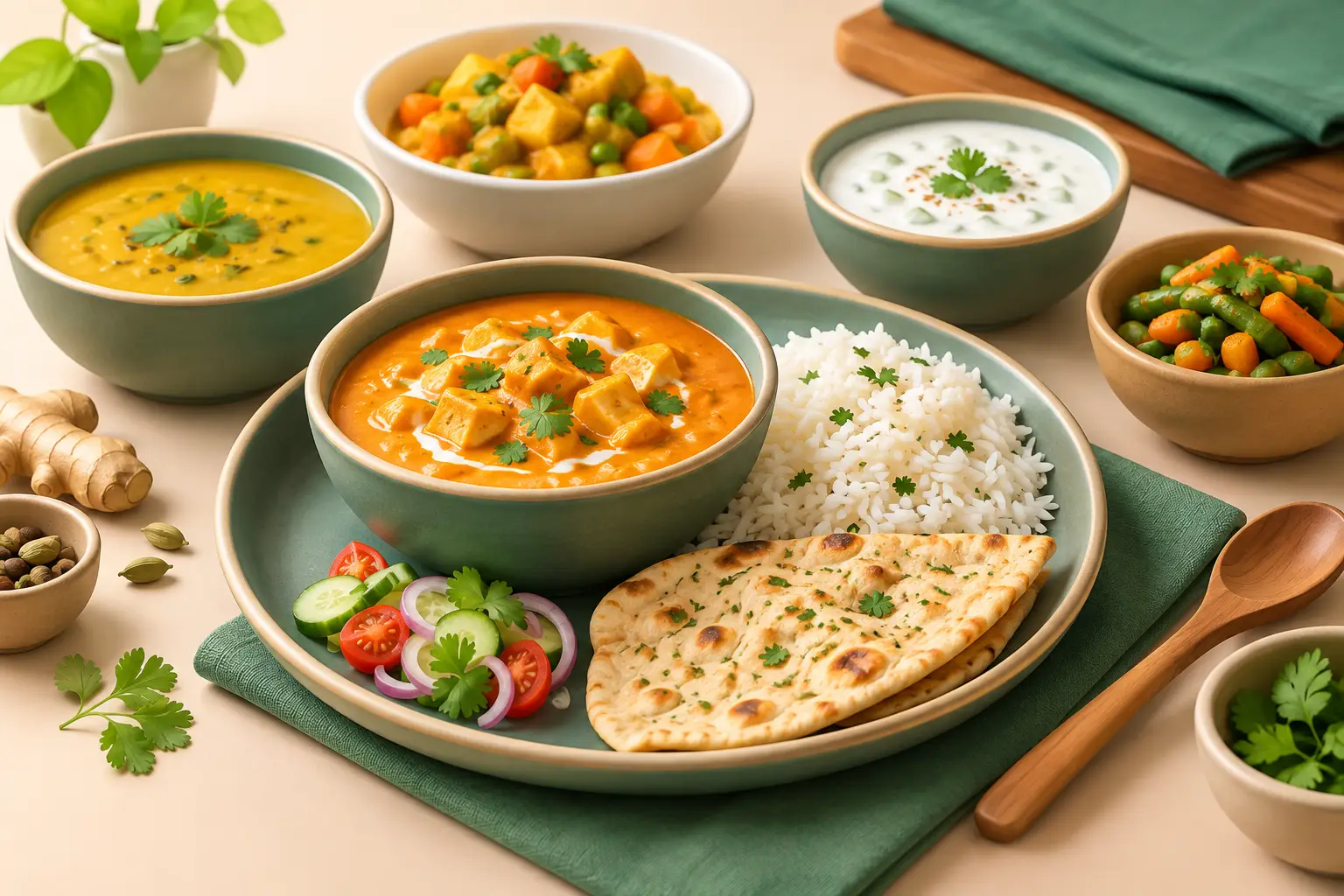
That is why structure matters. Keep lunch and dinner visually balanced. Aim for half the plate from vegetables when possible, a quarter from protein, and a quarter from starch. If the meal is dal and rice, add a dry vegetable side or salad to stop it becoming too starch-heavy. If the meal is curry and naan, skip the rice rather than stacking both unless it is a special occasion.
It also helps to respect satisfaction. Indian food is deeply comforting, and that is part of its value. A lighter meal still needs aroma, texture, acidity, and warmth. Fresh coriander, lemon, ginger, mustard seeds, cumin, and green chilies can make a simple dish feel complete without turning to excess butter or cream.
For busy households, ordering smart can be just as useful as cooking from scratch. A well-chosen spread of grilled mains, lentils, vegetable sides, and salad can support your week far better than defaulting to the heaviest options on the menu. That is especially helpful on evenings when convenience matters as much as quality. Restaurants like Cilantro in Putney have shown that Indian food can feel polished, fresh, and lighter without losing the depth people come back for.
When a meal plan should bend
Some weeks are not normal. You might have guests, office lunches, date nights, school events, or very little time. That does not mean the plan has failed. It just means the plan should flex.
If lunch is heavy, make dinner simpler. If dinner is celebratory, keep breakfast and lunch balanced and protein-forward. If takeaway is the only realistic option, choose one richer dish and support it with cleaner sides. Health is rarely built on one perfect day. It is built on what your average week looks like.
The best healthy indian meal plan example is the one you can repeat without feeling punished by it. Good food should still feel generous. When Indian cooking is fresh, balanced, and thoughtfully portioned, it does exactly that – it brings comfort to the table while still leaving you feeling like yourself afterward.