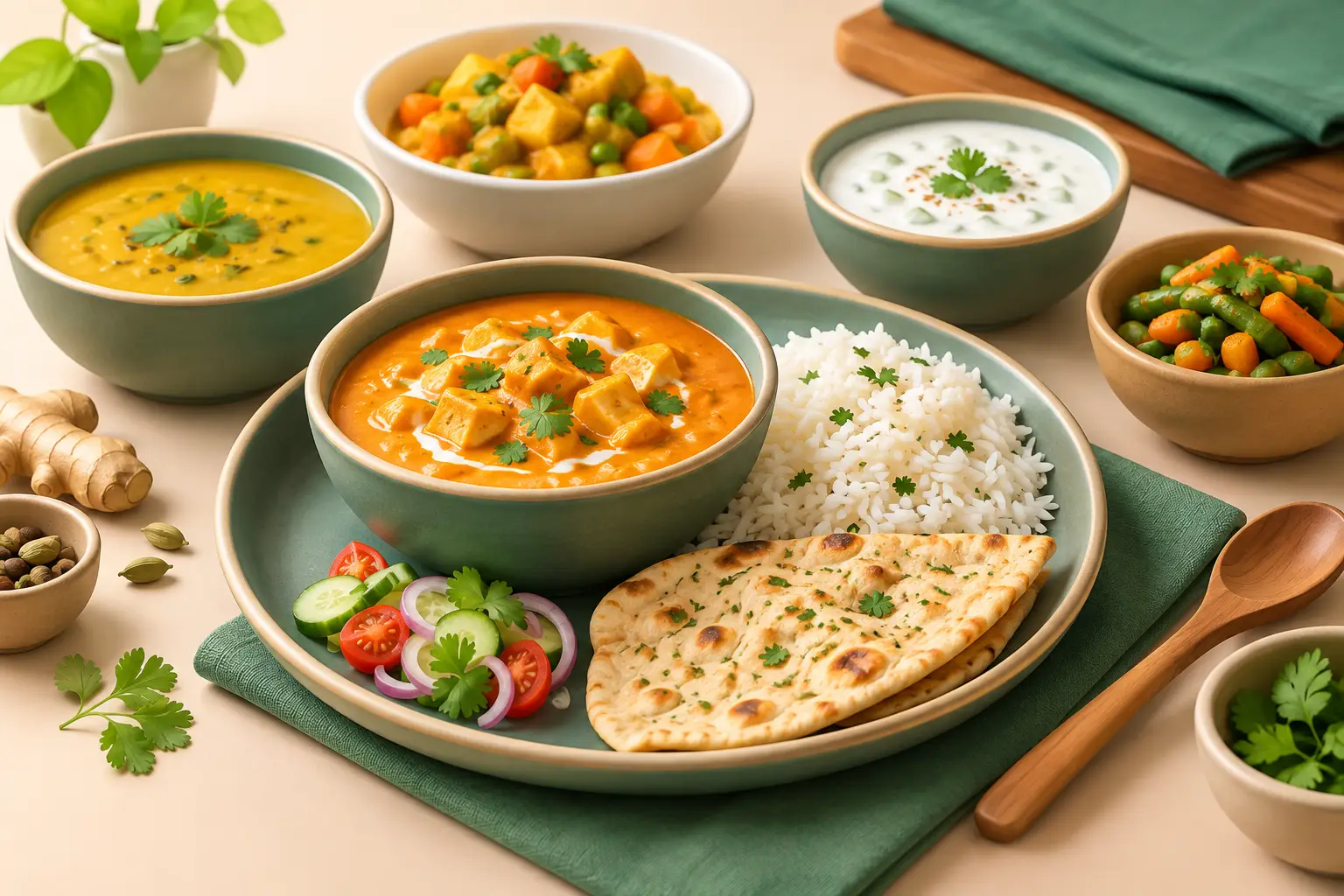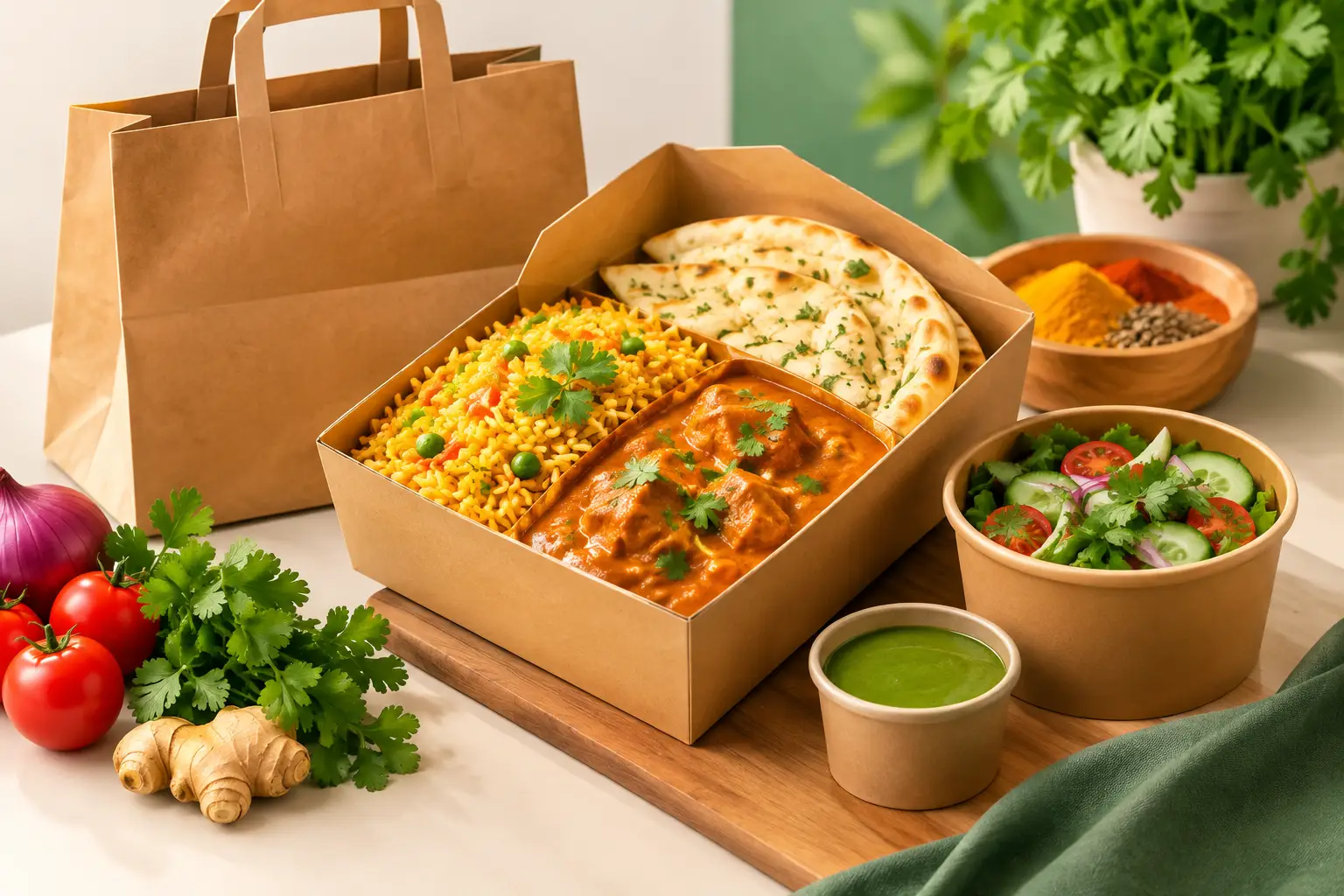
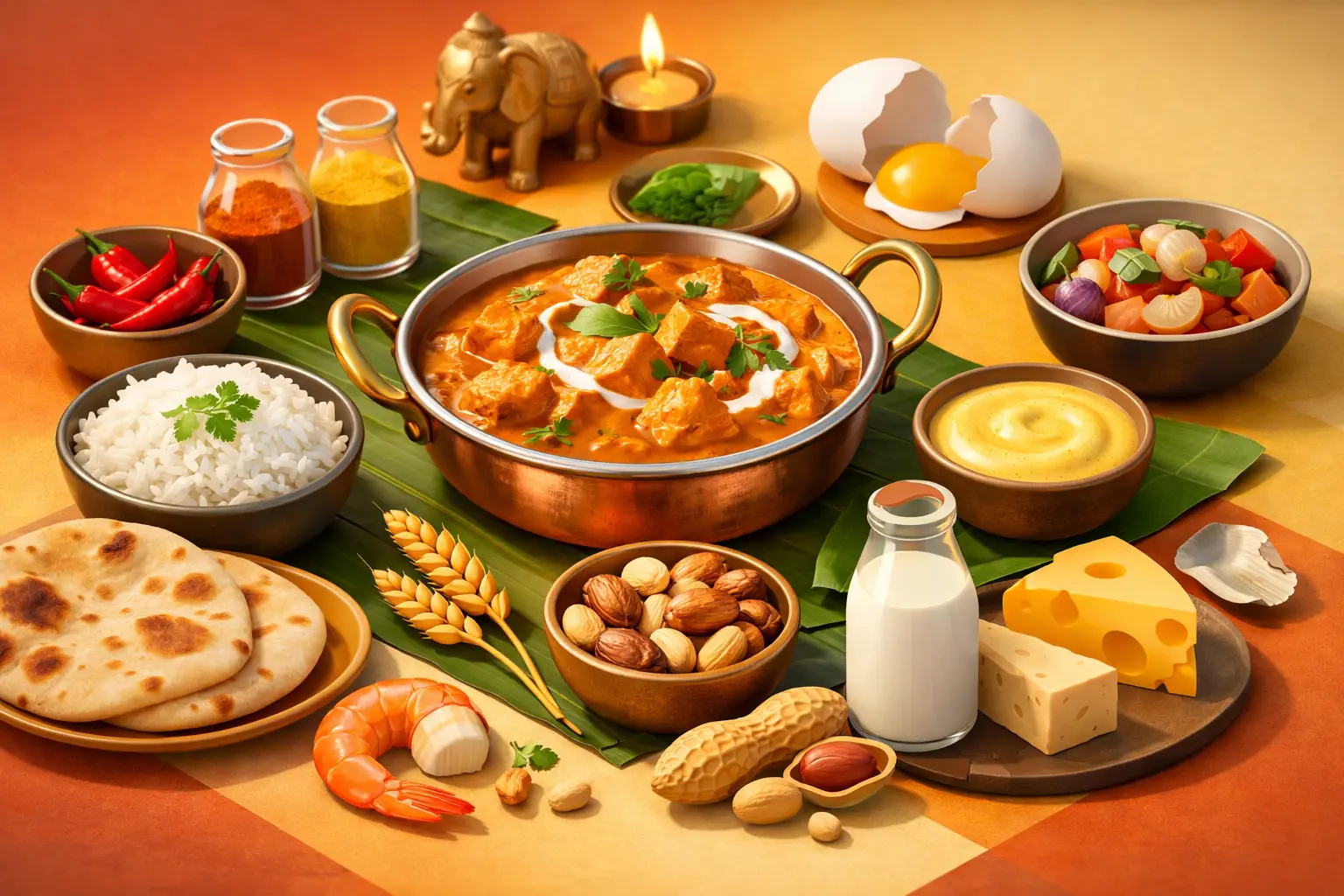
A curry can look like a simple bowl of comfort, yet its rich sauce may contain dairy, ground nuts, wheat, or ingredients prepared near other allergens. This curry allergen guide is designed to help you order Indian food with more confidence, whether you are planning a relaxed dinner out or choosing a fresh takeaway for home.
The key is not to guess from a dish name. Two chicken curries can be prepared very differently, and a vegetable dish is not automatically dairy-free, nut-free, or gluten-free. A clear conversation with the restaurant, combined with a little knowledge of traditional ingredients, makes all the difference.
Why curry dishes need a closer look
“Curry” describes a style of dish rather than one fixed recipe. Its flavor may come from onions, tomatoes, ginger, garlic, chilies, whole spices, and herbs. Those ingredients are often suitable for many dietary requirements, but the finished dish can change significantly when chefs add cream, yogurt, ghee, cashew paste, flour, or a prepared sauce.
Preparation matters just as much as the recipe. Fryers, tandoors, grills, chopping boards, serving spoons, and sauce pots may be shared across dishes. For someone managing a severe allergy, that possibility of cross-contact should be discussed before ordering, even when a menu item appears to avoid the allergen itself.
A good restaurant should welcome those questions. Giving the kitchen clear information early allows the team to check ingredients, explain what can be adapted, and be honest when a dish cannot safely meet your needs.
Curry allergen guide: ingredients to recognize
Dairy in creamy and tandoori dishes
Dairy is one of the most frequent allergens in Indian cooking. Ghee is clarified butter and is used for richness in rice, breads, curries, and finishing sauces. Paneer is a fresh cheese, while yogurt, cream, butter, and milk may all appear in marinades and mild curries.
A dish described as creamy, buttery, korma-style, or tikka masala-style may contain dairy, although recipes vary. Tandoori chicken and other grilled dishes are also often marinated in yogurt before cooking. Tomato-based, lentil, or vegetable curries can sometimes be made without dairy, but ask whether ghee, butter, cream, or yogurt is used at any stage.
Tree nuts and peanuts
Cashews and almonds are commonly blended into sauces to create a silky texture and gentle sweetness. They are especially likely in rich, mild curries, but they can also appear in garnishes, rice dishes, desserts, and sweets. Ground nuts are not always visible, so a sauce that looks smooth rather than nutty can still contain them.
Peanuts are less central to many North Indian curry recipes than cashews, but they may be used in regional dishes, snacks, chutneys, and desserts. If you have a nut allergy, specify the exact nut or nuts involved and ask about both ingredients and shared preparation areas.
Gluten and wheat
Naan, roti, paratha, samosas, and many fried starters usually contain wheat. Gluten can also be introduced through flour used to thicken sauces, crumbs or batter, soy sauce, and certain prepared spice blends or condiments.
Rice, lentils, chickpeas, potatoes, and most fresh spices are naturally gluten-free. That does not make every rice dish or curry suitable for someone with celiac disease or a wheat allergy. Ask whether the dish is prepared separately from wheat-based foods and whether the kitchen can manage cross-contact safely.
Sesame, soy, mustard, and other less obvious allergens
Sesame may appear in breads, sauces, snacks, or as a garnish. Soy can be present in sauces and modern recipe adaptations. Mustard seeds are a traditional tempering ingredient in some regional dishes, while mustard may also appear in pickles and sauces.
Egg can turn up in certain breads, coatings, desserts, and mayonnaise-based accompaniments. Fish and shellfish are relevant where seafood dishes are prepared, and sulfites may occur in pickles, chutneys, wine-based ingredients, or preserved items. These are not reasons to avoid Indian food altogether. They are reasons to ask precise, practical questions.
Ask questions the kitchen can answer
Saying “I have an allergy” is a useful start, but naming the specific allergen helps the restaurant respond appropriately. Tell your server or the person taking your order whether the allergy is to milk, cashew, almond, peanut, wheat, sesame, or another ingredient. If cross-contact is a serious concern, say so plainly.
The most useful questions are simple: Does this dish contain my allergen? Is it used in the marinade, sauce, garnish, bread, or side? Can the dish be made without it? Is there a risk of cross-contact during cooking or service?
Avoid relying on broad labels alone. “Vegetarian” does not mean dairy-free, “vegan” does not automatically mean free from cross-contact, and “gluten-free” should be confirmed with the restaurant if you have celiac disease. A thoughtful answer may sometimes be, “We cannot guarantee that.” While that can be disappointing, it is also the responsible information you need to make a safe decision.
If you are ordering online, add your allergy details in the notes and follow up directly when possible. For a group order, make sure the person placing it does not reduce your request to “no dairy” when the concern is a diagnosed milk allergy and cross-contact needs to be considered.
Choosing an Indian meal with care
Start with dishes whose main ingredients are naturally straightforward, then confirm the cooking method. A lentil-based dal, vegetable curry, grilled protein, plain basmati rice, or fresh salad may be easier to assess than a sauce with many blended components. Still, simpler does not always mean allergen-free. A dal may be finished with ghee, and grilled meat may have a yogurt marinade.
Sides deserve the same attention as the main course. Rice can contain butter or nuts, breads can contain wheat and dairy, and chutneys may contain nuts, sesame, or sulfites. Desserts often include milk, ghee, nuts, and wheat. Asking about the complete meal prevents the common mistake of selecting a suitable curry but overlooking an allergen in the rice, garnish, or sauce served alongside it.
For diners looking for lighter Indian food, a made-to-order approach can be especially helpful. Fresh vegetables, grilled dishes, balanced spice, and clearly discussed substitutions make it easier to enjoy the depth of Indian cooking without unnecessary guesswork. At Cilantro London, customers are encouraged to share dietary needs when ordering or reserving so the team can guide them toward suitable choices where possible.
When the safest choice is to change the plan
If the restaurant cannot confirm ingredients, cannot accommodate cross-contact precautions, or seems unsure about a serious allergy, choose another dish or another meal. This is particularly true for anaphylactic allergies and celiac disease, where a small amount can have significant consequences.
Carry any prescribed medication, follow the guidance from your clinician, and do not treat a general ingredient guide as medical advice or a replacement for restaurant confirmation. Recipes and suppliers can change, and each kitchen has its own equipment and processes.
Indian food should feel generous, vibrant, and reassuring. With clear communication and a restaurant that takes your needs seriously, you can focus less on uncertainty and more on the warm spices, fresh cooking, and pleasure of sharing a meal.