A great Indian meal deserves a second serving that tastes just as comforting as the first. The secret is not blasting everything in the microwave and hoping for the best. To reheat Indian food safely, cool and store it promptly, heat it thoroughly, and give each dish the small amount of care it needs to keep its texture, aroma, and depth of spice.
Whether you are saving a midweek curry, the last spoonful of biryani, or a few pieces of tandoori chicken, a thoughtful approach makes leftovers feel like a proper meal rather than an afterthought.
Start With Safe Storage
How leftovers are handled before reheating matters as much as the reheating method itself. Once dinner is over, transfer food from large takeaway containers into shallow, covered containers if possible. This helps it cool more quickly and evenly in the refrigerator.
Food should not sit out at room temperature for more than two hours. If the room is particularly hot, aim for one hour. That rule is especially relevant for rice, creamy curries, and dishes containing chicken, lamb, seafood, or paneer. Refrigerate leftovers as soon as they have stopped steaming heavily rather than leaving them on the counter until the end of the evening.
Keep refrigerated Indian food at 40°F or below and enjoy it within three to four days. If you know you will not eat it in that window, freeze it soon after it has cooled. Curries, dals, and cooked meats generally freeze well. Rice can be frozen too, although it may need a little added moisture when reheated.
A simple habit helps: label the container with the date. It removes the guesswork on a busy evening and makes it easier to enjoy food at its best.
How to Reheat Indian Food Safely by Dish
The goal is simple: heat food until it reaches 165°F in the center. A food thermometer is the most reliable option, particularly for meat, poultry, seafood, and rice. Without one, look for food that is steaming hot throughout, not merely warm around the edges.
Avoid reheating the same portion multiple times. Instead, take out only what you plan to eat and leave the rest cold in the refrigerator. It protects both food quality and food safety.
Curries, dals, and sauces
Curries are often at their best when reheated gently on the stovetop. Place the portion in a small pan over medium-low heat, stirring regularly so the sauce does not catch at the bottom. If the curry has thickened in the refrigerator, add a splash of water, stock, or coconut milk depending on the dish. This revives the sauce without diluting the flavor too much.
Bring it to a steady simmer and keep it there long enough for the center to become piping hot. For chicken, lamb, or seafood curries, stir carefully so the pieces heat evenly. Seafood can become firm if cooked for too long, so reheat it only until hot.
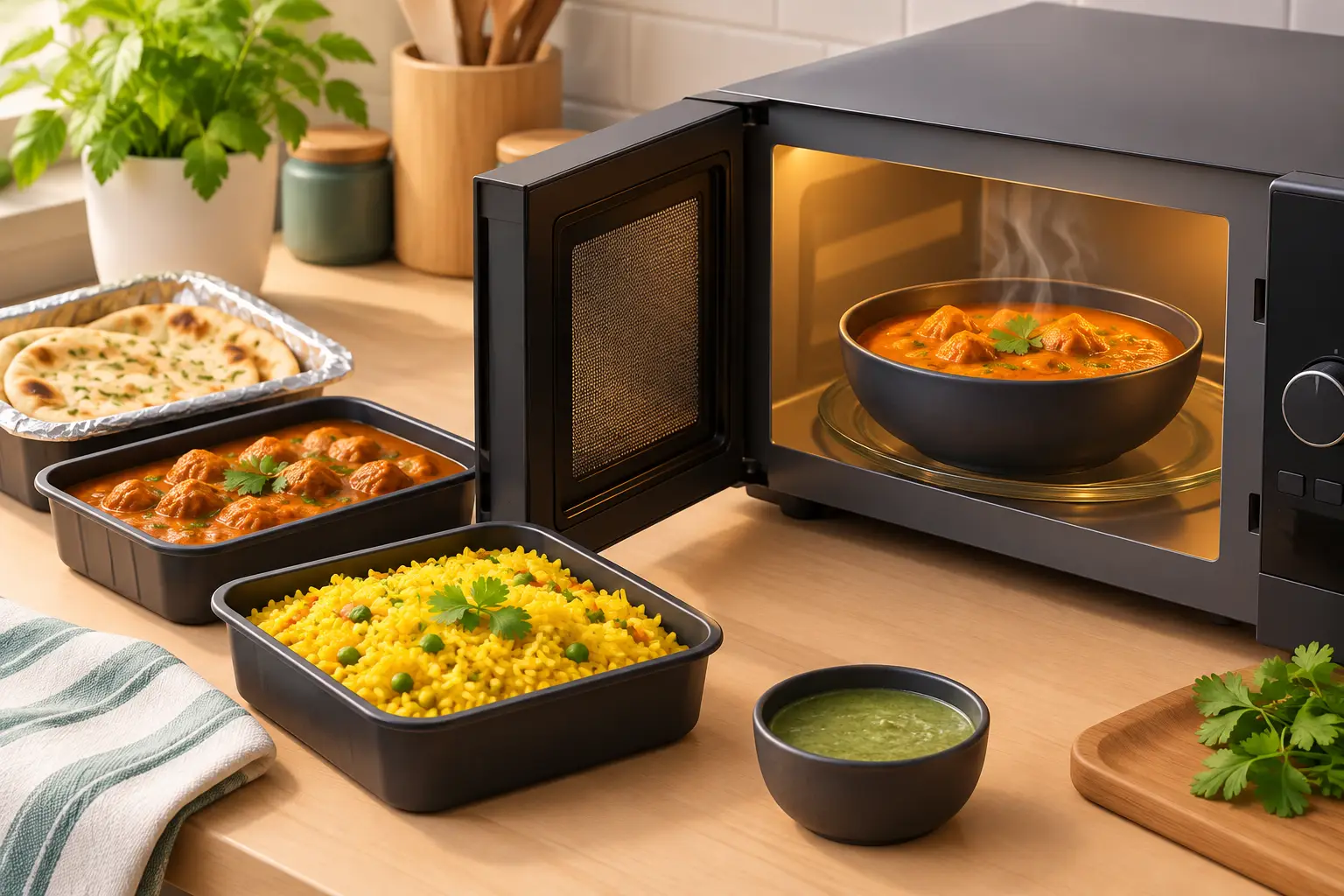
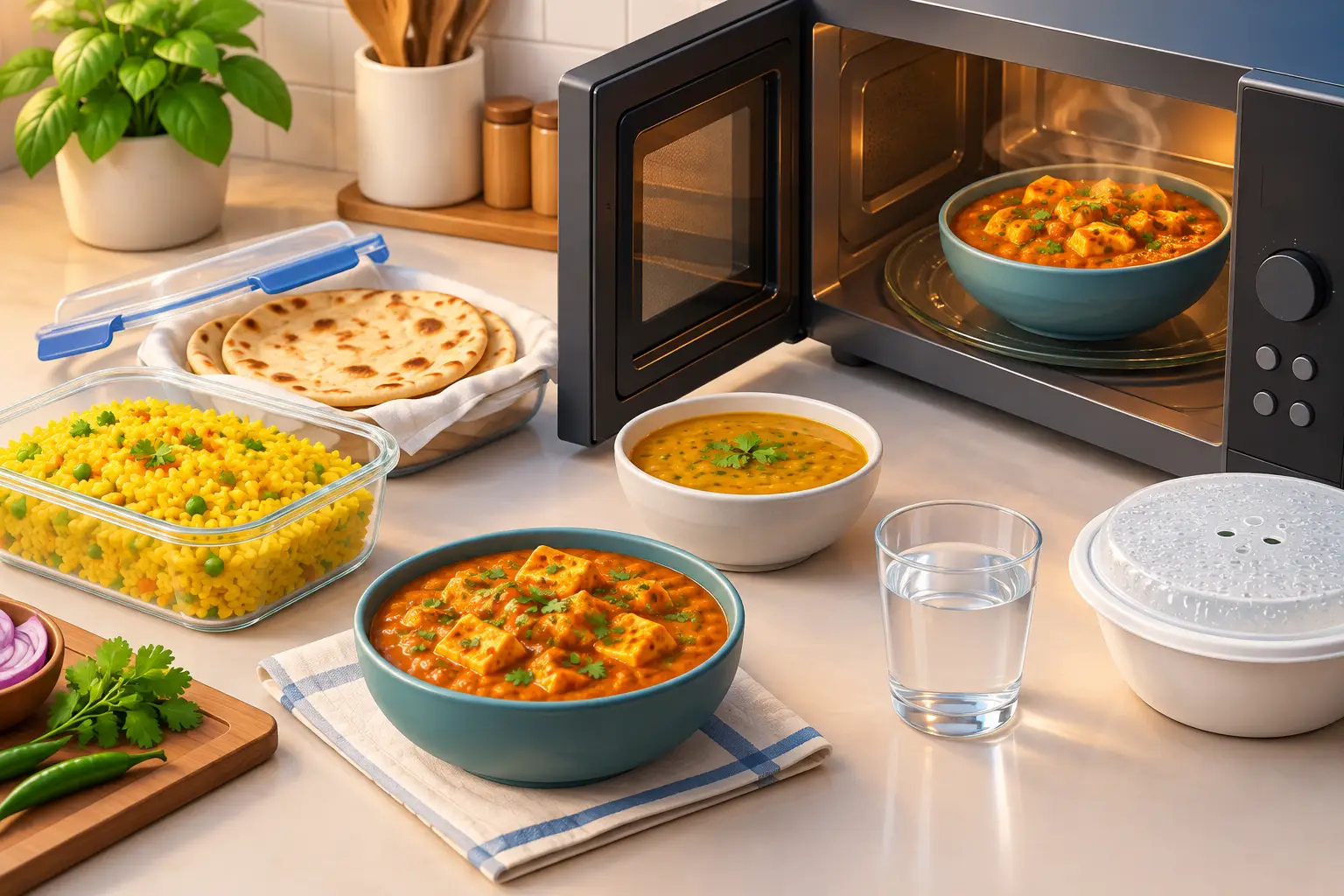
A microwave works well for a quick lunch or late supper. Use a microwave-safe bowl, cover it loosely, and heat in short intervals. Stir between each interval, paying close attention to cooler spots near the middle. A minute of standing time after heating lets the temperature settle through the dish.
Rice and biryani
Rice deserves extra care because cooked rice can support bacteria if it is left out too long before chilling. If it was refrigerated promptly, it is safe to reheat once until steaming hot.
For plain basmati rice, add a teaspoon or two of water to the portion, cover loosely, and microwave until hot. Fluff it with a fork halfway through. The added steam keeps the grains soft rather than brittle.
Biryani benefits from a gentler method, especially if you want to preserve the layers of fragrant rice, herbs, spices, and tender meat or vegetables. Place it in a covered oven-safe dish with a small splash of water around the edges. Heat at 325°F until steaming throughout. For a smaller portion, the microwave is fine, but cover it and use medium power if available. This prevents the rice on top from drying out before the center is warm.
Tandoori dishes and kebabs
Tandoori chicken, lamb chops, seekh kebabs, and similar grilled dishes can dry out quickly. The oven is usually the better choice for larger portions. Set the oven to 325°F, place the food in a covered dish, and add a tablespoon of water or a light brush of oil if it looks dry. Heat until the thickest piece reaches 165°F.
For a crisp exterior, uncover the dish for the final few minutes. Do not start with high heat. It may warm the surface quickly but leave the middle cool and turn the outside tough.
An air fryer can also work for smaller portions of tandoori dishes. Use a moderate setting and check frequently. It is excellent for restoring a little char to kebabs, but it is less forgiving than an oven, particularly with lean chicken breast or delicate fish.
Naan, roti, and other breads
Indian breads are best reheated separately, not under the lid with a curry. Wrapping naan in foil and warming it in a low oven keeps it soft. For a lightly crisp edge, warm it in a dry skillet for a minute or two per side.
Roti can be reheated in a dry skillet over medium heat until warm and pliable. Covering it briefly after heating helps hold in moisture. If bread has become very dry, a tiny brush of water before warming can bring back some softness.
Samosas, bhajis, and crisp starters
Crisp snacks need dry heat. The oven or air fryer will give a much better result than the microwave, which can make pastry and fried coatings soft. Reheat samosas, onion bhajis, and pakoras in a single layer at around 350°F until hot through and crisp outside.
If you are reheating several items, leave space between them. Crowding traps steam, which works against that satisfying crunch.
Foods That Need a Little Extra Judgment
Some leftovers are more sensitive than others. Dairy-based sauces, spinach dishes, and seafood are perfectly enjoyable when stored promptly and reheated thoroughly, but they should not be pushed to the fourth day simply because they still look acceptable. When in doubt, choose freshness over waste.
Cold accompaniments should stay cold. Raita, fresh salads, chutneys with yogurt, and sliced onions do not need reheating. Keep them refrigerated until serving and use clean utensils so they are not contaminated by warm food.
If a dish smells sour when it should not, has an unusual texture, or has been forgotten on the counter overnight, discard it. Reheating does not reliably make spoiled food safe. Trust your senses, but do not rely on smell alone when storage time has clearly exceeded safe limits.
Make Leftovers Feel Like Dinner Again
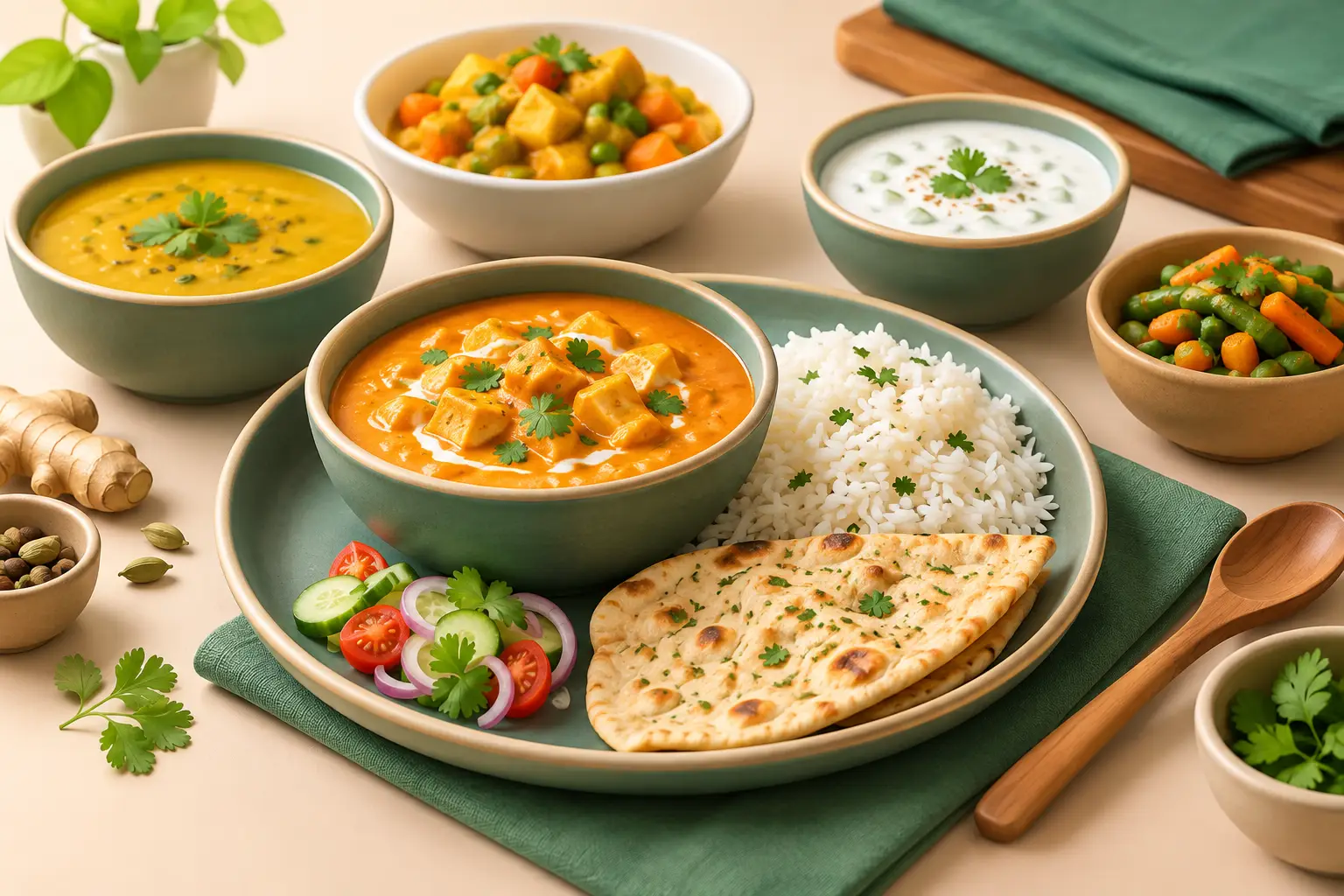
The difference between a hurried leftover meal and a satisfying one is often in the finishing touches. Heat curries slowly, fluff the rice, warm the naan separately, then add fresh cilantro, a squeeze of lemon, or a spoonful of chilled raita at the table. Those contrasts bring back the balance that makes Indian cooking so memorable.
At Cilantro London, every dish is prepared with care for layered spices, freshness, and a lighter, more refined finish. Give your leftovers the same consideration at home, and tomorrow’s dinner can still feel like a treat worth gathering around.